


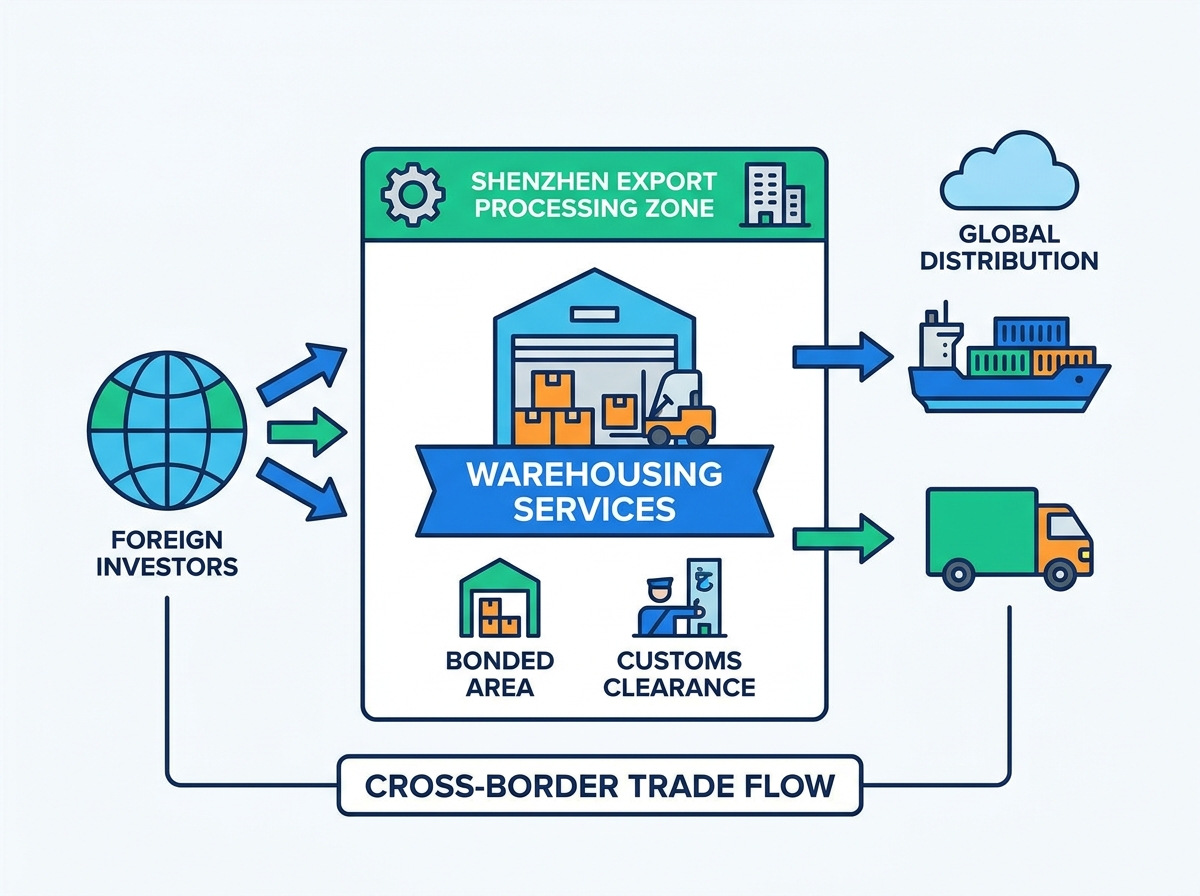
Is Shenzhen merely the Silicon Valley of hardware? Think again. It actually serves as a formidable gateway for global trade. Expanding into Asia often exposes foreign investors to crippling overhead and convoluted supply chains. The Shenzhen Export Processing Zone solves these exact logistical nightmares.
In this breakdown, we map out the tangible financial benefits of operating within this special economic area. Furthermore, we will dissect essential warehousing strategies that slash overhead, streamline daily operations, and inject speed into your global supply chain.
Key Takeaways
- 100% Market Access: China has systematically eliminated access restrictions for foreign investors in the manufacturing sector. This makes special economic zones highly viable for international ownership.
- Tax & Tariff Exemptions: Foreign entities benefit from duty-free imports on manufacturing machinery and raw materials. This provides a quantifiable, immediate improvement to operational cash flow.
- Optimized Supply Chains: Integrating specialized warehousing infrastructure within the zone permits delayed tariff payments. It also facilitates highly streamlined global distribution networks.
- Frictionless Customs: Upgraded digital clearance protocols enable accelerated import and export processing. Statistically, this minimizes border delays and expensive holding costs.
Understanding the Shenzhen Export Processing Zone
What Exactly is the Zone?
The Shenzhen Export Processing Zone is a highly regulated economic area established under the authorization of the Chinese central government. It is engineered specifically to facilitate export-oriented manufacturing, rapid assembly, and international logistics. Unlike standard industrial parks, this zone operates strictly under bonded conditions. Think of a bonded zone as a physical quarantine for your taxes. This structural framework means the area is treated as outside of China's domestic customs territory for tax and tariff purposes. Consequently, it provides a legally secure and financially advantageous environment for Foreign Direct Investment.
A Strategic Gateway for Asia-Pacific Businesses
Geography dictates supply chain efficiency. Shenzhen’s positioning makes this zone a premier logistical node. The area offers immediate proximity to major international maritime hubs, including the Yantian and Shekou seaports. These ports handle millions of Twenty-foot Equivalent Units annually. In addition, it sits near the Shenzhen Bao'an International Airport and shares a direct land border with Hong Kong. For foreign investors, this interconnected infrastructure acts as a high-speed launchpad. It enables rapid market penetration into both the broader Asian supply chain network and Western consumer markets.
Current Shifts in Global Supply Chain Routing
Recent industry data highlights a massive structural pivot in global trade. As international supply chains face unprecedented volatility, foreign investors are actively abandoning fragmented, multi-country storage models. Instead, there is a distinct shift toward centralized, high-tech Asian hubs. Shenzhen captures a dominant share of this volume because it merges advanced fulfillment infrastructure with localized manufacturing. This consolidation strategy allows global brands to shorten their lead times by up to 30 percent while maintaining robust supply chain resilience.
Core Financial and Policy Benefits for Foreign Investors
Pro-Business Pledges and Bureaucratic Efficiency
To stabilize and attract foreign capital, the Chinese government recently introduced targeted measures designed to incentivize foreign enterprises. These policy adjustments focus heavily on creating a predictable and transparent business environment. Local municipal authorities in Shenzhen have implemented these directives by offering streamlined administrative approvals and dedicated enterprise support services. As a result, the bureaucratic friction traditionally associated with overseas expansion has practically vanished.
Elimination of Manufacturing Restrictions
A pivotal shift in foreign investment law directly amplifies the attractiveness of this zone. Recent legal updates have effectively eliminated the negative list access restrictions for foreign investors operating within the manufacturing sector. International corporations can now establish Wholly Foreign-Owned Enterprises in the zone. You no longer need a mandatory local joint-venture partner. This legislative upgrade grants foreign investors complete operational control and robust protection over proprietary manufacturing processes.
Tax Exemptions and Cash Flow Advantages
The primary financial utility of the zone lies in its bonded nature. Foreign investors are exempt from paying import duties and Value-Added Tax on raw materials, component parts, and manufacturing equipment. The only stipulation is that the finished goods must eventually be exported out of China. This duty suspension mechanism preserves significant working capital. You can immediately reinvest those saved funds into core business growth rather than locking them up in border taxes.
| Cost Factor | Standard Chinese Domestic Market | Shenzhen Export Processing Zone |
|---|---|---|
| Import Duties on Raw Materials | Payable immediately upon port entry | Exempt upon entry, deferred indefinitely |
| Import Value-Added Tax | Typically 13%, payable immediately | Exempt for export-bound goods |
| Storage Time Limits | Subject to strict standard warehouse limits | Indefinite bonded storage permitted |
| Corporate Tax Incentives | Standard regional rates apply | Subject to local high-tech and export rebates |
The Strategic Role of Warehousing Services
Why Location Dictates Logistics Success
Integrating logistics infrastructure directly inside the bonded zone bridges the critical gap between manufacturing floors and global shipping channels. By utilizing professional warehousing services for cross-border trade, foreign enterprises eliminate the need to transport goods back and forth across customs borders. This geographic consolidation drastically reduces drayage costs. It minimizes transit damage risks and effectively compresses the overall supply chain timeline from weeks to mere days.
Cost Reduction Through Bonded Warehousing
Bonded warehouses act as a massive financial buffer for international trade. Foreign investors can import bulk inventory into these facilities and store goods indefinitely without triggering customs duties. Tariffs are assessed only if the goods cross the customs boundary into the domestic Chinese consumer market. If you re-export the goods to North America or Europe, they remain entirely duty-free. This effectively eliminates unnecessary tax burdens from your global distribution models.
Value-Added Services on the Warehouse Floor
Modern logistics facilities within the zone offer capabilities that extend far beyond basic pallet storage. Foreign companies can conduct legally permissible value-added services directly inside the bonded warehouse. Picture a scenario where bulk electronics arrive from a nearby factory. Warehouse staff can immediately perform product kitting, localized labeling, repackaging, and rigorous Quality Assurance inspections on the spot. Performing these tasks at the point of origin significantly reduces labor costs and prevents defective products from incurring expensive international freight charges.
Mastering Bonded Area Transit and Distribution
Seamless Cargo Movement Without Tax Penalties
Supply chain agility relies heavily on the ability to maneuver inventory without incurring administrative penalties. For foreign investors managing complex operations, moving goods without triggering immediate tax liabilities is a massive operational advantage. The zone is uniquely engineered to facilitate this exact requirement. By mastering the mechanics of bonded area transit and distribution, international enterprises optimize their cash flow instantly. Because the goods remain under customs supervision during transit in sealed vehicles, these movements do not trigger import taxes or require complex temporary import bonds.
Consolidation and Deconsolidation Strategies
The zone serves as an ideal hub for cargo consolidation. Foreign investors can source components from various global suppliers, ship them in bulk into the Shenzhen bonded zone, and store them duty-free. Once assembly is complete, the logistics provider deconsolidates the bulk materials. They then repackage them into smaller, customized shipments tailored for specific international markets. Conversely, finished goods produced by multiple contract manufacturers can be consolidated into full container loads. This sharply reduces international per-unit freight costs.
Multi-Modal Transportation Links
Distribution from the zone is supported by a robust multi-modal transportation network. Depending on urgency and budget, foreign investors can route their goods via ocean freight from Yantian Port for heavy cargo. You can utilize air freight from Shenzhen or Hong Kong airports for expedited e-commerce parcels. Alternatively, leverage the China-Europe Railway Express for a middle-ground solution balancing speed and cost. This flexibility allows supply chain managers to dynamically adjust routing based on real-time market demand.
| Distribution Metric | Standard Domestic Transit | Bonded Transit within the Zone |
|---|---|---|
| Duty Payment Timing | Immediate upon port entry | Deferred until domestic market entry |
| Cash Flow Impact | High capital lock-up | Optimal capital fluidity |
| Export Tax Rebates | Complex application process | Pre-exempted, no application needed |
| Customs Intervention | Multiple physical inspection points | Sealed transit with minimal intervention |
Comprehensive Export Processing Zone Logistics Support
End-to-End Supply Chain Solutions
Managing an international operation requires perfectly synchronized logistics. Securing comprehensive export processing zone logistics support encompasses the entire lifecycle of a product. This includes managing the inbound freight of raw materials, coordinating drayage to the manufacturing facility, and handling intra-zone bonded storage. It culminates in executing the final outbound international shipping. By consolidating these processes under a single logistics framework, foreign investors drastically reduce vendor management complexity.
Supporting Just-In-Time Manufacturing
For modern manufacturing, maintaining lean inventory is crucial for profitability. Reliable logistics support enables Just-In-Time manufacturing models. By keeping safety stock in nearby bonded warehouses, manufacturers can have components delivered to the assembly line precisely when needed. This reduces the footprint required for on-site factory storage. Furthermore, it frees up capital that would otherwise be tied up in excess raw material inventory sitting idle on the factory floor.
Reverse Logistics and Returns Management
Handling product returns across international borders is traditionally expensive and heavily taxed. Under standard regulations, importing a defective product back into China for repair triggers new import duties. However, the export processing zone offers a distinct advantage for reverse logistics. Defective goods can be shipped back from overseas directly into the Shenzhen bonded area. Because the zone remains outside the domestic customs territory, these items can be repaired, refurbished, or restocked without the foreign investor paying Chinese import duties on their own returned merchandise.
Navigating Special Customs Area Clearance Procedures
The Unified Declaration Model
Customs bottlenecks can severely disrupt supply chain forecasting. To mitigate this, authorities have implemented highly streamlined special customs area clearance procedures within the zone. Utilizing a unified declare and inspect model, goods moving between the bonded zone and the port face significantly fewer bureaucratic hurdles compared to standard imports. This coordinated approach between local customs and border inspection agencies saves investors critical days of waiting.
Paperless Clearance and Digital Compliance
Shenzhen Customs operates on a highly digitized infrastructure known as the Single Window system. This platform allows foreign investors and their logistics representatives to submit all necessary customs declarations, manifests, and tax documents electronically. Paperless clearance accelerates the approval process. It minimizes human data-entry errors through Electronic Data Interchange integrations and provides a transparent, auditable trail of all cross-border transactions.
Ensuring Strict Regulatory Compliance
While the zone offers numerous exemptions, strict adherence to Chinese customs laws remains mandatory. Misclassification of Harmonized System codes or discrepancies between imported raw materials and exported finished goods can lead to severe financial penalties. It is highly advisable for foreign investors to partner with licensed, local customs brokers who possess deep, empirical knowledge of zone-specific regulations. These experts ensure that all bonded transfers remain fully compliant with current statutory requirements.
How to Choose the Right Logistics Partner in Shenzhen
Evaluating Concrete Engineering and Freight Capabilities
Selecting a Third-Party Logistics provider in Shenzhen requires objective, engineering-level due diligence. Do not just look at abstract floor space. You must evaluate concrete operational parameters. A top-tier facility should guarantee 99.9% inventory accuracy. Look for climate-controlled zones ranging from 15 to 25 degrees Celsius for sensitive electronics. Furthermore, verify that they utilize heavy-duty racking systems capable of supporting up to 2 tons per pallet level.
Technology Stack and Security Infrastructure
Modern fulfillment centers process thousands of parcels daily. They deploy Application Programming Interface integrations directly linking your Enterprise Resource Planning software to their Warehouse Management System. This ensures real-time SKU visibility. Additionally, facility security is paramount. Ensure the premises are equipped with 24/7 CCTV, biometric access controls, and fire suppression systems that comply strictly with international safety standards.
The Importance of Local Customs Expertise
Infrastructure alone is insufficient without regulatory fluency. Your logistics partner must be deeply familiar with the nuances of zone administration, which frequently evolve based on new economic directives. Providers with in-house customs brokerage teams offer a massive operational advantage. They can preemptively identify documentation errors before they cause border delays. Partnering with a logistics firm that understands how to legally maximize tax exemptions is critical to realizing the full financial benefits of operating in Shenzhen.
Conclusion: Build a Resilient Supply Chain Today
Stop leaving margin on the table with inefficient domestic routing. The Shenzhen Export Processing Zone provides the ultimate sandbox for tax-free consolidation, streamlined manufacturing, and rapid global dispatch. Foreign investors gain a massive competitive edge by leveraging these benefits to structurally optimize their supply chains.
However, to truly capitalize on this strategic gateway, you need expert operational support. Top-tier warehousing facilities and seasoned logistics professionals improve your efficiency, maintain strict compliance, and protect your bottom line. Explore the tailored, high-performance logistics solutions at JFSZ Logistics to optimize your operations and execute your Shenzhen distribution strategy right now.
FAQ
How long can goods stay in a Shenzhen bonded warehouse?
Goods can be stored indefinitely within a Shenzhen bonded warehouse. Unlike standard domestic warehouses that often impose strict time limits on imported cargo, the bonded zone allows foreign investors to hold inventory without time constraints or immediate tax liabilities. This flexibility is perfect for staging global e-commerce inventory or buffering raw materials against supply chain shocks.
What is the difference between the Shenzhen Export Processing Zone and a Free Trade Zone?
While both areas offer significant tax benefits and operate outside normal domestic customs boundaries, their primary functions differ. The Export Processing Zone is heavily optimized for manufacturing, assembly, and export-driven logistics. In contrast, a Free Trade Zone typically encompasses a broader scope of industries, including international finance, retail, and service sectors. If your core focus is hardware production, consolidation, and global shipping, the Export Processing Zone is the superior logistical choice.
Can foreign investors own 100% of a manufacturing business in the zone?
Yes. Recent legislative and policy shifts by the Chinese government have officially eliminated all foreign access restrictions within the manufacturing sector. Foreign investors are now legally permitted to establish Wholly Foreign-Owned Enterprises. This grants them 100% ownership, complete operational control, and the ability to repatriate profits without needing a local joint-venture partner.
What are the main benefits of using warehousing services inside the zone?
The primary benefits are both financial and operational. By utilizing facilities inside the zone, investors benefit from duty-free storage of imported raw materials and components. Tax payments are delayed until goods enter the domestic market, which heavily optimizes cash flow. Additionally, proximity to major international ports reduces freight transit times. Businesses can also perform value-added services like packaging, kitting, and quality control directly inside the warehouse before final export.
Do I have to pay Chinese import taxes if I store my goods in a Shenzhen bonded warehouse?
No. As long as the goods are eventually exported out of China to international markets, they remain entirely tax and duty-free. This is legally protected under established bonded transit and storage rules. Import duties and Value-Added Tax are only triggered if you decide to take the goods out of the bonded zone and sell them directly to consumers or businesses within the domestic Chinese market.
Related Blogs
-
 Door to door shipping from China simplifies international logistics. But how can you ensure smooth delivery from factory to destination? Choosing the right shipping method, preparing documents, and understanding customs responsibilities are essential. This guide explains each shipping step, compares sea, air, and express services, and clarifies DDP and DAP terms. Learn how to arrange reliable deliveries and avoid unexpected costs.
-
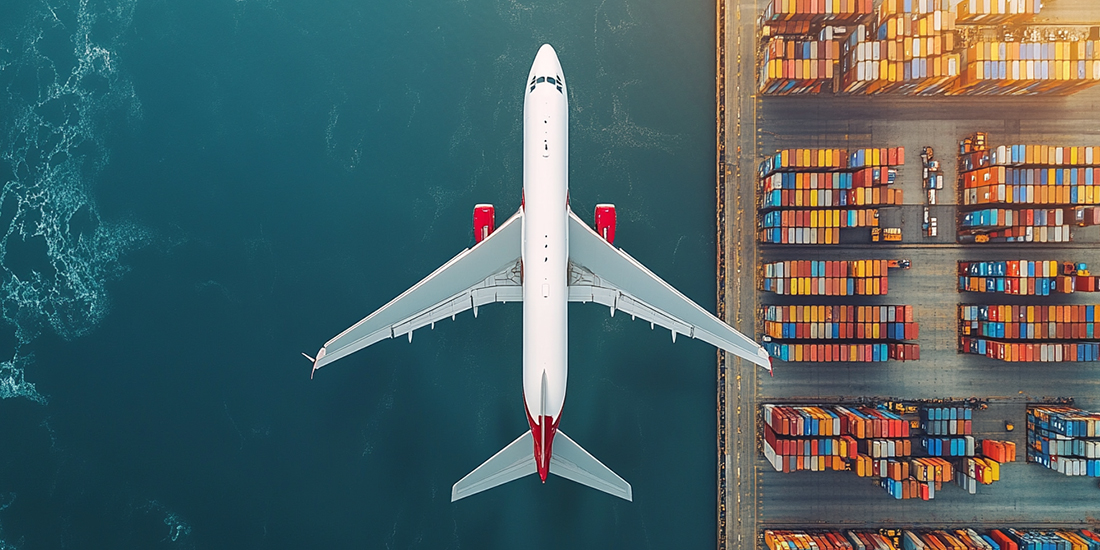 When production stops, every delivery day matters. Delayed components can disrupt schedules and customer commitments. Air freight from China offers a practical solution for urgent commercial shipments. However, choosing the right service requires careful planning. This guide compares standard, priority, and express shipping. You will also learn about flight schedules, customs clearance, and cargo preparation.
-
 Air freight from China offers speed, but costs can vary significantly. Do you know what determines your final shipping bill? This guide explains air freight cost from China, including per-kilogram rates, chargeable weight, surcharges, and destination fees. Learn how to estimate costs and reduce shipping expenses.
