



Air freight from China offers speed, but costs can vary significantly. Do you know what determines your final shipping bill? This guide explains air freight cost from China, including per-kilogram rates, chargeable weight, surcharges, and destination fees. Learn how to estimate costs and reduce shipping expenses.
How Much Does Air Freight from China Cost Per Kilogram?
The air freight cost from China is commonly quoted per kilogram. However, the final rate depends on shipment weight, destination, airline, and service type. Importers should understand the pricing structure before comparing quotations.
What Are the Typical Air Freight Rates from China Per KG?
Air freight rates from China per kg usually follow different weight brackets. Freight forwarders may provide separate quotations for shipments starting at 45 kg, 100 kg, 300 kg, 500 kg, and 1,000 kg.
Larger shipments may receive lower rates per kilogram. Airlines can allocate cargo capacity more efficiently when shipments reach higher weight brackets.
The following table shows a typical quotation structure. Actual rates require verification with carriers and freight forwarders.
Chargeable Weight | Common Pricing Basis | Quotation Considerations |
|---|---|---|
45–99 kg | Per kilogram | Minimum charges may apply |
100–299 kg | Per kilogram | Compare available flight options |
300–499 kg | Per kilogram | Higher weight brackets may offer better rates |
500–999 kg | Per kilogram | Check available cargo capacity |
1,000 kg or more | Bulk cargo quotation | Request customized pricing |
These brackets are common quotation reference points. They do not guarantee specific airline pricing.
Importers should also check whether quotations include fuel surcharges and airport handling. Some providers list these charges separately. Others include selected fees in their quoted rates.
Tip: Request quotations for several weight brackets. A small increase in cargo weight may qualify for a more favorable rate.
How Much Does Air Freight from China to the USA Cost?
The air freight cost from China to the USA depends on departure airports and destination gateways. Cargo weight and delivery requirements also influence the final quotation.
Common Chinese departure locations include:
Shanghai Pudong International Airport
Guangzhou Baiyun International Airport
Shenzhen Bao'an International Airport
Hong Kong International Airport
Beijing Capital International Airport
Major US destinations include Los Angeles, New York, Chicago, and Miami. Each route may have different airline capacity and transportation arrangements.
For example, a shipment from Shenzhen to Los Angeles may use a different flight arrangement from one destined for New York. Connecting flights can also change the overall schedule.
Importers should distinguish two common service arrangements:
Airport-to-airport: Covers transportation between the departure and destination airports.
Door-to-door: May include pickup, export clearance, air freight, import clearance, and local delivery.
The second option includes more logistics services. Therefore, its total quotation is generally broader than an airport-to-airport rate.
How Much Does Air Freight from China to Europe Cost?
Air freight costs from China to Europe vary by destination and airline route. Germany, the UK, France, and the Netherlands are common European shipping destinations.
Major European cargo gateways include Frankfurt, London Heathrow, Paris Charles de Gaulle, and Amsterdam Schiphol.
Several factors influence these quotations:
Departure airport and available flight routes.
Destination airport and local handling fees.
Cargo dimensions and chargeable weight.
Direct flight or connecting flight arrangements.
Import clearance and final delivery requirements.
Destination | Common Airport Gateway | Pricing Considerations |
|---|---|---|
Germany | Frankfurt | Airline capacity and local handling |
United Kingdom | London Heathrow | Customs and delivery arrangements |
France | Paris Charles de Gaulle | Route availability and handling |
Netherlands | Amsterdam Schiphol | Cargo capacity and final delivery |
This table identifies common gateways, not current freight prices. Importers should request destination-specific quotations before budgeting.
How Does Shipment Weight Affect Air Freight Pricing?
Shipment weight directly affects the air freight quotation. However, airlines do not always charge according to actual gross weight.
They generally use chargeable weight. This measurement considers both actual weight and volumetric weight.
Weight brackets also influence pricing. For example, a 100 kg shipment may receive a different rate from a 300 kg shipment.
Minimum charges can also apply to smaller shipments. Importers should check the minimum billable weight before confirming a booking.
A shipment weighing slightly more may qualify for a lower rate bracket. However, its total freight bill may still increase.
What Is the Difference Between Standard Air Freight and Express Shipping?
Standard air freight and express shipping serve different delivery requirements. Both use aircraft, but their service structures differ.
Comparison | Standard Air Freight | Express Shipping |
|---|---|---|
Service provider | Airlines and freight forwarders | International courier companies |
Pricing | Chargeable weight and route | Courier tariff and weight |
Suitable cargo | Commercial shipments and bulk cargo | Parcels and smaller shipments |
Delivery scope | Airport-to-airport or customized delivery | Usually integrated pickup and delivery |
Handling | Depends on the service arrangement | Managed through courier networks |
Cost structure | Often more flexible for larger cargo | Convenient but may cost more per kg |
Standard air freight often suits larger commercial shipments. Express shipping is convenient for samples and small urgent parcels.
Importers should compare the complete delivery scope. A lower airport freight rate may exclude several local services.
Note: Delivery speed depends on route availability, customs clearance, and final delivery arrangements.
How Do Direct Flights and Connecting Flights Affect Air Freight Costs?
Direct flights transport cargo without an intermediate flight transfer. They can reduce handling stages and simplify shipment planning.
Connecting flights use one or more transit airports. They may provide additional routing options when direct capacity is limited.
The main differences include:
Direct flights may offer shorter transportation schedules.
Connecting flights may provide more flexible capacity.
Transit airports introduce additional handling stages.
Flight frequency can influence booking availability.
Seasonal demand may affect both routes and pricing.
A connecting flight may offer a lower quotation. However, it can also involve longer transit times.
Importers should compare both price and schedule. They should also confirm whether the quoted transit time includes airport handling.
What Factors Affect Air Freight Costs from China?
The per-kilogram rate is only one part of air freight pricing. Several operational factors determine the final amount. Understanding them helps importers avoid unexpected expenses.
Chargeable Weight and Volumetric Weight
Actual weight measures how heavy the shipment is. Volumetric weight measures the space it occupies.
Airlines generally compare these two measurements. The higher applicable measurement becomes the chargeable weight.
A common calculation format is:
Volumetric Weight (kg) = Length × Width × Height ÷ Conversion Factor
For measurements in centimeters, a commonly used illustrative conversion factor is 6,000. However, the actual divisor must be confirmed with the carrier or forwarder.
Consider one carton measuring:
Length: 60 cm
Width: 50 cm
Height: 40 cm
Actual gross weight: 15 kg
Using 6,000 as the illustrative divisor:
60 × 50 × 40 ÷ 6,000 = 20 kg
The volumetric weight is 20 kg. Since it exceeds the actual weight, the shipment may be charged using 20 kg.
This calculation demonstrates why large, lightweight packages can cost more than expected.
Tip: Measure every carton before requesting a quotation. Accurate dimensions help prevent unexpected chargeable-weight adjustments.
Fuel Surcharges and Airline Handling Fees
Air freight quotations may include several additional charges. Fuel surcharges are one common component. They reflect changes in aviation fuel expenses and carrier pricing policies.
Other possible charges include:
Security screening fees.
Airport terminal handling charges.
Export documentation fees.
Cargo handling and processing fees.
Special handling charges.
These fees may change according to the carrier and route. Their billing methods also differ between providers.
Importers should request itemized quotations. This makes it easier to identify excluded expenses and compare different offers.
Cargo Characteristics and Special Handling Requirements
Cargo characteristics can affect airline acceptance and transportation costs. Standard commercial goods usually follow regular handling procedures.
However, some shipments require additional preparation.
Examples include:
Oversized or overweight cargo.
Fragile products requiring protective packaging.
Temperature-sensitive goods.
Lithium batteries and battery-powered equipment.
Dangerous goods requiring special declarations.
Special cargo may require additional documentation and airline approval. Some products also need specific packaging and labeling.
The supplied reference material identifies oversized cargo, dangerous goods, batteries, and electronic equipment as categories requiring specialized handling.
Note: Never describe restricted or dangerous goods as general cargo. Confirm airline acceptance before arranging pickup.
What Additional Charges Should Importers Include in Their Air Freight Budget?
A basic air freight quotation may not cover every logistics expense. Importers should calculate the complete transportation cost. This includes origin handling, destination services, customs, and final delivery.
Origin Charges in China
Origin charges cover operations before cargo departs China. Their amount depends on the supplier location and selected service.
Common charges include:
Cost Item | Description |
|---|---|
Factory pickup | Collecting cargo from the supplier |
Warehouse receiving | Checking and recording incoming goods |
Cargo inspection | Verifying package quantities and condition |
Repacking | Adjusting packaging when necessary |
Export documentation | Preparing required shipping documents |
Security screening | Completing airport security checks |
Airport handling | Processing cargo before departure |
Some shipments require temporary warehouse storage. Multiple-supplier orders may also need additional coordination.
These services can improve shipment organization. However, importers should confirm storage periods and service charges beforehand.
Destination Charges and Import Customs Fees
Destination charges apply after cargo reaches the destination airport. They vary according to local regulations and service arrangements.
Potential expenses include:
Destination airport handling.
Customs brokerage and import declaration.
Applicable customs duties and VAT.
Cargo inspection or examination fees.
Storage and warehouse charges.
Local transportation and final delivery.
Import duties and VAT depend on product classification and destination regulations. They should not be confused with basic air freight charges.
Importers should also check who handles import clearance. This helps clarify responsibilities and avoid unexpected expenses.
Door-to-Door Air Freight vs. Airport-to-Airport Costs
These two service arrangements have different responsibilities and pricing structures.
Airport-to-airport transportation covers the main air transportation stage. Door-to-door services coordinate more logistics operations.
Service | Airport-to-Airport | Door-to-Door |
|---|---|---|
Factory pickup | Usually excluded | Can be included |
Origin handling | Depends on quotation | Usually coordinated |
Air transportation | Included | Included |
Export clearance | Confirm separately | Can be included |
Import clearance | Usually excluded | Can be included |
Final delivery | Excluded | Can be included |
Door-to-door services simplify logistics coordination. They can be useful for importers without local transportation resources.
However, importers should confirm whether duties and VAT are included. Delivery addresses and customs responsibilities also affect quotations.
Tip: Compare service scope before comparing prices. A cheaper airport quotation may exclude important transportation expenses.
How Can Importers Reduce Air Freight Costs from China?
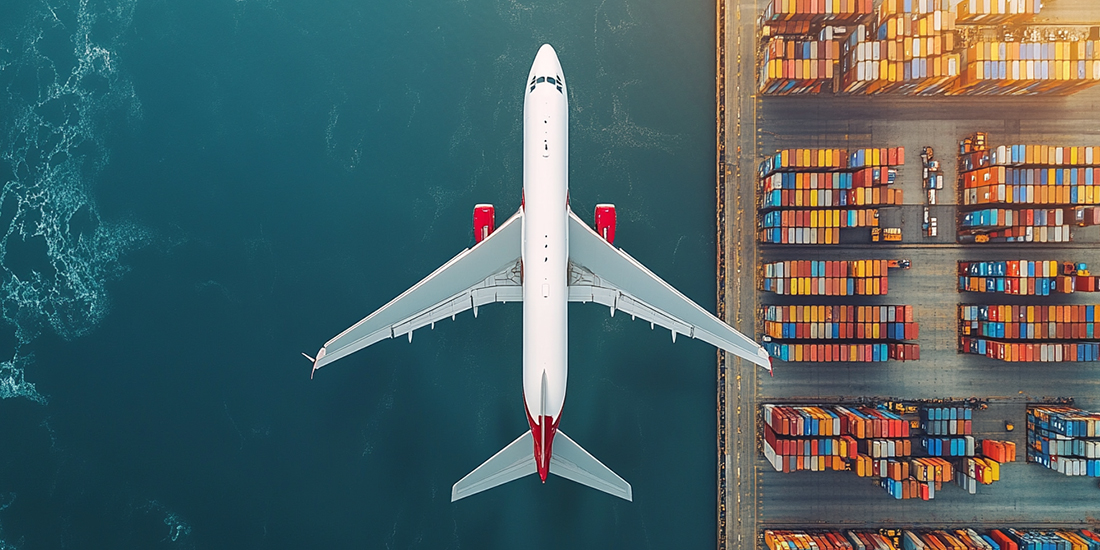
Air freight is generally more expensive than ocean freight. However, businesses can control several cost factors. Better packaging, consolidation, and scheduling can improve transportation efficiency. For shipments that are less time-sensitive, ocean freight can be a cost-effective alternative to air transportation. Importers can explore JIANFU's Maritime Transport Services to compare sea freight solutions for larger cargo volumes.
Consolidate Cargo from Multiple Chinese Suppliers
Multi-supplier consolidation combines different shipments into one transportation arrangement. A warehouse receives goods from several Chinese factories.
The forwarder checks the cargo before preparing the combined shipment. This can reduce repeated pickup and handling arrangements.
For example, an importer purchases products from three suppliers. Each supplier provides several cartons. Sending every shipment separately may create additional transportation expenses.
A consolidation warehouse can:
Receive goods from different suppliers.
Check package quantities and dimensions.
Provide temporary cargo storage.
Coordinate repacking and labeling.
Arrange combined air freight transportation.
The supplied reference pages describe warehouse receiving, multi-supplier consolidation, storage, and repacking services. These arrangements can help coordinate international shipments.
However, consolidation is not always cheaper. Warehouse fees and delivery deadlines must also be considered.
Optimize Packaging and Reduce Volumetric Weight
Oversized packaging increases volumetric weight. This can raise the chargeable weight and final freight cost.
Importers should review packaging before cargo dispatch.
Practical measures include:
Select cartons that match actual product dimensions.
Remove unnecessary packaging materials.
Use suitable protective materials for fragile products.
Avoid excessive empty space inside cartons.
Check whether pallet dimensions affect chargeable weight.
Recalculate volumetric weight after repacking.
For example, reducing carton height may lower volumetric weight. However, packaging must still protect the products during transportation.
Repacking should balance cargo protection and space efficiency. Excessive packaging reduction may increase damage risks.
Tip: Ask your supplier or warehouse to provide carton dimensions before and after repacking. Compare the chargeable weight to estimate potential savings.
Compare Airlines, Routes, and Shipping Schedules
Different airlines offer different routes and cargo capacity. Their quotations may also change according to shipment dates.
Importers should request several transportation options.
Consider these factors:
Airline capacity and departure frequency.
Direct and connecting flight arrangements.
Available departure dates.
Destination airport handling capabilities.
Expected transit time.
Additional handling and security fees.
Flexible departure dates may provide more booking options. Connecting flights may also offer competitive rates.
However, lower prices should not be the only selection factor. Importers must consider delivery deadlines and cargo requirements.
How Do You Calculate an Air Freight Shipping Budget?
A complete budget should include chargeable weight and additional logistics expenses. Importers should prepare accurate shipment information before requesting quotations.
Calculate Chargeable Weight Before Requesting a Quote
Start by collecting the gross weight and dimensions of every carton.
Then calculate volumetric weight using the applicable carrier conversion factor.
The basic formula is:
Chargeable Weight = Higher of Actual Weight or Volumetric Weight
For multiple cartons, calculate the total shipment measurements according to the forwarder's billing rules.
For example:
Measurement | Example |
|---|---|
Number of cartons | 10 |
Actual gross weight | 150 kg |
Total volumetric weight | 180 kg |
Chargeable weight | 180 kg |
Illustrative example. The applicable conversion factor and rounding rules require carrier verification.
In this example, volumetric weight exceeds actual weight. Therefore, 180 kg becomes the estimated chargeable weight.
Build a Complete Air Freight Cost Breakdown
Importers can use the following structure to estimate their total shipping budget.
Cost Component | Calculation Basis |
|---|---|
Main air freight | Rate × chargeable weight |
Fuel surcharge | Carrier tariff or applicable rate |
Security fees | Shipment or chargeable weight |
Origin handling | Warehouse and airport charges |
Export clearance | Documentation and customs services |
Destination handling | Local airport charges |
Import clearance | Brokerage and declaration fees |
Duties and VAT | Applicable customs assessment |
Final delivery | Destination and transportation requirements |
Estimated Total Cost = Main Freight + Surcharges + Origin Charges + Destination Charges + Customs + Delivery
Not every quotation uses the same billing structure. Some providers combine several services into one amount.
What Information Do Freight Forwarders Need for Accurate Quotes?
Accurate shipment details help forwarders provide suitable quotations. Importers should prepare the following information:
Required Information | Details |
|---|---|
Product name | Exact product description |
Carton quantity | Total packages or pallets |
Gross weight | Actual shipment weight |
Dimensions | Length, width, and height |
Origin | Supplier or pickup location |
Destination | Airport, city, and postcode |
Shipping method | Standard air freight or express |
Trade terms | EXW, FOB, or other applicable terms |
Delivery deadline | Expected arrival date |
Cargo characteristics | Batteries, liquids, or special goods |
The supplied service references also identify product names, carton quantities, weight, dimensions, trade terms, destinations, and delivery dates as quotation requirements.
Tip: Send complete shipment information in one request. This reduces repeated communication and improves quotation accuracy.
How to Choose a Reliable China Air Freight Forwarder?
A reliable freight forwarder helps importers coordinate transportation and control logistics expenses. Businesses should evaluate operational resources and service transparency.
Evaluate Airline Resources and Global Route Coverage
Check whether the forwarder can arrange different airline routes. It should understand the requirements of major international destinations.
Important considerations include:
Airline partnerships and available cargo capacity.
Departure airport coverage in China.
Direct and connecting flight options.
Overseas agent networks.
Destination customs and delivery arrangements.
The supplied reference pages describe cooperation with multiple airlines and routes. They also identify all-cargo aircraft, passenger aircraft belly holds, and charter flights as available transportation modes.
Different aircraft arrangements suit different cargo requirements. Importers should confirm the available option for each shipment.
Check Warehousing, Repacking, and Cargo Consolidation Capabilities
Warehousing can support businesses purchasing from multiple Chinese suppliers.
Evaluate whether the forwarder can provide:
Cargo receiving and inspection.
Temporary warehouse storage.
Multi-supplier consolidation.
Repacking and labeling.
Special cargo preparation.
Export documentation support.
These capabilities can simplify shipment coordination. They may also help importers optimize packaging and transportation arrangements.
Compare Quotation Transparency and Delivery Services
A professional quotation should explain the included services. It should also identify possible additional expenses.
Before booking, confirm:
Chargeable weight and conversion rules.
Main freight and fuel surcharges.
Origin and destination charges.
Customs clearance responsibilities.
Insurance and special handling fees.
Estimated transit time and delivery scope.
Shipment tracking and customer support.
Do not select a forwarder based only on the lowest quoted rate. Compare the complete service package and operational capabilities.
Conclusion
Air freight costs from China depend on chargeable weight, routes, and additional fees. Comparing complete quotations helps importers control shipping expenses. Shenzhen Jianfu International Freight Forwarding Co., Ltd. provides air freight, cargo consolidation, warehousing, and customs support. Its integrated logistics services help businesses simplify shipments and manage transportation costs efficiently.
FAQ
Q: How much does air freight from China cost per kg?
A: Rates vary by destination, weight bracket, airline, and service.
Q: What affects air freight cost from China?
A: Chargeable weight, fuel surcharges, handling fees, and customs charges.
Q: How is air freight cost from China calculated?
A: Airlines generally charge the higher of actual or volumetric weight.
Q: Is express shipping more expensive than standard air freight?
A: Express shipping often costs more but offers integrated delivery.
Q: How can importers reduce air freight costs from China?
A: Consolidate supplier orders, optimize packaging, and compare airline routes.
Related Blogs
-
 Door to door shipping from China simplifies international logistics. But how can you ensure smooth delivery from factory to destination? Choosing the right shipping method, preparing documents, and understanding customs responsibilities are essential. This guide explains each shipping step, compares sea, air, and express services, and clarifies DDP and DAP terms. Learn how to arrange reliable deliveries and avoid unexpected costs.
-
 When production stops, every delivery day matters. Delayed components can disrupt schedules and customer commitments. Air freight from China offers a practical solution for urgent commercial shipments. However, choosing the right service requires careful planning. This guide compares standard, priority, and express shipping. You will also learn about flight schedules, customs clearance, and cargo preparation.
-
 Air freight from China offers speed, but costs can vary significantly. Do you know what determines your final shipping bill? This guide explains air freight cost from China, including per-kilogram rates, chargeable weight, surcharges, and destination fees. Learn how to estimate costs and reduce shipping expenses.
