



In today's hyper-connected global market, a delayed shipment is more than a logistical hiccup. It translates directly into lost revenue and damaged brand reputation. This reality hits particularly hard when dealing with high-value goods like consumer electronics originating from Southern China's tech capital. Shippers constantly grapple with fluctuating fourth-quarter airfreight rates. They face sudden geopolitical market disruptions and complex regulatory frameworks that can easily stall urgent cargo on the tarmac.
Partnering with a dedicated logistics expert solves these critical bottlenecks. By stepping beyond basic booking services, a specialized forwarding team ensures your goods bypass congestion and reach international gateways swiftly. Throughout this comprehensive guide, we will explore how optimizing your supply chain guarantees peak-season capacity and delivers seamless door-to-door execution.
Key Takeaways
To maintain a competitive edge in international trade, supply chain managers must master the core components of expedited shipping from Southern China. The following factors are critical for operational success.
- Speed and Coordination: Time-critical shipments demand proactive oversight to meet strict deadlines and prevent costly inventory stockouts.
- Tech-Focused Logistics: Specialized handling protocols guarantee safe, compliant, and rapid transit for high-value tech merchandise. This is especially true for items powered by lithium batteries.
- Customs Mastery: Expert management of documentation prevents disastrous clearance delays at both origin airports and final destination terminals.
- Strategic Partnerships: A reliable logistics partner shields your supply chain against market volatility, severe capacity shortages, and erratic seasonal pricing.
Why Shenzhen is the Ultimate Origin for Global Air Cargo
Often branded as the Silicon Valley of Hardware, Shenzhen has firmly cemented its status as an unparalleled global manufacturing powerhouse. The region churns out a massive percentage of the world's telecommunications equipment, smart devices, and advanced automotive components. For international buyers, moving these components from a bustling factory floor to overseas retail shelves at breakneck speed is a foundational business requirement.
Current Industry Trends and Capacity Shifts
The current landscape of Shenzhen air cargo is shifting rapidly. With the explosive growth of cross-border e-commerce platforms and continuous demand for advanced telecommunications gear, capacity at Shenzhen Bao'an International Airport faces unprecedented pressure. Recent industry data indicates a steady double-digit growth in export volumes for lithium-battery-powered devices. This surge means traditional commercial airline belly cargo is no longer sufficient. Shippers are increasingly relying on dedicated freighters and chartered flights to bypass commercial bottlenecks. Consequently, securing guaranteed space requires much earlier forecasting and deeper carrier relationships than in previous years.
Infrastructure and Airport Capabilities
The logistical framework in Southern China is meticulously engineered to support high-volume, rapid-turnaround exports. Serving as a vital node in this network, the local international airport boasts state-of-the-art cargo terminals. These facilities feature dedicated temperature-controlled zones and specialized handling areas designed explicitly for dangerous goods.
Furthermore, the region maintains dense, direct flight networks connecting to major European hubs such as Frankfurt and Amsterdam, alongside North American gateways like Chicago O'Hare. This expansive infrastructure allows proficient logistics providers to secure rapid routing options. As a result, ground dwell time before an aircraft takes off is drastically minimized.
The Need for Speed in Modern Supply Chains
Modern retail operates on aggressively lean inventory models. Buyers sourcing from Chinese manufacturers cannot rely solely on ocean freight, which routinely demands transit times stretching up to 45 days. Because consumer electronics suffer from remarkably short product life cycles, time-to-market becomes the ultimate metric of success.
Expedited air cargo solutions are absolutely essential to sustain inventory flow. They absorb sudden spikes in consumer demand and fulfill rigid business-to-business contracts. While flying freight commands a premium price tag, companies realize a massive return on investment through faster capital turnover and the complete avoidance of crippling stockout penalties.
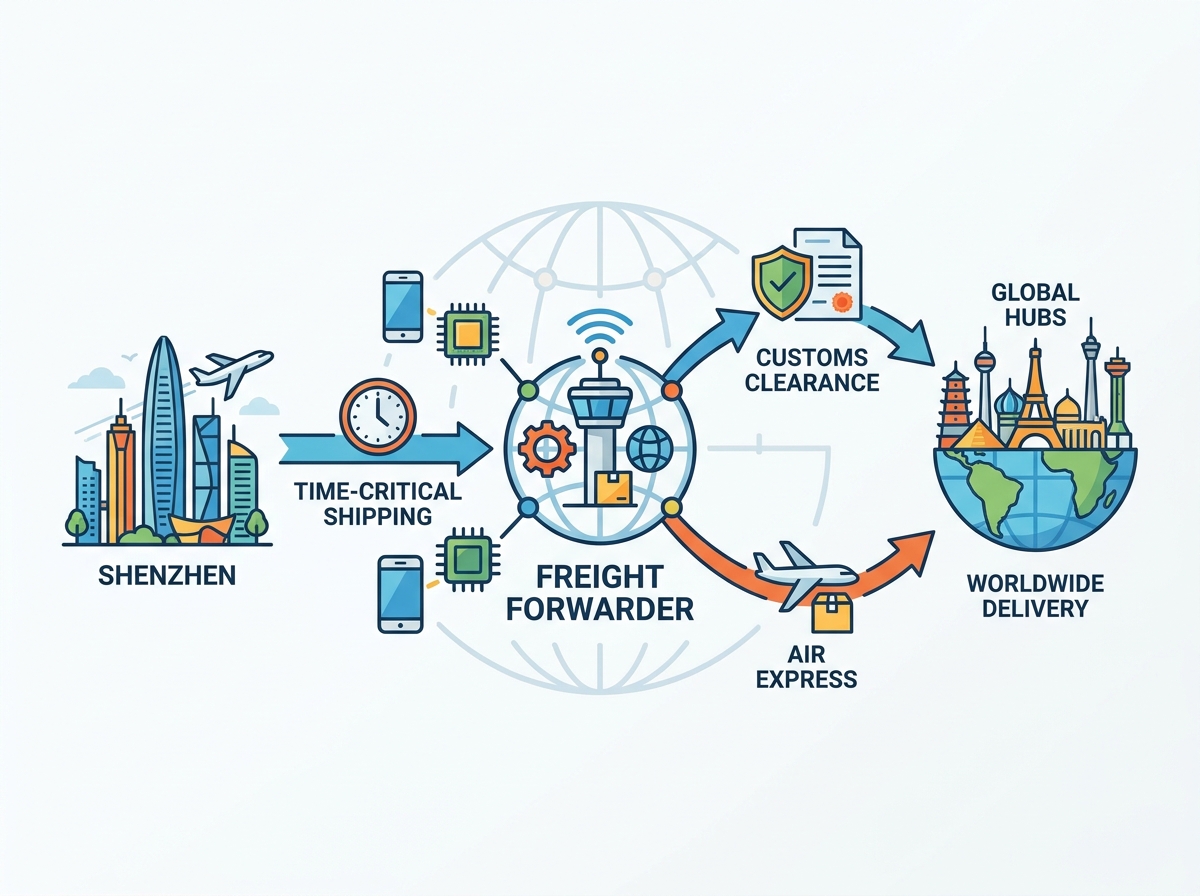
The Crucial Role of a Freight Forwarder in Time-Critical Shipping
Executing an urgent cross-border shipment involves much more than simply reserving space in an aircraft's belly. A high-level logistics partner acts as the master architect of your supply chain. They transform highly complex variables into a frictionless, predictable process. This includes carrier negotiations, regulatory compliance, and localized ground operations.
Securing Peak-Season Capacity
The fourth quarter introduces severe stress tests for global shippers. Driven by holiday retail surges and aggressive new product launches, airline capacity evaporates. Spot market rates become dangerously volatile. During these chaotic peak seasons, an established forwarder leverages deep-rooted relationships with premier airlines.
By utilizing Block Space Agreements and securing pre-allocated capacity contracts, a capable partner guarantees your cargo space even when the broader market faces total gridlock. This proactive management prevents critical pallets from being bumped to later flights. It locks in predictable transit times when every hour counts.
Routing Strategy Comparison
To better understand how a forwarder optimizes your budget and timeline, consider the following routing strategies commonly deployed for outbound China freight.
| Service Type | Average Transit Time | Cost Level | Best Suited For |
|---|---|---|---|
| Direct Express Flight | 1 to 3 Days | Premium | High-value electronics, strict launch deadlines, emergency restocking. |
| Standard Transshipment | 3 to 6 Days | Moderate | Regular inventory replenishment, balancing speed with budget constraints. |
| Air-Road Multimodal | 7 to 10 Days | Economical | Heavy machinery components, bypassing congested primary airport hubs. |
Door-to-Door One-Stop Services
Urgent shipments demand uncompromising end-to-end oversight. Fragmented logistics create dangerous communication gaps. When a shipper pieces together different vendors for trucking, warehousing, and air transport, they multiply the risk of delays. Conversely, a comprehensive forwarder delivers seamless door-to-door execution.
This holistic approach covers dispatching trucks for rapid factory pickups and consolidating boxes in highly secure warehouses. It includes processing export paperwork, managing the main-leg flight, and orchestrating final-mile delivery at the destination. Centralizing these moving parts under a single umbrella ensures total accountability. It grants supply chain managers real-time visibility from the loading dock to the final warehouse.
Air Express Logistics for Electronics: Speeding Up Tech Supply Chains
Because electronic devices form the absolute backbone of Southern China's export economy, logistics providers must possess highly specialized knowledge to transport them legally. Utilizing proper air express logistics for electronics is not merely about raw speed. It is fundamentally about strict regulatory compliance and sophisticated risk mitigation.
Handling Lithium Batteries and Sensitive Tech
The foremost hurdle in flying electronics is the pervasive presence of lithium batteries. The International Air Transport Association enforces rigid, unforgiving regulations regarding dangerous goods transport. Lithium-ion batteries governed under UN3480 for standalone units and UN3481 for batteries contained in equipment require meticulous, error-free handling.
An experienced logistics team ensures every pallet meets these stringent global standards. On the warehouse floor, trained staff verify Material Safety Data Sheets. They cross-check UN38.3 testing reports and confirm that all outer packaging strictly adheres to packing instructions. Proper labeling, including mandatory battery marks and Cargo Aircraft Only stickers, is executed flawlessly. This precision prevents airline inspectors from rejecting the freight.
Security and Tracking
High-value tech cargo is inherently vulnerable to theft and transit damage. Consequently, urgent air freight solutions integrate aggressive security protocols. Forwarders deploy tamper-evident tape and utilize secure transit facilities monitored by continuous surveillance. They conduct precise weight checks at multiple transit milestones to immediately detect anomalies. Advanced tracking portals allow procurement teams to digitally monitor their expensive inventory as it moves from the origin facility directly to the destination tarmac.
Navigating Time-Sensitive Air Cargo Customs Clearance
Bureaucratic red tape represents the most frequent bottleneck in international trade. Even if a charter flight touches down hours ahead of schedule, a single missing document can leave cargo languishing in a terminal for days. This racks up exorbitant storage fees. Executing flawless time-sensitive air cargo customs clearance requires exactitude, proactive planning, and a deep understanding of destination-specific import laws.
Pre-Clearance Strategies
To eliminate the risk of border delays, proactive operators employ aggressive pre-clearance strategies. This means the grueling paperwork process is initiated long before the freight is actually loaded onto the aircraft.
Critical documents such as commercial invoices detailing Harmonized System codes, itemized packing lists, Air Waybills, and necessary battery reports are digitized. They are transmitted to destination brokers while the plane is still cruising at high altitude. By allowing customs authorities to review and assess duties in advance, the goods are instantly released for final-mile trucking the moment they are unloaded from the aircraft belly.
Compliance in Global Hubs
Import regulations differ wildly between international borders. Pushing goods through German customs requires entirely different procedural knowledge than clearing federal agencies in the United States. Expert forwarders rely on entrenched partnerships with licensed, local customs brokers positioned directly at these destination airports. These local specialists expertly navigate complex tax deferment programs and specific agency holds. They ensure that urgent freight bypasses compliance roadblocks.
Global Freight Forwarding Coordination: Connecting Shenzhen to Major Markets
Moving time-critical inventory from factory floors to international destinations requires more than simply checking flight schedules. It demands highly strategic global freight forwarding coordination. Supply chain directors must constantly balance transit speeds against cost efficiency and the operational reliability of various transit hubs. A professional logistics architect analyzes real-time data to map out the most resilient routing for high-stakes shipments.
Direct Flights vs. Transshipment Hubs
When orchestrating outbound freight, shippers generally evaluate two primary pathways. Direct connections to mega-hubs deliver the absolute fastest transit times, typically landing within one to three days. However, these express routes command premium spot rates. They are notoriously susceptible to capacity blackouts during the holiday rush.
Alternatively, threading cargo through major Middle Eastern or Asian transshipment hubs can yield substantial cost savings. While this method naturally extends the journey to three to five days, a skilled coordinator leverages these secondary networks. This secures consistent, reliable capacity when direct flights are completely sold out.
Adapting to European Hub Shifts
Recent industry analyses of European air cargo reveal a distinct, growing pivot toward secondary transit hubs. Because traditional mega-airports face chronic labor shortages, severe tarmac congestion, and increasingly strict night-flight curfews, agile logistics operators are adapting their strategies.
By intentionally redirecting tech shipments through cargo-focused gateways in Belgium or Hungary, forwarders bypass massive ground handling bottlenecks. Once landed at these secondary airports, the cargo is immediately loaded onto expedited cross-border trucks. It often reaches final European destinations much faster than if it had waited for processing at a congested primary hub.
Overcoming Market Disruptions: Why an Agile Shenzhen International Freight Forwarder Matters
The aviation freight market is inherently turbulent. Shippers routinely confront sudden rate spikes, unpredictable geopolitical airspace closures, and abrupt capacity reductions. Navigating this chaotic environment requires the specialized expertise of an agile Shenzhen international freight forwarder capable of pivoting operational strategies at a moment's notice to prevent supply chain paralysis.
Multimodal Alternatives
When airspace restrictions strike or direct airfreight rates climb to unsustainable heights, relying solely on traditional aviation becomes a severe financial liability. Agile partners mitigate this danger by engineering creative multimodal transport solutions. One highly effective contingency is the hybrid air-road model.
For instance, during extreme capacity crunches into Western Europe, a forwarder might fly the cargo from China to a central transit point in Central Asia. From there, the pallets are swiftly transferred onto bonded, high-security trucking networks for the final overland leg. While marginally slower than a direct flight, this multimodal approach offers a highly reliable, cost-controlled alternative. It keeps production lines running when standard air routes fail.
Transparent Pricing in a Volatile Market
During the intense peak season, spot market rates can swing wildly from one day to the next. This extreme volatility makes budget forecasting a nightmare for procurement teams. A dependable logistics partner provides much-needed stability through transparent pricing structures and pre-negotiated space agreements.
By committing to pre-purchased cargo space, a forwarder shields their clients from the most aggressive market spikes. When reviewing logistics quotes, shippers should expect rigorously itemized breakdowns. These must clearly define origin handling fees, base air freight, fuel surcharges, security scans, and final-mile delivery costs. This level of transparency ensures no hidden fees erode profit margins.
How to Choose the Best Freight Forwarder for Your Shenzhen Shipments
Selecting the right logistics partner is a strategic business decision that directly impacts customer satisfaction and bottom-line revenue. The optimal provider should function seamlessly as an extension of your internal supply chain team. They must bring specialized technical knowledge and a resilient operational network to the table. Stop looking at generic brochures and start evaluating their actual engineering capabilities.
Industry-Specific Expertise and Parameter Matching
Not all cargo requires the same level of care. The operational protocols for exporting fast fashion differ vastly from those required for high-tech manufacturing. When sourcing heavily from Southern China's technology sector, it is imperative to prioritize forwarders with an undisputed track record in handling sensitive electronics.
Your chosen provider must possess deep technical fluency. Can they handle pallets up to 1000kg for heavy tech infrastructure? Do they offer guaranteed 24-hour origin processing? A failure to comply with nuanced dangerous goods regulations inevitably results in grounded cargo and severe financial penalties. Look for partners who offer comprehensive Delivered Duty Paid and Delivered Duty Unpaid options, tailored specifically for Amazon FBA or direct business-to-business fulfillment.
Global Network and Local Presence
A successful urgent shipment demands flawless execution at both the origin loading dock and the destination warehouse. Therefore, a top-tier partner must maintain a formidable local presence in Southern China. This encompasses operating local consolidation warehouses, maintaining direct communication channels with airport authorities, and deploying local staff who deeply understand Chinese export protocols.
Equally critical is their destination network. The forwarder must utilize established, heavily vetted agents at major global hubs. These destination partners bear the responsibility of executing rapid customs brokerage, recovering the pallets from the airline terminal, and orchestrating the final-mile trucking delivery. Without this tightly woven origin-to-destination network, even the fastest flight will ultimately result in a delayed delivery.
Shipping high-stakes cargo from China's manufacturing capital requires meticulous, strategic planning. Your supply chain demands absolute speed, uncompromising regulatory compliance, and the ability to adapt to sudden market shifts. A specialized logistics expert eliminates the friction from this process. They transform incredibly complex international freight movements into a distinct competitive advantage. Don't let unpredictable peak seasons or customs bottlenecks dictate your revenue. Explore the comprehensive freight forwarding and customs clearance solutions at JF SZ Logistics today. Ensure your urgent goods arrive safely, compliantly, and exactly on schedule.
FAQ
What is the average transit time for time-critical air cargo from Shenzhen to European hubs?
Transit times depend entirely on the specific routing strategy deployed. Direct express flights to major European hubs typically take one to three days from airport to airport. Conversely, standard air freight, which frequently utilizes transshipment hubs in the Middle East, usually requires three to five days. A dedicated logistics expert will analyze your strict deadline and financial budget to recommend the most appropriate routing option to expedite your shipment.
Can a freight forwarder handle air express logistics for electronics with lithium batteries?
Yes, specialized forwarders are fully equipped and certified to manage electronic shipments containing lithium batteries. Because airlines classify these goods as dangerous goods, the forwarder will rigorously review your Material Safety Data Sheets and testing reports to guarantee compliance. They also manage the strict packaging, labeling, and documentation requirements necessary to prevent airline rejections and ensure the safe transit of sensitive technology.
How does time-sensitive air cargo customs clearance work?
Rapid clearance relies heavily on proactive, digital preparation. A forwarder submits all necessary commercial documents, such as commercial invoices and detailed packing lists, to the destination customs broker electronically before the flight even departs from China. This pre-clearance strategy allows customs authorities to process and approve the shipment while the aircraft is still in transit. It ensures the cargo is released for final delivery immediately upon landing.
Why should I use a Shenzhen international freight forwarder instead of a global courier like DHL or FedEx?
While global couriers are highly efficient for small parcels, a dedicated forwarder offers significant strategic advantages for heavier commercial shipments, typically those exceeding 100 kilograms. Forwarders provide highly flexible routing options, aggressive pricing structures for bulk cargo, and customized supply chain coordination. Furthermore, they offer personalized customer service and dedicated account managers. This proves invaluable when resolving complex clearance issues that automated courier networks often struggle to handle.
How do freight forwarders secure space during peak seasons?
Top-tier logistics providers secure peak-season capacity primarily through Block Space Agreements with major commercial airlines and cargo carriers. This is a binding contract where the forwarder pre-purchases a specific volume of cargo space on designated flight routes well in advance. This strategic move guarantees that their clients will have unfettered access to cargo space even during the highly volatile fourth-quarter peak season, when general market capacity is extremely tight or completely unavailable.
How do fluctuating fuel surcharges affect air freight costs from Shenzhen?
Fuel surcharges are dynamic fees applied by airlines to offset the volatile cost of aviation fuel. They are typically calculated per kilogram and adjust frequently based on global oil market indexes. A specialized forwarder monitors these index shifts closely. They provide transparent quotes that separate the base freight rate from the fuel surcharge, allowing supply chain managers to accurately forecast landed costs without unexpected invoice shocks.
What is the cutoff time for same-day air cargo dispatch from Shenzhen?
Cutoff times vary depending on the airline and the specific flight schedule. However, for time-critical express services out of major Southern China airports, cargo and compliant documentation generally need to be handed over to the terminal at least six to eight hours before departure. Working with a forwarder who operates local consolidation warehouses ensures rapid pre-flight processing, maximizing the chances of catching same-day outbound flights.
Related Blogs
-
 Door to door shipping from China simplifies international logistics. But how can you ensure smooth delivery from factory to destination? Choosing the right shipping method, preparing documents, and understanding customs responsibilities are essential. This guide explains each shipping step, compares sea, air, and express services, and clarifies DDP and DAP terms. Learn how to arrange reliable deliveries and avoid unexpected costs.
-
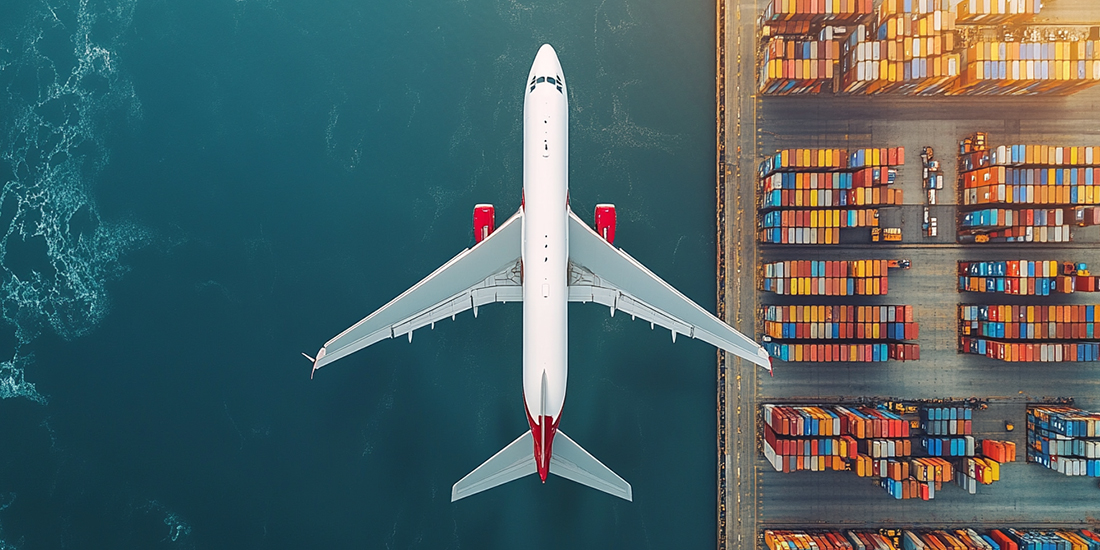 When production stops, every delivery day matters. Delayed components can disrupt schedules and customer commitments. Air freight from China offers a practical solution for urgent commercial shipments. However, choosing the right service requires careful planning. This guide compares standard, priority, and express shipping. You will also learn about flight schedules, customs clearance, and cargo preparation.
-
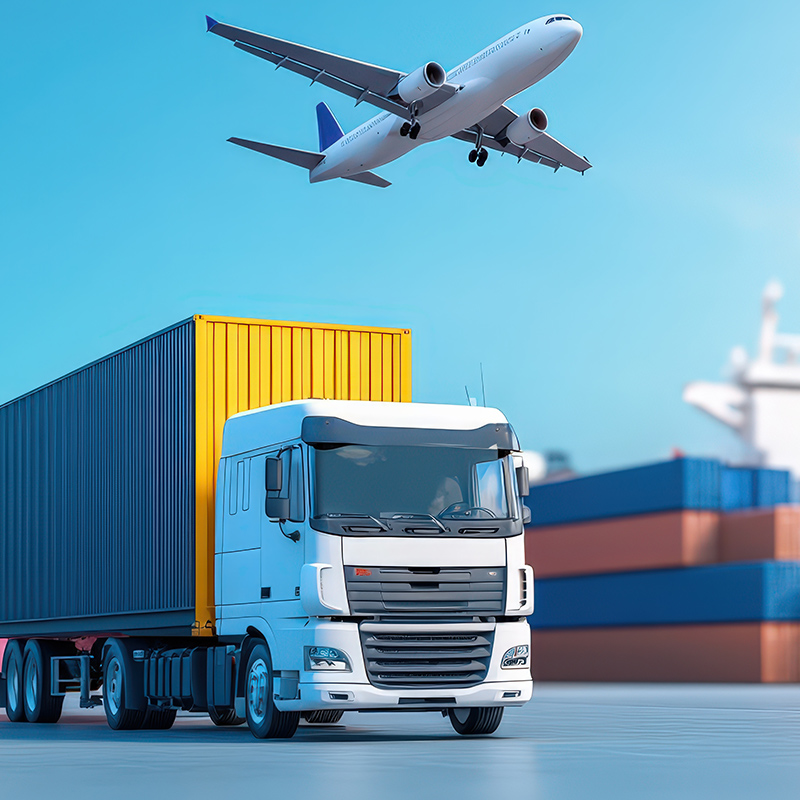 Air freight from China offers speed, but costs can vary significantly. Do you know what determines your final shipping bill? This guide explains air freight cost from China, including per-kilogram rates, chargeable weight, surcharges, and destination fees. Learn how to estimate costs and reduce shipping expenses.
