



Introduction
Fragmented supply chains act as a primary catalyst for severe delays, hidden overheads, and logistical nightmares in today’s hyper-connected global market. The Greater Bay Area is a massive economic corridor connecting Hong Kong, Macao, and nine mega-cities in Guangdong province. This region has rapidly evolved into an unparalleled powerhouse for global trade. Navigating its diverse legal systems and complex infrastructure demands far more than a basic shipping vendor.
Relying on disjointed, multi-vendor networks inevitably eats into your profit margins. Transitioning away from these isolated silos toward a fully integrated logistics partner fundamentally transforms your bottom line. This comprehensive guide explores the mechanics of unified logistics. We unpack the specific advantages of regional integration. Furthermore, we demonstrate exactly why a consolidated approach serves as the ultimate strategy to future-proof your global supply chain.
Key Takeaways
- Unified Supply Chains: Consolidating operations under a single logistics provider eliminates severe communication gaps, compresses transit times, and structurally lowers overall operational costs.
- Regional Connectivity: Strategic placement of inventory leverages advanced infrastructure. This allows businesses to tap into a seamless one-hour living and logistics circle across eleven major cities.
- Cost Efficiency: Utilizing specialized storage solutions defers taxation and optimizes inventory management. This optimization is particularly critical for high-volume cross-border e-commerce and manufacturing sectors.
- Frictionless Compliance: Expert management of cross-border documentation ensures rapid border clearances. This effectively avoids costly delays, demurrage fees, and regulatory penalties.
- Data-Driven Visibility: Integrated logistics solutions provide end-to-end tracking capabilities. Procurement managers gain complete, real-time command over their global inventory movements.
The Rise of the Greater Bay Area as a Global Logistics Hub
The Greater Bay Area has systematically developed into one of the most formidable economic engines in the world. The region features a massive concentration of global manufacturing, technological innovation, and consumer demand. Its economic output rivals that of entire developed nations. It stands uniquely positioned as both the factory of the world and a premier financial center.
Recent supply chain market analyses highlight a definitive industry shift. Supply chain resilience now overtakes mere cost-cutting as the primary objective for global manufacturers. Market trends indicate that leading enterprises are aggressively abandoning multi-vendor silos. They demand end-to-end integration. This strategic pivot is driven by the urgent need to mitigate geopolitical risks, navigate fluctuating tariffs, and respond to the explosive growth of cross-border e-commerce. Industry data shows a sharp rise in demand for digitalized logistics platforms across the region. Organizations that consolidate their logistics networks capture significant market share. In contrast, those clinging to fragmented models bleed margins through constant operational friction.
Unprecedented infrastructure synergy supports this economic density. Massive engineering triumphs like the Hong Kong-Zhuhai-Macao Bridge and the expansion of deep-water ports in Shenzhen physically link these cities. They create a highly efficient one-hour logistics circle. Cargo that previously took days to move between manufacturing floors in Dongguan and export terminals in Hong Kong transports in a matter of hours today.
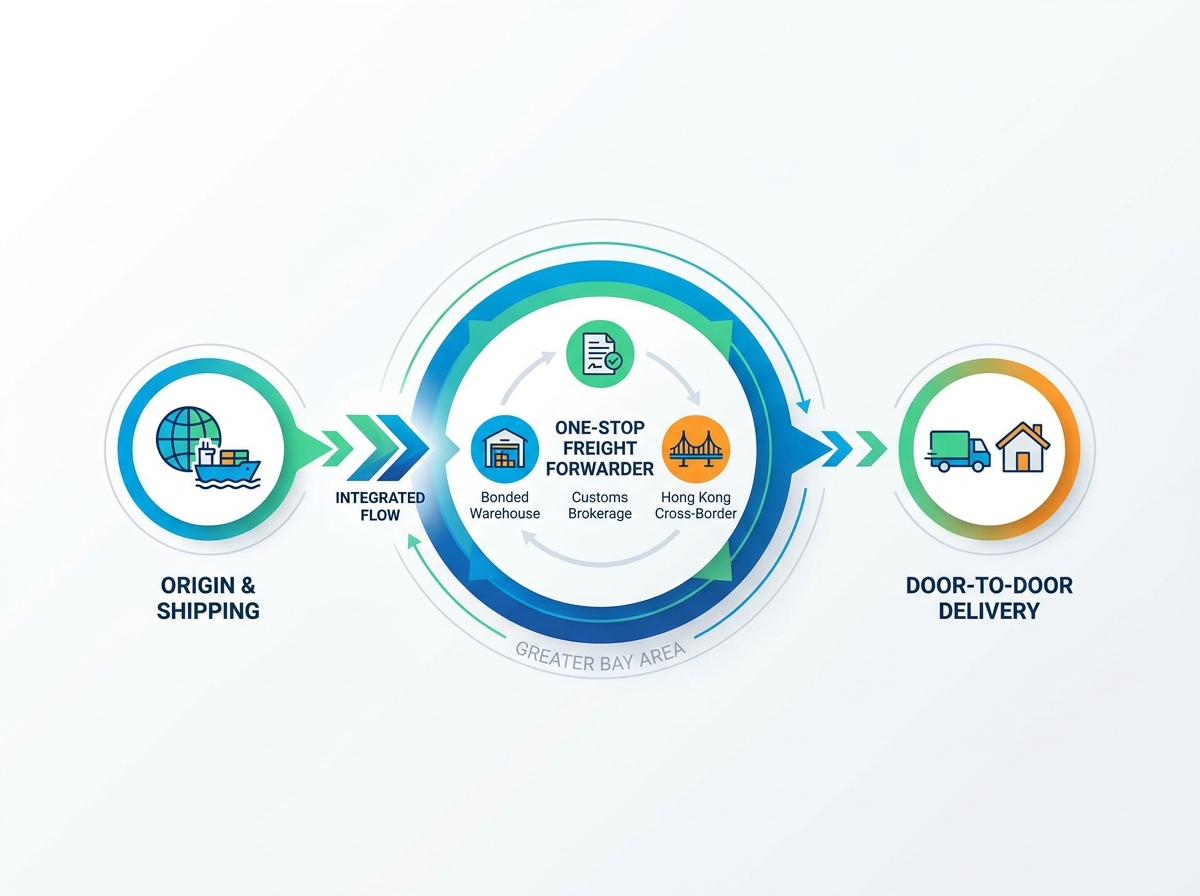
What is One-Stop International Freight Forwarding?
Consider the traditional logistics model to truly grasp the value of integration. Historically, a company manufacturing high-value electronics in Shenzhen and distributing them to fulfillment centers in Frankfurt hires multiple entities. They need a local drayage operator, a separate export customs agent, an ocean or air carrier, an import broker at the destination, and a final-mile delivery service. Every single handover between these micro-vendors represents a critical point of failure. A simple miscommunication regarding cargo dimensions or a delayed document transfer frequently leads to missed sailings and inflated demurrage charges.
Transitioning to one-stop international freight forwarding systematically eliminates these structural inefficiencies. A single entity assumes absolute responsibility for the entire lifecycle of the shipment within this unified framework. The process is orchestrated through a centralized operational hub from the moment the goods leave the assembly line to the instant they arrive at the final distribution center.
Specifically, the modern forwarder acts as a strategic supply chain architect. They utilize integrated Transport Management Systems and Warehouse Management Systems to synchronize trucking schedules with vessel departures. This architectural approach ensures that documentation processes concurrently with physical cargo movement. It compresses the overall transit timeline and drastically reduces administrative overhead.
The Strategic Advantage of Hong Kong Cross-Border Warehousing and Distribution
Hong Kong occupies a highly advantageous position within the global supply chain matrix. It operates as a free port. It imposes no tariffs on standard imported goods and does not levy value-added taxes. Furthermore, its geographical proximity to the mainland Chinese manufacturing base makes it an indispensable gateway for inbound and outbound global trade.
Implementing Hong Kong cross-border warehousing and distribution allows businesses to stage their inventory with tactical precision. Manufacturers in Guangdong move finished goods across the border into Hong Kong facilities without triggering immediate export tax complications. Once staged, these goods are consolidated, sorted, and shipped globally via Hong Kong International Airport or its extensive seaport network.
This configuration proves equally formidable for inbound logistics and business-to-consumer e-commerce. Imagine an international cosmetics brand holding bulk inventory in Hong Kong. A consumer in mainland China clicks the purchase button. The specific item is picked, packed, and dispatched across the border via specialized postal channels within hours. This methodology enables rapid fulfillment, often achieving next-day delivery across the region. It strictly adheres to regional trade regulations while bypassing the need to establish heavily regulated corporate entities inside mainland China just to hold inventory.
Streamlining Operations with Integrated Bonded Warehouse and Freight Services
Inventory holding costs and cash flow management remain critical metrics for any supply chain decision-maker. A bonded warehouse functions as a secured, customs-supervised facility. Imported goods are stored or manipulated here without the immediate payment of duties and taxes. This financial obligation is only triggered when the goods officially release into the domestic commercial market.
Organizations significantly optimize their working capital by leveraging integrated bonded warehouse and freight services. A company moves a container of high-value components directly into a bonded zone instead of paying hefty tariffs the moment it hits the port. Taxes defer for months, or they are avoided entirely if the goods are re-exported. This flexibility serves as a cornerstone of modern, lean inventory management.
In addition, integrating these storage facilities directly with freight operations unlocks substantial value-added capabilities. Providers execute kitting, assembly, relabeling, and rigorous quality control inspections within these specialized zones. The transition from storage shelf to transit truck is frictionless because the freight operator and the warehouse manager are the same entity. This mitigates cargo damage risks and eliminates redundant transportation costs.
Overcoming Red Tape: Door-to-Door Customs Brokerage and Logistics
Navigating the Greater Bay Area means interacting with distinct, highly regulated customs jurisdictions. Moving goods from Shenzhen to Hong Kong is not a simple domestic transfer. It acts as a formal cross-border transaction requiring precise documentation. A minor discrepancy between a commercial invoice and a packing list detains cargo at the border, triggering severe manufacturing delays.
This compliance hurdle highlights the absolute necessity of expert door-to-door customs brokerage and logistics. The risk of paperwork mismatches plummets when customs clearance is managed by the same provider handling the physical freight. Documentation is audited and pre-cleared electronically while the cargo remains in transit. Regulatory approvals are already secured by the time the truck arrives at the checkpoint.
Expert brokers also provide indispensable risk mitigation. Trade agreements and import restrictions shift frequently based on geopolitical climates. An integrated provider employs licensed specialists who continuously monitor these environments. They ensure cargo classifies correctly to legally minimize duty liabilities while maintaining strict adherence to international laws. This proactive stance protects businesses from unexpected audits and financial penalties.
Why Integration Wins: Top Benefits for Your Supply Chain
The return on investment of an integrated model is highly quantifiable for supply chain executives evaluating logistics partnerships. Moving away from a fragmented vendor base toward a unified provider yields several bottom-line benefits. These benefits protect profit margins and ensure operational continuity.
| Operational Feature | Fragmented Logistics Model | Integrated One-Stop Logistics |
|---|---|---|
| Vendor Management | Multiple points of contact, constant finger-pointing during disruptions. | Single Point of Contact for immediate issue resolution. |
| Transit Time | Prone to severe handover delays between micro-vendors. | Synchronized routing compresses schedules and prevents missed sailings. |
| Data Visibility | Disjointed tracking creates inventory blind spots. | End-to-end real-time dashboard updates across all transit legs. |
| Customs Risk | High risk of document mismatch and border detainment. | Pre-cleared compliance ensures seamless border crossing. |
| Overall Cost | Compounding middleman margins and redundant insurance fees. | Volume-based pricing and transparent structural cost reduction. |
Measurable Cost Reduction: Consolidating services naturally leads to economies of scale. Businesses benefit from volume-based pricing across trucking, warehousing, and ocean or air freight. Integration strips away overlapping administrative fees, redundant insurance policies, and compounding middleman margins.
Single Point of Contact: Accountability is often the first casualty of a disruption in a decentralized supply chain. If a shipment misses a vessel, the drayage operator blames the warehouse, while the warehouse blames the customs broker. An integrated provider offers a Single Point of Contact. The logistics partner possesses both the mandate and internal resources to resolve anomalies immediately.
Operational Scalability: Market demand fluctuates rapidly. A one-stop partner inherently possesses the scalable infrastructure to adjust operations internally. Whether you need to double your warehousing footprint ahead of a holiday rush or secure emergency air charter capacity, an integrated provider executes these changes dynamically without constant contract renegotiations.
How to Choose the Ultimate Freight Forwarder in the Greater Bay Area
Recognizing the value of an integrated supply chain is only the first step. Selecting the appropriate partner to execute this strategy requires rigorous evaluation. Buyers must look beyond basic rate sheets and scrutinize prospective partners based on their structural capabilities and regional expertise. Here is an actionable checklist for decision-makers:
- Assess Local Networks and Physical Assets: The distinction between an asset-backed provider and a pure broker is critical. Inquire about their physical footprint. Do they operate their own transportation fleets and facilities near major hubs like the Port of Shenzhen? Direct control over assets guarantees tighter security protocols and reliable capacity during peak seasons.
- Evaluate Technological Capabilities: A true one-stop solution demands robust digital infrastructure. Request a demonstration of their portal. The system should offer automated milestone alerts and seamless API integration with your existing Enterprise Resource Planning software. Look for systems that deliver API response times under 200 milliseconds. An inability to provide real-time data integration strongly indicates fragmented internal operations.
- Validate Customs Expertise: Ensure the provider employs licensed, in-house customs professionals rather than outsourcing this critical function. Top-tier providers utilize pre-declaration systems to achieve same-day release rates exceeding 98 percent. Deep expertise in regional cross-border trade prevents border bottlenecks and accelerates the overall transit timeline.
- Demand Tailored Solutions: Generic solutions fail in specialized industries. If you handle sensitive electronics, your partner must provide bonded facilities with strict temperature controls, typically maintaining environments between 15 and 25 degrees Celsius. Your partner must demonstrate a proven track record within your specific vertical to solve complex operational challenges.
Conclusion
Relying on disjointed logistics networks acts as a severe competitive disadvantage in the highly competitive and fast-moving Greater Bay Area. Supply chain integration brings undeniable advantages. It cuts structural costs, accelerates speed to market, and ensures rigorous compliance. A unified partner removes the daily stress of vendor management, granting you complete, data-driven control over your global inventory.
Fragmented systems simply cannot keep pace with modern commerce. A true logistics partner does not just move boxes. They architect and optimize your entire supply chain for maximum efficiency. Stop juggling multiple vendors and letting operational friction erode your margins. Streamline your regional operations today by evaluating your current setup. Reach out to a proven industry leader like JFSZ Logistics to request a tailored logistics audit. Discover exactly how end-to-end integration can accelerate your business growth and secure your profit margins.
Frequently Asked Questions
What exactly does a freight forwarder do in a one-stop logistics model?
A freight forwarder acts as your central logistics architect rather than just a basic cargo booking agent in a unified model. They manage the entire lifecycle of the supply chain. This includes coordinating origin factory pickups, inventory storage, specialized packaging, regulatory customs clearance, main transit routing, and final-mile delivery. They provide a seamless, end-to-end solution that eliminates friction and enhances efficiency by centralizing these distinct functions.
How does Hong Kong cross-border warehousing and distribution benefit e-commerce businesses?
This setup provides a massive strategic advantage by allowing brands to store inventory in a tax-free environment. It is located just hours away from the manufacturing base in mainland China. This facilitates rapid inbound stock replenishment while offering immediate access to international outbound flight networks. This dual advantage ensures rapid global order fulfillment, significantly lowers inventory holding costs, and provides unparalleled agility to meet fluctuating consumer demand.
Why should I choose integrated bonded warehouse and freight services over standard warehousing?
Opting for a bonded facility allows businesses to import and store goods without immediately paying customs duties or taxes. These fees legally defer until the merchandise dispatches for local consumption. It drastically reduces transportation costs between the port and the warehouse when combined with freight services under a single provider. This optimizes working capital and simplifies the eventual distribution process.
Does door-to-door customs brokerage and logistics really save time?
Yes, it fundamentally accelerates the shipping cycle. The preparation and verification of all necessary documentation occur concurrently with the physical movement of the cargo when your forwarder handles clearance directly. This proactive approach ensures that declarations file and clear before the goods even arrive at border checkpoints. It prevents cargo from stalling and ensures highly predictable delivery schedules.
Is one-stop international freight forwarding more expensive than hiring separate vendors?
No, empirical evidence shows it is generally much more cost-effective. The initial comprehensive quote may appear larger because it encompasses the entire supply chain. However, it structurally eliminates the overlapping administrative fees and compounding profit margins of multiple independent vendors. It reduces indirect costs like demurrage fees and excessive transfer charges, ultimately resulting in a lower total cost of ownership.
How long does customs clearance take in the Greater Bay Area?
Customs clearance often completes within a few hours when utilizing an integrated provider equipped with advanced pre-declaration systems. Top-tier logistics partners frequently achieve same-day release rates exceeding 98 percent. They accomplish this by thoroughly auditing and submitting documentation electronically while the cargo remains in transit toward the border checkpoint.
What are the main differences between a standard warehouse and a bonded warehouse in Hong Kong?
A standard warehouse is utilized for general storage after goods fully clear customs and all applicable duties are paid. Conversely, a bonded warehouse functions as a highly secure, customs-supervised facility. Imported goods are stored, manipulated, or assembled here without triggering immediate duty or tax payments. This operational difference provides massive cash flow advantages for businesses staging inventory for broader regional distribution.
Related Blogs
-
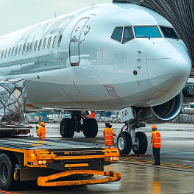 Door to door shipping from China simplifies international logistics. But how can you ensure smooth delivery from factory to destination? Choosing the right shipping method, preparing documents, and understanding customs responsibilities are essential. This guide explains each shipping step, compares sea, air, and express services, and clarifies DDP and DAP terms. Learn how to arrange reliable deliveries and avoid unexpected costs.
-
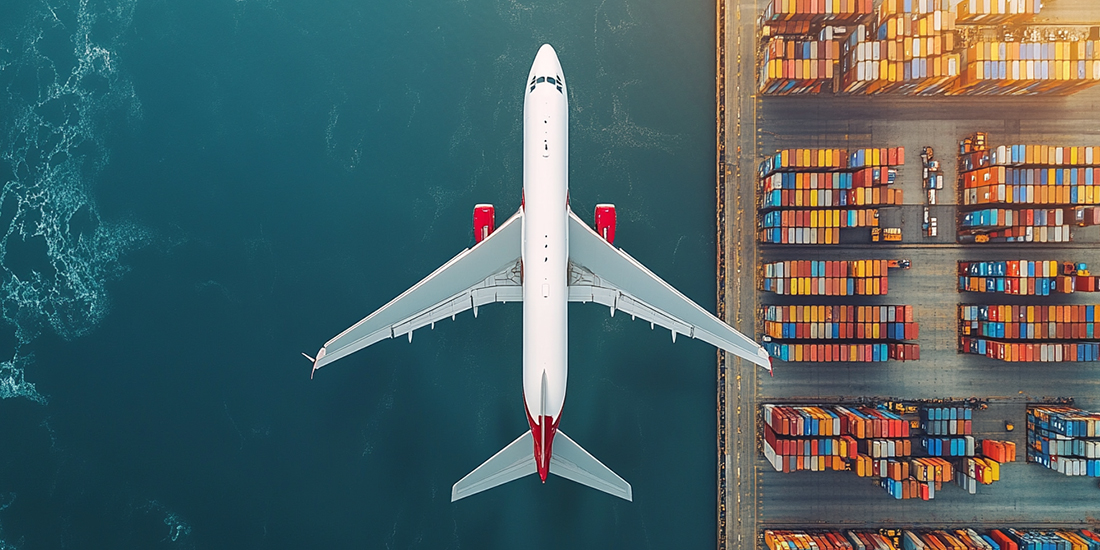 When production stops, every delivery day matters. Delayed components can disrupt schedules and customer commitments. Air freight from China offers a practical solution for urgent commercial shipments. However, choosing the right service requires careful planning. This guide compares standard, priority, and express shipping. You will also learn about flight schedules, customs clearance, and cargo preparation.
-
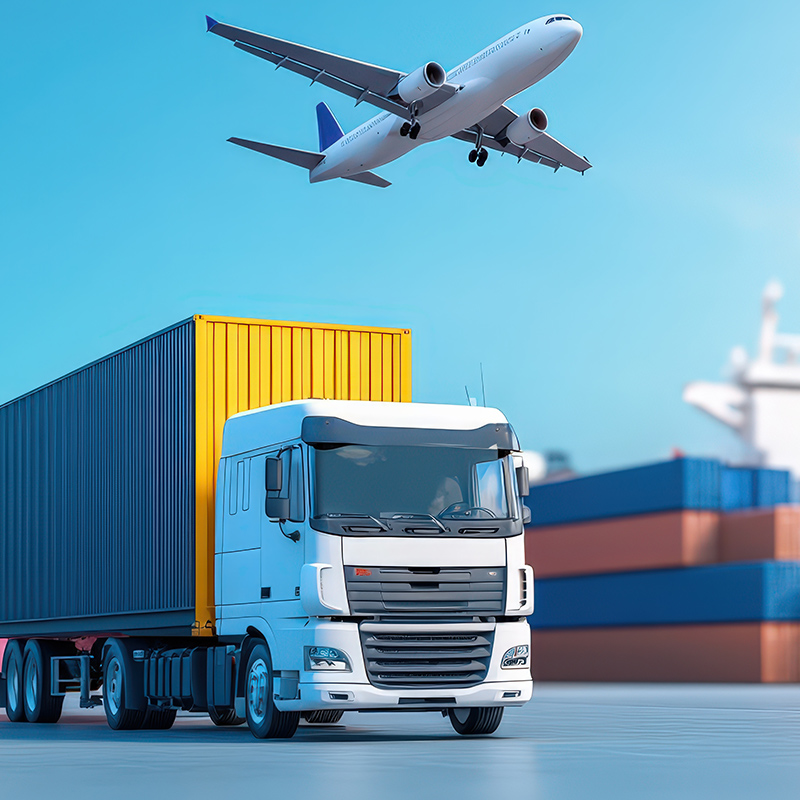 Air freight from China offers speed, but costs can vary significantly. Do you know what determines your final shipping bill? This guide explains air freight cost from China, including per-kilogram rates, chargeable weight, surcharges, and destination fees. Learn how to estimate costs and reduce shipping expenses.
