



Global supply chain volatility has transformed ocean shipping from a predictable line item into a primary driver of margin erosion for modern shippers. Opaque pricing models, fluctuating surcharges, hidden port fees, and complex Incoterms make it difficult for procurement and supply chain leaders to accurately forecast total landed costs. Controlling these expenses requires moving beyond spot-rate hunting. It demands a structural understanding of freight pricing, strategic routing, rigorous criteria for evaluating logistics partners, and proactive risk mitigation. Shippers face constant pressure to maintain inventory flow while protecting profit margins against sudden market shifts. Relying on outdated spreadsheet models or accepting initial carrier quotes without scrutiny leaves money on the table. You need a systematic approach to dissecting invoices, understanding the mechanics of container utilization, and mapping out inland hand-offs. This guide breaks down the exact mechanisms driving your shipping expenses and provides actionable frameworks to regain control over your logistics spend.
Base freight rates often represent less than half of the total invoice; mastering surcharges (BAF, THC, D&D, PSS) and Incoterms is critical for accurate cost forecasting.
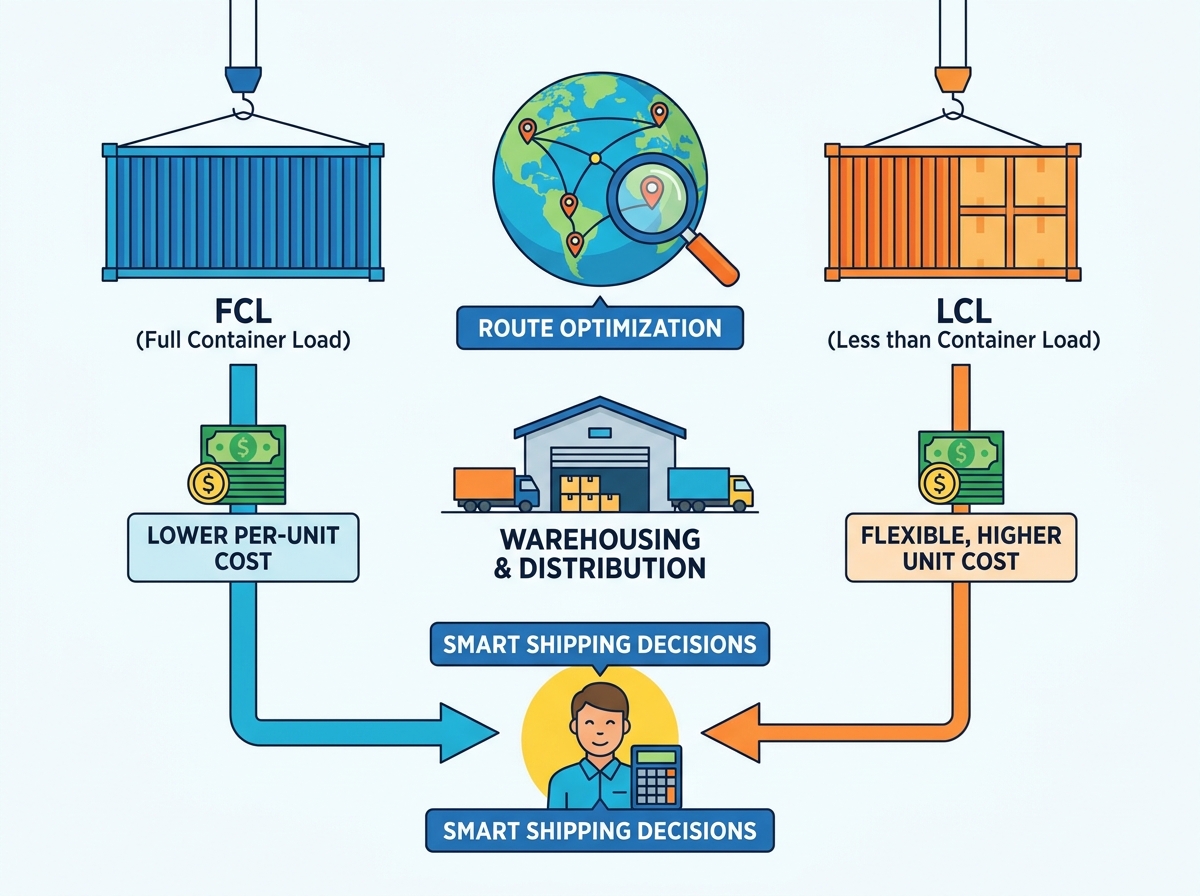
Achieving cost-effective FCL & LCL shipping requires continuous break-even analysis based on volume, dimensional weight, cash flow constraints, and inventory holding costs.
Ocean freight route optimization is not just about the shortest physical path; it involves balancing transit times against the risk of transshipment delays, inland drayage costs, and port congestion.
Integrating warehousing & distribution services directly with ocean freight contracts can significantly reduce demurrage risks, streamline cross-docking, and lower total landed costs.
The Core Cost Components of Ocean Freight Logistics
Problem Framing: Defining a Fair Rate
Establishing a baseline for a fair rate requires dissecting the anatomy of an ocean freight invoice. Base rates rarely tell the whole story. Carriers apply multiple layers of surcharges and fees before your cargo reaches its destination. Identifying these hidden cost drivers allows you to negotiate better terms. You must separate fixed operational costs from variable market surcharges. This separation provides a clear picture of your actual freight spend. Shippers who ignore the fine print often face budget overruns. You need a granular approach to invoice auditing to catch discrepancies early. Mastering the core components of ocean freight logistics requires dissecting every line item on your bill of lading and commercial invoice.
Request a fully itemized quote from your forwarder before booking, separating origin, ocean, and destination charges.
Cross-reference the quoted base rate against current market indices for your specific trade lane.
Verify the exact validity dates of the quote to ensure your cargo loads before a General Rate Increase takes effect.
Audit the final invoice against the initial quote, flagging any new accessorial charges or unexplained dimensional weight adjustments.
The Role of Incoterms in Cost Allocation
Incoterms dictate the exact moment financial responsibility shifts from the seller to the buyer. Terms like FOB (Free On Board) mean the supplier covers origin charges and loading. You take over the costs once the cargo passes the ship's rail. EXW (Ex Works) places maximum financial burden on you, the buyer. You must pay for everything from the factory floor to your warehouse door. CIF (Cost, Insurance, and Freight) means the seller pays for main carriage and insurance. However, CIF often leads to inflated destination charges. Unscrupulous forwarders may double-bill origin handling fees if you misunderstand your contract terms. Aligning your Incoterms with your supply chain strategy prevents unexpected invoices.
Common Incoterms and Financial Responsibility | |||
Incoterm | Origin Charges & Export Customs | Main Ocean Freight | Destination Charges & Import Customs |
|---|---|---|---|
EXW (Ex Works) | Buyer | Buyer | Buyer |
FOB (Free On Board) | Seller | Buyer | Buyer |
CIF (Cost, Insurance, Freight) | Seller | Seller | Buyer |
DDP (Delivered Duty Paid) | Seller | Seller | Seller |
Base Freight Rates (O/F) vs. Market Volatility
Carriers determine base ocean freight rates using a mix of vessel capacity and market demand. Seasonality heavily influences these baseline numbers. Spot market rates fluctuate daily based on immediate ship utilization. Long-term contract rates, governed by Negotiated Rate Arrangements or NVOCC Service Arrangements, offer stability. However, they lock you in regardless of market dips. You must also navigate General Rate Increases. Carriers implement these increases to artificially boost revenue during high-demand periods. Peak Season Surcharges hit your budget hard leading up to major retail holidays. Planning your shipping calendar around these predictable spikes saves capital. You should forecast your volume accurately to secure space allocations before carriers announce peak season capacity cuts.
Fuel, Environmental, and Bunker Surcharges (BAF/EBS)
Fuel costs represent a massive variable for ocean carriers. They pass these costs to you via the Bunker Adjustment Factor. This factor fluctuates monthly based on global crude oil indices. The IMO 2020 mandate forced vessels to use low-sulfur fuel. This shift permanently elevated baseline bunker costs. Alternative fuel mandates continue to reshape surcharge structures. Regional carbon taxes, such as the EU Emissions Trading System, add another layer of expense. Carriers now itemize environmental compliance costs on your invoice. Tracking these indices helps you verify if a carrier's fuel increase is mathematically justified. You should demand transparency regarding the specific formula your carrier uses to calculate their monthly bunker adjustments.
Terminal Handling Charges (THC) and Port Fees
Ports charge Terminal Handling Charges for moving containers between the vessel and the yard. Origin and destination charges vary wildly by region and port authority. You cannot negotiate these fixed infrastructure costs. Wharfage fees cover the use of the port's physical docks. Documentation fees apply to the processing of the Bill of Lading and customs manifests. The International Ship and Port Facility Security charge covers mandatory port security measures. Reviewing these line items ensures your forwarder is passing them through at cost without hidden markups. Always ask for the official port tariff schedule if you suspect a forwarder is inflating terminal handling fees to pad their margins.
Marine Cargo Insurance
Relying solely on carrier liability leaves your company financially exposed. The Carriage of Goods by Sea Act limits carrier liability to a minimal fixed amount per customary freight unit. If a container falls overboard, standard payouts will not cover your manufacturing costs. Comprehensive all-risk cargo insurance provides necessary protection. It covers physical loss, damage, and General Average declarations. Calculating the return on investment for marine insurance involves weighing the premium against your cargo's commercial value. A single catastrophic loss easily justifies years of insurance premiums. Never ship high-value goods without a dedicated all-risk policy. Ensure your policy covers the goods from the origin warehouse to the final destination, not just while the cargo sits on the vessel.
Choosing Cost-Effective FCL & LCL Shipping Models
Solution Categories for Containerized Transport
Evaluating your primary transport methods requires analyzing shipper volume, cargo density, and urgency. You generally choose between renting an entire box or sharing space. Each method carries distinct operational requirements and financial implications. Selecting the wrong model inflates your landed costs and extends lead times. You must align your shipping model with your current inventory strategy. Implementing Cost-Effective FCL & LCL Shipping requires continuous mathematical evaluation of your purchase orders. We will explore how to determine the optimal choice for your specific cargo profile based on hard data rather than assumptions.
FCL (Full Container Load) Economics
FCL shipping provides exclusive use of a standard container. You pay a flat rate for the box, regardless of how full it is. Volume thresholds dictate when FCL becomes cheaper than shared space. Generally, if your cargo exceeds a specific cubic meter threshold, FCL offers better value. FCL provides superior security because the container remains sealed from origin to destination. This reduces handling frequency and significantly lowers the risk of cargo damage. Pilferage risks drop dramatically when your goods are not mixed with other shippers' freight. FCL also moves through customs and port terminals faster than consolidated loads. You avoid the delays associated with deconsolidating multiple shipments at a container freight station.
LCL (Less than Container Load) Trade-offs
LCL allows you to ship smaller volumes by sharing container space. This model supports lean inventory strategies. You preserve cash flow by importing only what you need immediately. However, LCL pricing relies on dimensional weight, calculated as Weight or Measure. Carriers charge based on whichever factor yields higher revenue. You must account for hidden LCL costs. Container Freight Station fees apply for consolidating your goods at origin and deconsolidating them at destination. These physical handling steps add days to your transit time. LCL cargo also faces higher risks of customs holds if another shipper's cargo in the same box triggers an inspection. You must factor these potential delays into your production schedules.
FCL vs. LCL Operational Comparison | ||
Feature | FCL (Full Container Load) | LCL (Less than Container Load) |
|---|---|---|
Pricing Structure | Flat rate per container. | Variable rate based on Weight or Measure (W/M). |
Transit Time | Faster (direct terminal handling). | Slower (requires consolidation/deconsolidation). |
Security & Damage Risk | High security, low damage risk. | Lower security, higher handling damage risk. |
Customs Clearance | Cleared as a single unit. | Subject to delays if co-loaded cargo is flagged. |
The Shipper’s Break-Even Analysis
You need a mathematical framework to find the exact tipping point between FCL and LCL. This break-even analysis relies on current lane rates and origin/destination handling fees. The tipping point fluctuates based on market conditions. Sometimes, shipping a half-empty container costs less than paying LCL consolidation fees for a medium-sized load. Run this analysis for every purchase order to maintain tight cost control.
Calculate the total volume of your shipment in cubic meters and the total gross weight in kilograms.
Determine the LCL chargeable weight by applying the standard ocean freight ratio (usually 1 CBM = 1000 kg).
Multiply the chargeable weight by the current LCL base rate.
Add all LCL-specific accessorials, including origin CFS fees, destination CFS fees, and LCL documentation charges.
Compare this final LCL sum against the current flat rate for a 20-foot FCL container, including its specific terminal handling and chassis fees.
Strategic Ocean Freight Route Optimization
Evaluation Dimensions: Features-to-Outcomes
Routing choices directly impact your inventory availability and inland transport costs. You cannot look at ocean transit in a vacuum. The port you choose dictates your rail and truck routing. These decisions influence your overall freight spend and final-mile efficiency. Effective Ocean Freight Route Optimization extends far beyond the water. You must evaluate features like port infrastructure against outcomes like reduced lead times. Balancing physical geography with operational reality prevents bottlenecks. A cheap ocean rate to a congested port ultimately costs more in inland delays and lost sales.
Direct vs. Transshipment Routing
Direct routing moves your container from origin to destination on a single vessel. It offers the fastest transit time and highest reliability. Transshipment routing involves offloading your container at a relay port and loading it onto a second vessel. Transshipment usually costs less upfront. However, it introduces the statistical risk of rolled cargo. If the connecting vessel is full, your container sits at the relay port for another week. You must weigh the upfront cost savings against the financial impact of a stockout. High-margin goods always warrant direct routing. Low-value, non-urgent commodities can tolerate transshipment risks. Always ask your forwarder for the historical reliability percentage of the specific transshipment hub they propose.
Mitigating Port Congestion and Blank Sailings
Port congestion traps your inventory on the water. Ships anchor offshore for days or weeks waiting for a berth. You can mitigate this by using predictive visibility tools. These platforms analyze vessel traffic and terminal productivity. If your primary port is backed up, you can select an alternative port of discharge. Carriers also utilize blank sailings to manage capacity. Blank sailings instantly extend your lead times. They force you to increase safety stock requirements to prevent manufacturing delays. Diversifying your carrier mix and routing options provides a buffer against these sudden capacity reductions. Maintaining relationships with multiple forwarders ensures you have backup routing options when your primary lane shuts down.
Balancing Transit Time with Freight Spend
Faster transit times command premium freight rates. You must calculate your inventory carrying costs during transit to determine if this premium yields a positive return. Capital tied up in floating inventory cannot be deployed elsewhere. If your daily cost of capital exceeds the daily savings of a slower routing, you are losing money. Premium direct routing makes sense for seasonal retail goods with a short shelf life. Slower, cheaper routing works for industrial raw materials with steady, predictable consumption rates. Align your transit time requirements with your cash flow strategy. Do not pay for expedited ocean freight if the goods will simply sit in your destination warehouse for three months.
Pre-Carriage and On-Carriage Optimization
Ocean routing extends beyond the water. Pre-carriage and on-carriage heavily influence total costs. Selecting the optimal port of entry requires factoring in inland drayage rates. A cheaper ocean rate to a distant port might be erased by expensive truck transport to your facility. You must evaluate rail ramp proximity and chassis split fees. A chassis split occurs when a trucker must pick up a chassis from a different location than the container. This adds unnecessary mileage and hourly trucking costs. Route your cargo through ports that offer seamless, cost-effective inland connectivity. Analyze the dwell times at destination rail ramps before committing to an intermodal routing strategy.
Integrating Warehousing & Distribution Services
Overall Value Influencing Factors
Looking beyond the port is essential for understanding total landed costs. Final-mile efficiency often dictates the success of your supply chain. Disconnected logistics silos create friction, delays, and unexpected fees. By seamlessly connecting your ocean transit with Warehousing & Distribution Services, you eliminate the friction that causes terminal penalties. When you integrate these functions, you gain control over the most volatile segments of the journey. Unified operations protect your margins by ensuring cargo flows continuously from the vessel to the final delivery point without administrative bottlenecks.
Demurrage and Detention (D&D) Avoidance
Demurrage and detention bills can destroy your freight budget. Demurrage occurs when your full container sits inside the terminal beyond the allotted free time. Detention occurs when you hold the carrier's empty container outside the terminal for too long. Free time usually ranges from three to five days. Congested warehouses and driver shortages cause shippers to miss these tight windows. Integrated drayage and warehousing prevent catastrophic bills. A unified provider monitors vessel discharge times and dispatches trucks immediately. They prioritize unloading containers nearing the end of their free time, returning empties swiftly to stop the clock. Proactive empty return management is the only reliable way to eliminate detention penalties.
Port-Centric Warehousing vs. Inland Distribution
You must choose between deconsolidating at the port or moving intact containers inland. Port-centric warehousing involves transloading cargo near the terminal. You empty the ocean container, return it immediately, and load the goods into domestic trailers. This strategy eliminates detention risks and reduces inland transport costs. Moving intact containers via rail or truck to inland distribution centers works better for massive, single-destination volumes. You can also leverage cross-docking facilities near the port. Cross-docking bypasses long-term storage entirely. Workers move goods directly from the receiving dock to outbound trucks, accelerating time-to-market. Evaluate your final delivery footprint to determine which distribution model minimizes domestic freight spend.
Consolidated Supply Chain Value
Using a single-source provider for freight and warehousing reduces vendor friction. You eliminate the hand-off delays that occur when a forwarder, a drayage company, and a warehouse operate in silos. Consolidated providers offer improved chain-of-custody visibility. You track your inventory from the origin factory directly to the final distribution shelf on one platform. This integration simplifies billing and accountability. If a delay occurs, you make one phone call instead of mediating a dispute between three different vendors. Unified operations streamline your administrative workload and lower your total landed costs. You spend less time chasing updates and more time optimizing your inventory planning.
Evaluating and Shortlisting Ocean Freight Logistics Partners
Implementation Risks & Mitigation
Selecting a reliable partner requires a strict evaluation framework. The wrong choice leads to invoice inaccuracies, missed sailings, and predatory pricing. You must look past the initial sales pitch and examine their operational infrastructure. Mitigating implementation risks involves auditing their digital capabilities, compliance records, and carrier relationships. Request case studies demonstrating their ability to handle your specific commodity type. Verify their financial stability to ensure they can secure space allocations during peak season capacity crunches. A rigorous vetting process prevents costly disruptions during the onboarding phase.
Freight Forwarders vs. NVOCCs vs. Direct Carriers
You have three primary options for booking freight. Contracting directly with a Vessel Operating Common Carrier works for massive shippers moving thousands of containers annually. Direct carriers offer raw capacity but limited customer service. Non-Vessel Operating Common Carriers buy space in bulk and resell it. They issue their own House Bill of Lading and act as the carrier to you, assuming legal liability for the transit. Asset-light freight forwarders act as your agent, arranging transport without taking on carrier liability. Forwarders offer the highest flexibility and route options. Choose an NVOCC or forwarder if you need customized routing, consolidation, and high-touch service.
Technology, Visibility, and Freight Auditing
Modern logistics relies on robust technology. Evaluate prospective partners on their tracking capabilities. You need real-time data integration with your internal systems. Look for platforms that provide automated exception management alerts. If a container is rolled, you need to know instantly. Digital document workflows reduce manual data entry errors. Automated freight auditing is equally important. Your partner's system should automatically flag discrepancies between billed costs and contracted rates. This technology ensures you never pay for unauthorized surcharges or mathematically incorrect dimensional weight calculations. Demand a live demonstration of their customer portal before signing a contract.
Compliance and Customs Brokerage
Border delays destroy transit time optimizations. Integrated customs clearance is a mandatory requirement for a logistics partner. They must possess deep expertise in managing Harmonized Tariff Schedule classifications. Incorrect classification codes lead to severe compliance penalties and cargo seizures. Your partner should conduct pre-clearance audits to ensure all commercial invoices and packing lists match customs requirements. A proactive customs broker navigates government agency regulations smoothly. Keeping brokerage and freight under one roof ensures seamless communication when customs officers request additional documentation. This integration prevents containers from sitting in customs holds racking up demurrage charges.
Red Flags in Freight Pricing Proposals
You must scrutinize pricing proposals for predatory tactics. Identify and challenge clauses that leave pricing open-ended. Vague terms regarding destination charges give the forwarder a blank check to inflate your final invoice. Demand an itemized list of all origin and destination fees. Unrealistic transit time promises are a major red flag. If a forwarder quotes a transit time significantly faster than the industry average, they are likely hiding transshipment realities. Vague Incoterm applications lead to double-billing. Ensure the quote explicitly states which Incoterm governs the rate and clearly delineates buyer versus seller responsibilities. Reject any proposal that bundles origin and ocean charges without a clear breakdown.
Conclusion
Conduct a historical audit of your last 12 months of freight invoices to identify demurrage leaks and general rate increase impacts.
Map out your current routing choices and calculate the true cost of inland drayage versus alternative ports of entry.
Request itemized, door-to-door quotes from prospective logistics providers based on clearly defined Incoterms.
Implement a break-even analysis tool for all future LCL versus FCL purchasing decisions based on dimensional weight.
Consolidate your customs brokerage and warehousing with your primary freight partner to eliminate hand-off friction.
FAQ
Q: What is the difference between freight forwarders and NVOCCs in ocean freight logistics?
A: A freight forwarder acts as an agent, arranging transport and handling documentation without assuming carrier liability. An NVOCC acts as a carrier to the shipper. NVOCCs buy vessel space in bulk, resell it, and issue their own House Bill of Lading, taking on legal responsibility for the cargo during transit.
Q: How do Incoterms affect my total ocean freight costs?
A: Incoterms define exactly when the financial responsibility for freight, insurance, and handling shifts from the seller to the buyer. Terms like EXW require you to pay all costs from the factory. Terms like FOB mean you only pay costs after the cargo is loaded onto the vessel, directly impacting your final invoice.
Q: How can shippers avoid unexpected Demurrage and Detention (D&D) charges?
A: Shippers avoid D&D charges by closely monitoring vessel arrival times and integrating drayage with warehousing operations. Dispatching trucks immediately upon discharge ensures containers are moved within the terminal's free time. Swiftly unloading cargo and returning empty containers prevents daily detention penalties.
Q: At what volume does cost-effective FCL become a better choice than LCL shipping?
A: Generally, cargo volumes exceeding 15 cubic meters make FCL more cost-effective than LCL. However, the exact break-even point depends on current market rates, dimensional weight calculations, and the heavy consolidation and deconsolidation fees associated with LCL handling at container freight stations.
Q: What are General Rate Increases (GRI) and Peak Season Surcharges (PSS)?
A: Carriers implement GRIs to raise base freight rates across specific trade lanes based on market demand and capacity constraints. PSS is a temporary fee applied during high-volume shipping months, typically leading up to major retail holidays, to capitalize on the surge in container traffic.
Q: Why should shippers integrate warehousing and distribution with ocean freight?
A: Integrating these services eliminates hand-off delays between disconnected vendors. A single-source provider coordinates vessel arrivals directly with warehouse receiving schedules. This alignment prevents containers from sitting idle, drastically reduces demurrage risks, and accelerates the final-mile delivery of your inventory.
Related Blogs
-
 Door to door shipping from China simplifies international logistics. But how can you ensure smooth delivery from factory to destination? Choosing the right shipping method, preparing documents, and understanding customs responsibilities are essential. This guide explains each shipping step, compares sea, air, and express services, and clarifies DDP and DAP terms. Learn how to arrange reliable deliveries and avoid unexpected costs.
-
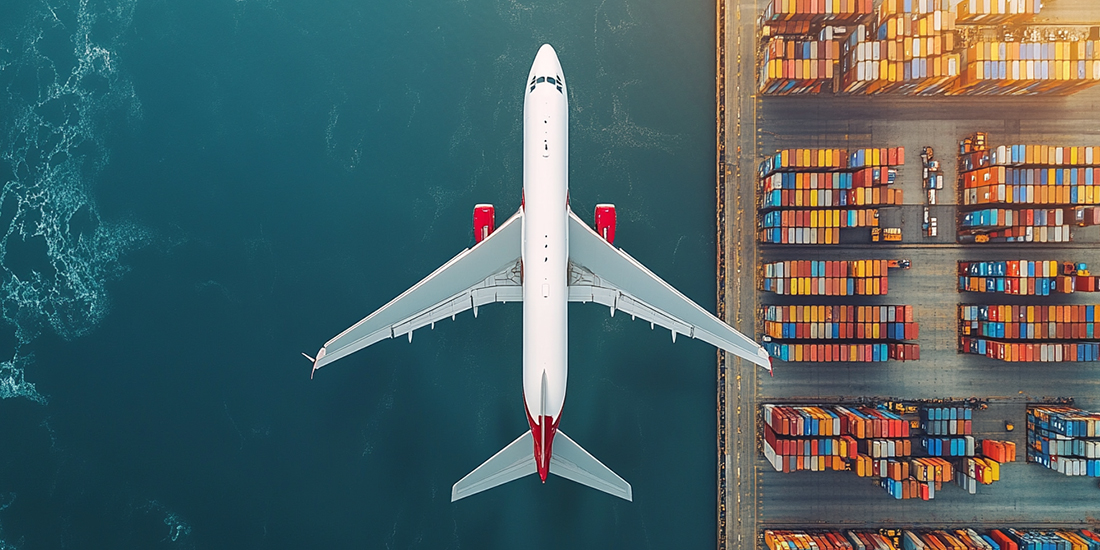 When production stops, every delivery day matters. Delayed components can disrupt schedules and customer commitments. Air freight from China offers a practical solution for urgent commercial shipments. However, choosing the right service requires careful planning. This guide compares standard, priority, and express shipping. You will also learn about flight schedules, customs clearance, and cargo preparation.
-
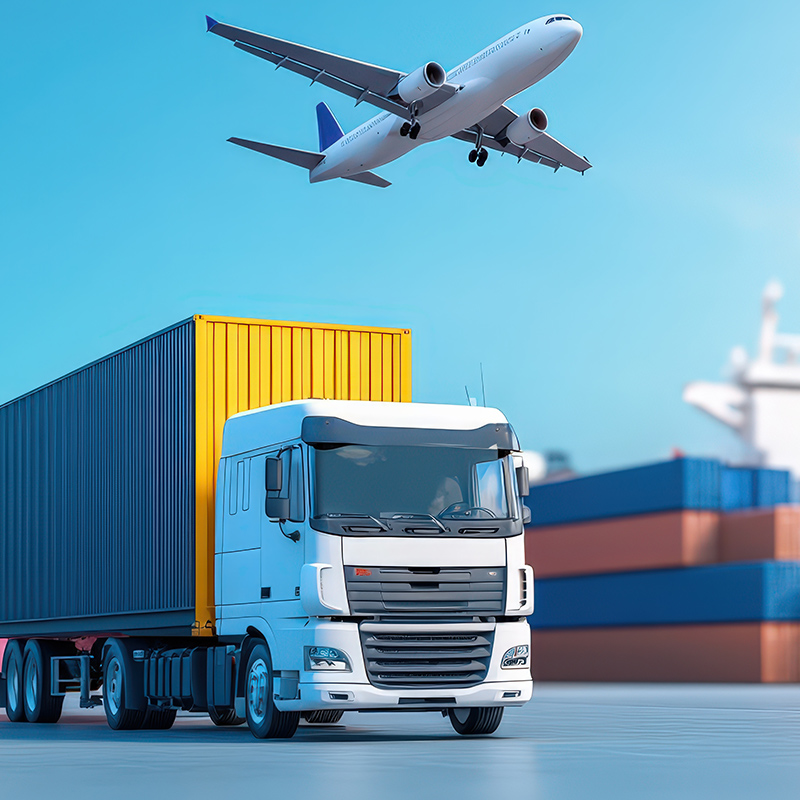 Air freight from China offers speed, but costs can vary significantly. Do you know what determines your final shipping bill? This guide explains air freight cost from China, including per-kilogram rates, chargeable weight, surcharges, and destination fees. Learn how to estimate costs and reduce shipping expenses.
