



Maritime transport moves over 80% of global goods, acting as the physical foundation of international exchange. This sector drives worldwide economic growth and sustains manufacturing supply chains across continents. Recent UNCTAD data shows global maritime trade saw a 2.4% volume recovery. However, the market remains fragile. Port infrastructure struggles with capacity limits, and geopolitical shifts force massive vessel rerouting. This reality fundamentally changes how organizations must procure logistics support. Supply chain leaders face a constant tension. They must secure the unmatched efficiency of large-volume, long-distance shipments while mitigating severe operational risks. Port congestion, equipment shortages, and fluctuating carrier schedules threaten production lines daily. This technical evaluation framework helps procurement leaders assess, shortlist, and contract maritime logistics partners. We will align vendor capabilities with specific operational tolerances, scale requirements, and compliance mandates.
Strategic Alignment: Selecting the right maritime goods transportation services requires mapping cargo profiles (volume, fragility, time-sensitivity) directly to carrier capabilities, routing structures, and the inherent efficiencies of ocean freight.
Risk Mitigation: Resilient global trade relies on robust international freight forwarding services that offer proactive customs clearance, alternative routing, and comprehensive cargo insurance.
Technological Visibility: Modern procurement demands API-driven tracking and predictive analytics to manage inventory in transit and mitigate supply chain blind spots.
Defining Success Criteria for Maritime Transport Services
Establishing Baseline Operational Requirements
Audit internal supply chain needs before engaging vendors. Calculate required transit times and volume forecasting accuracy. Determine your acceptable variance in delivery windows. You must know exactly when goods must arrive to prevent production halts. Map out origin and destination pairs clearly. Identify seasonal volume spikes. Analyze historical shipping data to find patterns in your cargo flow. This baseline prevents overpaying for unnecessary speed. It also protects against costly delays. Establish clear metrics for on-time performance. Define what constitutes a late delivery for your specific operations. Some supply chains tolerate a three-day delay. Others shut down manufacturing lines after twenty-four hours.
To build a solid operational baseline, follow these specific steps:
Extract three years of historical shipping data from your ERP to identify peak volume months and seasonal anomalies.
Calculate the average transit time for your top five trade lanes, factoring in both port-to-port transit and inland drayage.
Define your maximum allowable delay threshold before a stockout occurs at your primary distribution centers.
Map the physical dimensions and weight of your standard shipments to determine optimal container utilization rates.
By establishing these parameters, you create a rigid standard for evaluating potential logistics partners. You can immediately disqualify vendors who lack the network capacity to handle your peak season surges or those who consistently miss your required delivery windows.
Evaluating Scale and Efficiency Benefits
Moving large quantities across oceans offers massive scale benefits. The low energy expenditure per unit makes ocean freight highly attractive. Assess how these inherent efficiencies align with your organizational growth. High-volume shippers gain the most leverage. You can negotiate better terms when forecasting accurate, consistent volumes measured in Twenty-foot Equivalent Units (TEUs). Consolidating shipments reduces the number of individual customs entries. It streamlines terminal handling processes. Evaluate your warehouse capacity to handle massive influxes of goods. Ocean freight delivers in bulk. Your receiving facilities must process these large volumes efficiently without causing yard congestion.
When you scale up your ocean freight operations, you must also scale your physical infrastructure. A sudden influx of twenty containers arriving simultaneously can overwhelm a facility designed to handle five trucks a day. You need adequate dock doors, sufficient forklift capacity, and enough floor space to stage incoming inventory. Furthermore, you must manage chassis availability. If your local port faces a chassis shortage, your containers will sit at the terminal, racking up demurrage fees regardless of how efficiently the ocean voyage was executed.
Cost-Effectiveness vs. Transit Time Realities
Ocean shipping involves inherent trade-offs. Slow-steaming lowers fuel consumption and emissions. It reduces base freight expenses. However, it extends transit times significantly. Expedited maritime services utilize faster vessels and direct routes. Establish a framework to calculate inventory holding costs during transit. Sometimes paying for a faster vessel saves money overall. It reduces the capital tied up in floating inventory. Faster transit also reduces market risk for trend-sensitive goods. Analyze the lifecycle of your products. Perishable or seasonal items demand faster transit. Durable industrial components can tolerate slower, more efficient routing.
Consider the impact of transit time on your cash flow. When goods spend forty-five days on the water, your capital remains locked in that inventory. If you can reduce that transit time to twenty-five days using a direct routing service, you free up twenty days of working capital. You must weigh this financial benefit against the higher freight rate charged by the direct service.
Vendor Financial Stability and Asset Control
Evaluate a provider's financial health rigorously. Look at their alliance memberships and operational models. Determine if they operate as a Non-Vessel Operating Common Carrier (NVOCC) or a direct asset owner. Asset owners control the physical ships. They manage the crews and maintenance schedules. NVOCCs buy space in bulk and resell it. Financially stable partners survive market downturns. They maintain service levels when capacity tightens. Request audited financial statements during the RFP process. Investigate their history of mergers or acquisitions. A stable vendor provides consistent service across decades, protecting your supply chain from sudden carrier bankruptcies.
Working with an NVOCC offers flexibility because they can route your cargo across multiple different asset owners. If one carrier experiences a strike or a vessel breakdown, the NVOCC can shift your booking to another alliance. However, during severe capacity shortages, asset owners prioritize their direct clients over NVOCC allocations. You must balance the flexibility of an NVOCC against the guaranteed space offered by a direct asset owner.
Core Categories of Maritime Goods Transportation Services: Types, Costs, and Benefits
Containerized Freight (FCL vs. LCL)
Container shipping dominates global trade. You must choose between Full Container Load (FCL) and Less than Container Load (LCL). FCL provides dedicated space. It offers higher security and faster transit. Your cargo remains sealed from origin to destination. LCL involves space-sharing. You utilize only a portion of the container. However, it introduces consolidation delays. Handling risks increase as workers load and unload multiple shipments in one box at a Container Freight Station (CFS).
When managing maritime goods transportation services, understanding the exact break-even point between LCL and FCL is mandatory. Generally, once your shipment exceeds fifteen cubic meters, booking an entire twenty-foot container becomes more economical than paying LCL rates. LCL shipments also face higher risks of customs holds. If one shipper in your shared container triggers an inspection, the entire box gets delayed.
Operational Feature | Full Container Load (FCL) | Less than Container Load (LCL) |
|---|---|---|
Space Utilization | Dedicated container for a single shipper | Shared space among multiple shippers |
Transit Speed | Faster; direct routing from port to port | Slower; requires consolidation and deconsolidation |
Security Level | High; sealed at origin and opened at destination | Moderate; handled multiple times at freight stations |
Volume Suitability | High volume (typically over 15 cubic meters) | Low volume (typically under 15 cubic meters) |
Customs Processing | Single customs entry for the entire container | Multiple entries; one delay affects all cargo inside |
Specialized Cargo Solutions
Not all cargo fits in standard dry containers. Specialized solutions handle unique physical requirements. Breakbulk services move oversized or heavy-lift cargo. Think industrial turbines, construction equipment, or large steel pipes. Cranes load these items individually into the vessel hold. Stevedores secure them with heavy-duty lashing. Roll-on/Roll-off (RoRo) vessels transport vehicles and wheeled machinery. Operators drive the cargo directly onto the ship via ramps. This eliminates crane lifting risks. Temperature-controlled (reefer) logistics protect perishables. They maintain strict cold chains for pharmaceuticals, chemicals, and food products. Reefer containers require continuous power supply throughout the journey.
Managing reefer cargo requires precise coordination with the terminal. You must ensure the port has adequate reefer plugs available upon discharge. If a reefer container sits unplugged on the tarmac for even a few hours, the internal temperature spikes, potentially ruining the entire shipment. You must also verify that your inland trucking provider operates generator sets (gensets) to keep the container powered during the final mile delivery.
Global Port-to-Port Transportation vs. Door-to-Door Logistics
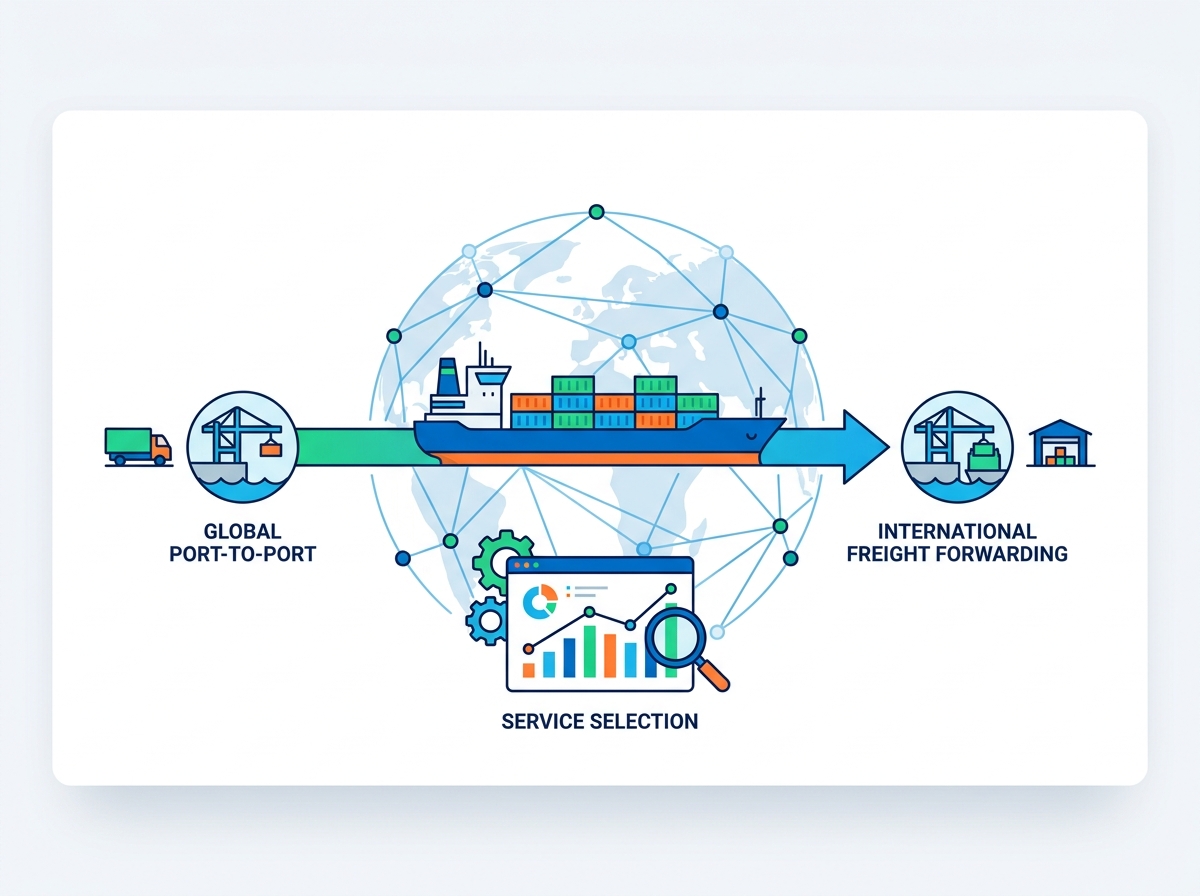
Contracting strictly for Global Port-to-Port Transportation means the carrier only handles the ocean leg. You must arrange transport to and from the terminals. You manage the drayage trucks and rail connections independently. Integrated door-to-door logistics cover the entire journey. The provider manages drayage, inland transport, and final mile delivery. Door-to-door simplifies communication. You have one point of contact for the entire move. Port-to-port offers more control over individual supply chain segments. It allows you to select specialized regional carriers for inland moves.
If you operate a highly sophisticated internal logistics team, port-to-port routing allows you to optimize inland costs by leveraging local trucking relationships. However, if your organization lacks dedicated transportation managers, door-to-door services prevent cargo from getting stranded at the destination port. The integrated provider absorbs the headache of coordinating chassis, scheduling dock appointments, and navigating local terminal congestion.
Evaluating International Freight Forwarding Services
Carrier Network and Route Optimization
Robust International Freight Forwarding Services leverage extensive carrier alliances. They use volume contracts to secure favorable terms. Forwarders deploy advanced routing algorithms. These tools guarantee space allocations during tight capacity markets. A strong network ensures your cargo moves even when primary vessels overbook. Forwarders analyze historical transit data to select the most reliable strings. They avoid ports with chronic congestion. They monitor weather patterns to reroute shipments proactively. This network depth provides resilience against sudden localized disruptions.
When evaluating a forwarder's network, look beyond their marketing materials. Ask for specific examples of how they handled recent port strikes or canal closures. A competent forwarder will demonstrate how they shifted cargo from the West Coast to the East Coast, or how they utilized sea-air combinations to keep critical inventory moving. Their ability to pivot quickly defines their true value.
Customs Brokerage and Regulatory Compliance
Integrated customs expertise prevents border delays. Brokers manage complex tariff classifications using Harmonized System (HS) codes. They ensure strict compliance with international trade agreements. Mistakes in documentation cause severe bottlenecks. Customs authorities will hold improperly declared cargo for intensive X-ray or physical exams. Expert forwarders clear cargo proactively. They submit paperwork electronically before the vessel arrives at the destination port. They handle import licenses, certificates of origin, and phytosanitary documents. This expertise shields you from regulatory penalties and storage fees at the terminal.
Customs compliance is not a passive activity. Your forwarder must actively audit your commercial invoices and packing lists for accuracy. They should flag discrepancies between the stated weight on the bill of lading and the actual weight recorded at the terminal. Furthermore, they must manage Importer Security Filing (ISF) requirements flawlessly. Failing to file an ISF accurately and on time results in immediate fines and guarantees a customs hold upon arrival. They must also monitor Anti-Dumping and Countervailing Duties (AD/CVD) to prevent unexpected tax liabilities.
Digital Infrastructure and Supply Chain Visibility
Modern procurement demands strong technical capabilities. Forwarders must offer EDI/API integration. You need real-time milestone tracking directly in your ERP system. Exception management dashboards highlight problems immediately. Visibility allows you to reroute critical inventory. It eliminates supply chain blind spots. Advanced platforms use satellite AIS data to track vessel positions accurately. They predict arrival times using machine learning models. This digital infrastructure transforms ocean freight from a black box into a transparent pipeline.
Relying on manual email updates for container tracking is obsolete. Your logistics partner must transmit EDI 315 status messages directly into your transportation management system. You need automated alerts when a container is discharged from the vessel, when it clears customs, and when it gates out of the terminal. This granular data allows your warehouse managers to schedule labor efficiently and prevents trucks from waiting idly for unreleased cargo. Advanced providers even use geofencing around ports to trigger automated arrival notifications.
Strategic Trade-Offs and Value Influencing Factors
Spot Market Rates vs. Long-Term Contract Pricing
Riding spot market volatility carries high risk. Rates plummet during low demand but skyrocket during disruptions. Locking in fixed-rate contracts provides stability. Minimum Quantity Commitments (MQCs) secure baseline volumes. Use contracts for predictable inventory flows. Play the spot market for unexpected volume surges. Contract negotiations require accurate volume forecasting. Carriers penalize shippers who fail to meet their MQCs. Conversely, spot market reliance leaves you vulnerable to sudden capacity shortages. A blended approach often yields the best results.
When negotiating long-term contracts, pay close attention to the specific inclusions and exclusions. A low base rate means nothing if the carrier applies exorbitant peak season surcharges later in the year. Ensure your contract clearly defines how and when bunker adjustment factors will be calculated. You must also negotiate favorable free time at the destination port to avoid crippling demurrage charges if your warehouse falls behind on receiving.
Direct Routing vs. Transshipment Strategies
Transshipment hubs reduce base freight expenses. Carriers consolidate cargo onto massive mega-ships to achieve economies of scale. However, transshipment exponentially increases risks. Cargo often gets rolled to later vessels if the connecting ship is full. Transit times extend unpredictably. Handling damage risks multiply with every container move at the hub. Direct routing ensures reliable delivery schedules. The vessel travels straight from origin to destination without discharging the container. Direct services require less buffer stock and simplify inventory planning.
If you choose a transshipment route, you must build additional buffer time into your production schedule. A container scheduled to connect in Singapore or Busan can easily sit on the terminal for two weeks waiting for available space on a feeder vessel. You must track the cargo's progress through the transshipment hub aggressively. Do not assume the container will make its scheduled connection automatically.
Environmental Compliance and Surcharges
Regulatory frameworks impact shipping structures heavily. Mandates like IMO 2023 and the EU Emissions Trading System (ETS) enforce lower emissions. Carriers adopt new fuels and technologies to comply. You will see bunker adjustment factors (BAF) and carbon taxation on invoices. Demand transparent billing from providers. Understand exactly how environmental rules affect your specific trade lanes. Carriers often implement slow-steaming to meet carbon intensity indicators. This compliance strategy directly impacts your transit times. Factor these environmental variables into your overall logistics planning.
Environmental compliance is reshaping vessel deployment. Older, less efficient ships are being scrapped or relegated to secondary trade lanes. As carriers invest in dual-fuel vessels capable of burning LNG or methanol, they pass these capital expenditures onto shippers through environmental surcharges. You must audit these surcharges carefully. Ensure your forwarder provides a clear breakdown of the carbon tax applied to your specific container, rather than accepting a generic, flat-rate fee.
Implementation Risks and Mitigation Strategies
Managing Port Congestion and Geopolitical Disruptions
Port congestion ruins delivery timelines. Vessels wait at anchor for weeks. Geopolitical events force sudden route changes, adding thousands of miles to the journey. Build tactical contingency plans. Utilize secondary ports to bypass bottlenecks. If major hubs back up, route cargo through smaller regional terminals. Diversify your carrier alliances. Do not put all your volume with one network. Maintain strategic buffer stock to absorb transit delays. Track labor union negotiations at major ports to anticipate strike actions.
When a primary port experiences a labor slowdown, the impact cascades across the entire inland network. Rail ramps back up, chassis disappear, and drayage rates double overnight. You must have pre-negotiated rates with trucking companies at alternative ports. If you normally import through Los Angeles, you need a standing plan to divert cargo to Seattle or Houston at a moment's notice. This agility prevents your supply chain from freezing entirely.
Cargo Insurance and Liability Limitations
Standard carrier liability offers minimal protection. International maritime laws limit payouts drastically. They often cap liability at a minimal amount per package or customary freight unit. This is entirely insufficient for high-value goods. A total loss of a container could result in a negligible settlement. You must secure comprehensive "All-Risk" marine insurance. This supplemental coverage protects your financial interests against loss, damage, or General Average declarations. It covers risks from rough seas, theft, and handling accidents.
General Average is a terrifying concept for uninsured shippers. If a vessel suffers a catastrophic fire or runs aground, maritime law dictates that all cargo owners must share the cost of saving the ship. The carrier will hold your cargo hostage until you post a massive cash bond to cover your portion of the salvage operation. Comprehensive marine insurance covers this bond automatically, allowing your goods to be released without draining your corporate cash reserves. Ensure your policy includes Institute Cargo Clauses (A) for the broadest possible coverage.
Managing Capacity Constraints During Peak Seasons
Vessel space vanishes during traditional shipping seasons. Pre-Golden Week and Q3 holiday build-ups cause massive capacity crunches. Carriers implement blank sailings to manage equipment repositioning. Implement accurate forecasting models. Establish early booking protocols. Secure space weeks in advance. Communicate closely with your Maritime Transport Services provider to lock in allocations. Provide rolling forecasts to your partners. This allows them to secure equipment and vessel space before the market tightens completely.
During peak season, carriers prioritize high-yield cargo and clients with flawless forecasting records. If you consistently book ten containers but only deliver five, the carrier will cut your allocation when space gets tight. You must align your procurement, manufacturing, and logistics teams to produce highly accurate volume projections. Book your cargo at least four weeks prior to the vessel's departure date, and ensure empty containers are picked up immediately upon release.
Conclusion
Draft a detailed Request for Proposal (RFP) outlining strict operational tolerances, required transit times, and accurate volume forecasts for your primary trade lanes.
Request historical performance data from potential vendors, focusing heavily on on-time delivery rates, exception management protocols, and customs clearance accuracy.
Conduct pilot shipments on secondary trade lanes to test vendor capabilities, communication speed, and the reliability of their inland drayage networks.
Implement API-driven tracking tools to monitor initial performance metrics, ensure data accuracy, and integrate milestone updates directly into your ERP system.
FAQ
Q: Why is maritime transport considered the backbone of global trade?
A: Maritime transport moves over 80% of global goods. It remains the most efficient method for large-volume, long-distance shipments. Ships carry massive quantities of raw materials, components, and finished products across oceans. This immense capacity sustains international supply chains, enables globalization, and drives continuous economic growth worldwide.
Q: What is the difference between international freight forwarding services and direct carrier contracts?
A: Carriers own the vessels and move the physical goods across the ocean. Forwarders act as intermediaries. They negotiate rates, consolidate cargo, and manage the end-to-end documentation. Forwarders also handle customs clearance and arrange inland transportation, providing a comprehensive logistics solution rather than just port-to-port vessel space.
Q: What are the primary risks associated with global port-to-port transportation?
A: Primary risks include rolled cargo at origin, extended transshipment delays, and severe port congestion. Weather events and geopolitical disruptions frequently force vessel rerouting. Additionally, shippers face demurrage and detention fees if they fail to retrieve containers or return empty equipment within the allotted free time.
Q: How does port congestion impact overall maritime transport efficiency?
A: Port congestion creates severe cascading effects. Vessels wait at anchor, extending transit times and disrupting subsequent schedules. This forces carriers to skip ports or implement blank sailings. For shippers, congestion increases inventory holding requirements, delays production lines, and severely complicates final-mile inland transportation planning.
Q: Why is standard carrier liability insufficient for high-value global trade?
A: International maritime law strictly limits carrier liability. Payouts are capped at a minimal amount per package or customary freight unit. If a container of high-value electronics sinks, the standard liability covers only a fraction of the cargo's true value. Supplemental marine cargo insurance is mandatory for actual risk mitigation.
Q: How do environmental regulations affect maritime transport services?
A: Mandates for low-sulfur fuel and carbon emissions tracking force carriers to adapt. They implement slow-steaming to reduce fuel consumption and meet carbon intensity targets, which extends transit times. These regulations also introduce new environmental surcharges, requiring shippers to account for shifting operational variables and billing structures.
Related Blogs
-
 Door to door shipping from China simplifies international logistics. But how can you ensure smooth delivery from factory to destination? Choosing the right shipping method, preparing documents, and understanding customs responsibilities are essential. This guide explains each shipping step, compares sea, air, and express services, and clarifies DDP and DAP terms. Learn how to arrange reliable deliveries and avoid unexpected costs.
-
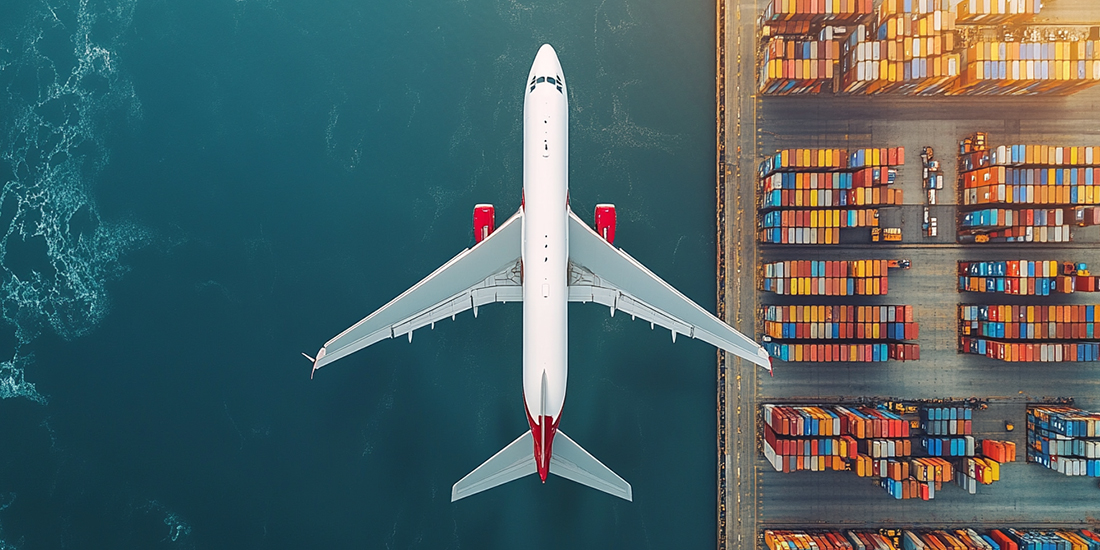 When production stops, every delivery day matters. Delayed components can disrupt schedules and customer commitments. Air freight from China offers a practical solution for urgent commercial shipments. However, choosing the right service requires careful planning. This guide compares standard, priority, and express shipping. You will also learn about flight schedules, customs clearance, and cargo preparation.
-
 Air freight from China offers speed, but costs can vary significantly. Do you know what determines your final shipping bill? This guide explains air freight cost from China, including per-kilogram rates, chargeable weight, surcharges, and destination fees. Learn how to estimate costs and reduce shipping expenses.
