


Introduction
Global trade moves at breakneck speed. Yet border delays, complex regulations, and manual paperwork remain critical bottlenecks for importers and exporters. Traditional customs processing is inherently prone to human error. A single typo on a commercial invoice can lead to costly fines. It can delay shipments and severely disrupt supply chains. To survive in today's hyper-competitive logistics landscape, supply chain architects must pivot away from legacy methods.
The solution lies in the deep integration of artificial intelligence, machine learning, and automation into trade logistics. This analysis explores how an intelligent customs architecture fundamentally transforms global trade. By detailing how automating declarations and ensuring compliance optimizes cargo velocity, we will demonstrate why partnering with a tech-forward logistics provider is the ultimate key to a frictionless cross-border experience.
Core System Advantages and Operational Impact
- Digital Transformation: Upgrading to modern platforms eliminates manual data entry. This reduces human transcription errors by up to 90 percent.
- Speed and Accuracy: Automated processing allows for real-time document submission. Sub-second API responses significantly accelerate border release times.
- Proactive Compliance: AI-driven predictive analytics ensure strict regulatory adherence. This prevents audits and costly monetary penalties before they occur.
- Seamless Integration: Synchronized data connects warehousing, logistics, and customs platforms. This creates a single, unified source of truth across the supply chain.
- Bottom-Line Impact: Automating workflows directly reduces demurrage fees. It minimizes port storage costs and slashes administrative overhead.
The Evolution of Trade and Current Industry Trends
The landscape of international trade has shifted dramatically over the past decade. Previously, moving goods across borders required extensive manual documentation, physical stamps, and in-person verification. Logistics teams would spend hours typing data from scanned PDFs into government portals. Today, the sheer volume of global commerce demands a much more sophisticated, engineering-led approach.
Recent market analysis reveals a decisive shift in global trade facilitation. Customs authorities worldwide are aggressively modernizing their infrastructure. They are phasing out fragmented regional databases in favor of centralized, AI-ready single-window portals. For example, major global markets are implementing advanced predictive targeting systems to screen cargo data before it even loads at the origin port. This regulatory evolution means that adopting digital customs clearance services is no longer just an operational upgrade. It is a baseline requirement to interact with modern government agencies. Businesses failing to digitize risk facing increased scrutiny and prolonged border wait times.
Relying on legacy systems for cross-border logistics introduces significant financial and operational vulnerabilities. Manual data entry is fundamentally flawed. Industry data suggests human transcription carries an error rate that triggers severe consequences in a regulatory environment. A simple typographical error on a commercial invoice or a misclassified Harmonized System code can lead to customs holds. These errors trigger intensive cargo exams and substantial monetary penalties. As e-commerce expands, brokers relying on paper-based workflows struggle to manage the influx of shipments. This inefficiency directly impacts the importer's bottom line through delayed inventory cycles and unpredictable delivery schedules.
How System Architecture Drives Declaration Processing
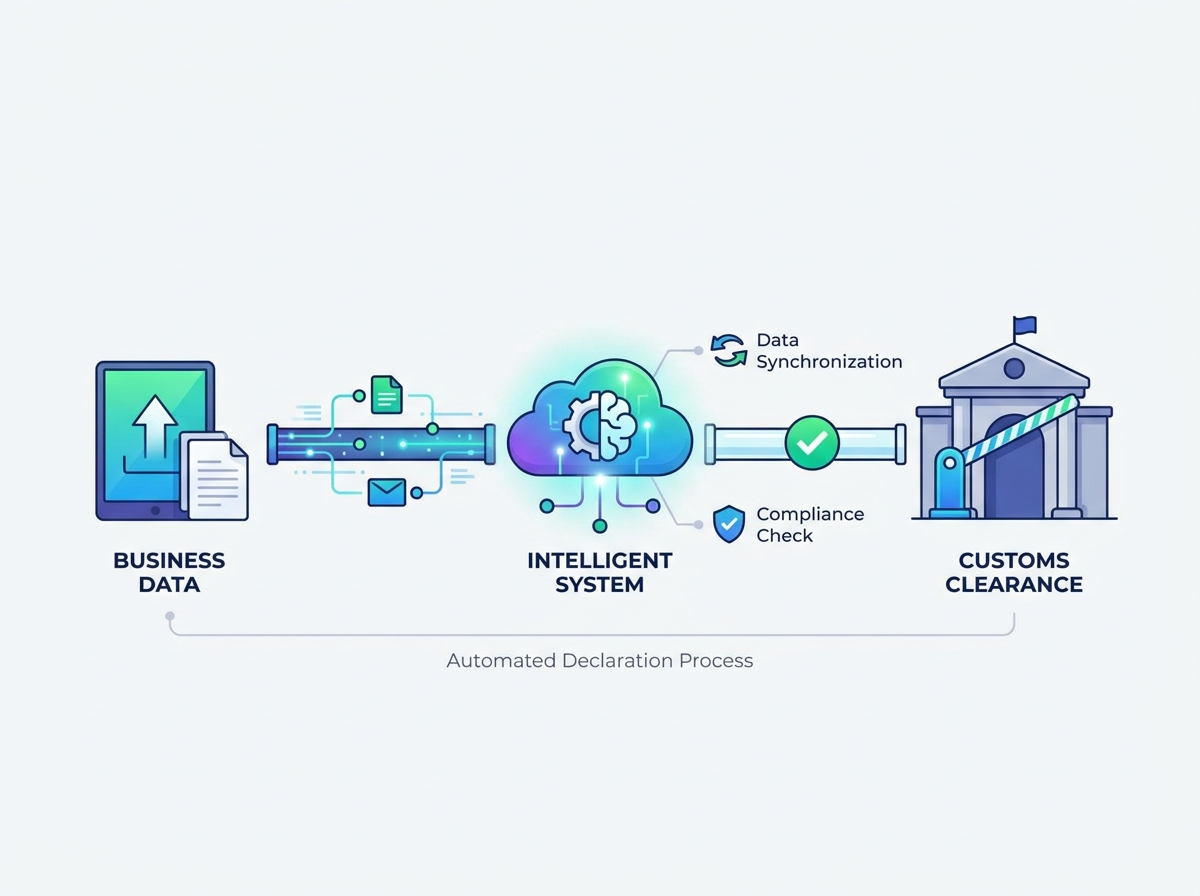
Understanding the mechanics of modern automation helps demystify the clearance process. It shifts the paradigm from reactive paperwork filing to proactive data management. This enables supply chain managers to regain control over their cargo's journey.
The workflow kicks off by digitizing raw trade documents. Imagine a shipper generating a complex packing list with hundreds of unique items. Instead of a clerk manually reviewing the file, the intelligent system ingests the document instantly. Using advanced Optical Character Recognition and machine learning algorithms, the software identifies the document type. It extracts critical data points such as supplier details, item descriptions, quantities, and values in milliseconds. Unlike basic scanners, these AI models understand context. They deliver up to 99.8 percent data extraction accuracy, pulling information seamlessly even from unstructured or non-standardized PDF formats.
Automated systems compile the validated data and execute electronic customs declaration processing via direct API connections. This replaces the traditional black box where importers were left guessing about their cargo status. Today, stakeholders receive real-time status updates directly within their logistics dashboards. Features like sub-200ms API latency ensure that messages such as Accepted, Under Review, or Released are reflected instantly, providing unparalleled transparency.
Core Comparison: Legacy vs. Intelligent Customs Systems
| Operational Metric | Legacy Manual Processing | Intelligent Customs System |
|---|---|---|
| Data Entry Method | Manual typing from paper or PDF | AI-driven OCR with 99.8% accuracy |
| Processing Speed | Hours to days per shipment | Milliseconds via RESTful APIs |
| Compliance Checking | Reactive human review | Proactive algorithmic risk profiling |
| System Integration | Siloed databases requiring re-entry | Unified WMS and ERP synchronization |
| Visibility | Blind spots during border transit | 24/7 real-time milestone tracking |
Mastering Regulatory Adherence with Predictive Analytics
Compliance is arguably the most critical component of international trade. Regulatory bodies enforce strict rules regarding tariffs, restricted entities, and product safety standards. Navigating this treacherous landscape requires absolute precision.
Trade regulations are never static. Governments frequently adjust tariff rates, implement anti-dumping duties, and update international agreements. An intelligent system continuously monitors these legislative shifts. It automatically updates its internal databases to reflect the latest Harmonized System codes and duty rates. This ensures every declaration submitted is calculated using the most current legal framework.
Furthermore, one of the most powerful applications of AI in trade is predictive risk management. Before a declaration is ever transmitted, machine learning algorithms analyze the transaction against historical data and known risk profiles. If the system detects an anomaly, such as an unusually low declared value for a specific commodity, it flags the entry for human review. This proactive approach enforces strict customs brokerage regulatory compliance. It prevents erroneous filings that could trigger audits or cargo seizures.
Integrating Warehousing for a Unified Logistics Strategy
Customs clearance should not exist in a vacuum. It is merely a transitional phase within a broader supply chain ecosystem. To achieve maximum efficiency, border processes must be tightly integrated with freight forwarding and warehousing operations.
A fragmented supply chain creates massive blind spots. The System of Systems approach advocates for total interoperability. Modern platforms utilize APIs to communicate directly with Warehouse Management Systems and Transportation Management Systems. This ensures every stakeholder operates from the exact same dataset.
Specifically, achieving intelligent customs data synchronization plays a pivotal role in this integration. The moment a customs authority issues an electronic release message, the system automatically triggers an alert to the receiving warehouse. This immediate data transfer allows the facility to prepare for the incoming cargo. Receiving docks can be scheduled, labor can be allocated for unloading, and cross-docking operations can be initiated without delay. By bridging the gap between the border and the storage facility, businesses accelerate inventory turnover rates and reduce transit times.
Engineering Standards for Choosing the Right Partner
Transitioning from manual workflows to an intelligent ecosystem requires more than just purchasing new software. It requires aligning your supply chain with a logistics partner capable of executing complex technical integrations while maintaining strict adherence to international trade laws. The stakes in cross-border trade are exceptionally high. A single systemic failure can result in irreversible damage to client relationships.
When evaluating potential partners for your international trade operations, supply chain directors must move beyond standard pricing models. Assess the underlying capabilities of their operational framework. The ideal provider must utilize RESTful APIs that facilitate instant data synchronization. This ensures your Enterprise Resource Planning systems and the broker platform communicate without manual intervention.
In contrast to legacy brokers, a technology-forward partner provides a centralized dashboard tracking shipments in real-time. Look for infrastructure built on enterprise-grade cloud environments employing advanced encryption protocols like AES-256 for data at rest and in transit. Reputable providers adhere to strict cybersecurity frameworks such as SOC 2 compliance and ISO 27001 standards. This guarantees your highly sensitive commercial data remains protected against unauthorized access.
Conclusion: Accelerate Your Supply Chain Velocity
The future of global trade is undeniably digital. Relying on manual processes is no longer a viable strategy in a landscape dominated by strict regulations, massive e-commerce volumes, and tight supply chain margins. An intelligent customs architecture fixes these systemic issues by automating declarations, synchronizing data across platforms, and ensuring proactive compliance.
This technology gives forward-thinking businesses a massive operational advantage. It transforms trade compliance into a strategic asset that lowers costs and accelerates delivery times. Stop losing money and time at the border. Partner with industry experts to streamline your imports and exports. Explore the high-performance logistics solutions at JFSZ Logistics to discover how advanced automated services can revolutionize your supply chain operations today.
FAQ
What are digital customs clearance services?
These services represent a fundamental shift from traditional paper-based border processing to a fully automated cloud-based workflow. Instead of relying on manual data entry and physical document couriers, these services utilize advanced software ecosystems. Technologies such as Optical Character Recognition scan and digitize commercial invoices and packing lists. The software then automatically formats the data to meet the specific requirements of the destination country government portal, eliminating delays and providing a secure repository for all trade documentation.
How does electronic customs declaration processing work?
It is a highly structured automated workflow facilitating real-time communication between a logistics provider and government customs portals. The process begins the moment commercial documents are uploaded. Artificial intelligence extracts the necessary data fields, validates this data against current trade regulations, and converts the information into a secure encrypted format. This data is transmitted directly to the customs authority system via a dedicated gateway, generating an automated response within minutes.
Why is intelligent customs data synchronization important for my business?
It is the technical process of ensuring information flows seamlessly and accurately across your entire supply chain software ecosystem. In traditional setups, businesses suffer from data silos where their internal systems and the broker operate independently, requiring manual re-entry. Synchronization uses APIs to connect these platforms into a single source of truth. When an order is updated internally, that change is instantly reflected in the border documentation, eliminating discrepancies that trigger audits.
How can automation improve customs brokerage regulatory compliance?
Regulatory compliance is incredibly complex due to the sheer volume and frequency of legislative changes. Automation improves compliance by removing the reliance on human memory and manual research. Intelligent systems are continuously updated with the latest global trade data. Before a declaration is submitted, predictive analytics scan the transaction for high-risk indicators such as illogical commodity codes or restricted countries of origin. If an anomaly is detected, the system flags the entry for manual review by a licensed broker.
Can an intelligent customs system integrate with my existing warehousing solutions?
Yes, the ability to integrate with existing warehousing solutions is one of the primary benefits of modern automation. Through robust API integrations, the customs platform communicates directly with your Warehouse Management System. As soon as the electronic release message is received from the government authority, the system automatically sends a notification to the destination warehouse. This allows managers to proactively schedule drayage transportation and allocate dock doors before the container even leaves the port.
What is the ROI of implementing an automated customs system?
The return on investment is realized through drastic reductions in operational friction. By automating data entry, companies eliminate costly transcription errors that lead to fines. Furthermore, pre-clearing cargo accelerates port retrieval, directly neutralizing demurrage and detention fees. Companies also save significantly on administrative labor, allowing personnel to shift focus from data entry to strategic exception management.
How does AI handle Harmonized System code classification errors?
Artificial intelligence tackles classification by utilizing Natural Language Processing to analyze detailed product descriptions, materials, and intended use cases. It cross-references these details against vast historical databases and current global tariff schedules. If the AI detects a mismatch between the provided description and the historical code usage, it instantly blocks the automated submission. The system then routes the specific line item to a senior customs engineer for final verification, ensuring absolute accuracy before government transmission.
Related Blogs
-
 Door to door shipping from China simplifies international logistics. But how can you ensure smooth delivery from factory to destination? Choosing the right shipping method, preparing documents, and understanding customs responsibilities are essential. This guide explains each shipping step, compares sea, air, and express services, and clarifies DDP and DAP terms. Learn how to arrange reliable deliveries and avoid unexpected costs.
-
 When production stops, every delivery day matters. Delayed components can disrupt schedules and customer commitments. Air freight from China offers a practical solution for urgent commercial shipments. However, choosing the right service requires careful planning. This guide compares standard, priority, and express shipping. You will also learn about flight schedules, customs clearance, and cargo preparation.
-
 Air freight from China offers speed, but costs can vary significantly. Do you know what determines your final shipping bill? This guide explains air freight cost from China, including per-kilogram rates, chargeable weight, surcharges, and destination fees. Learn how to estimate costs and reduce shipping expenses.
