



Is your cargo currently stuck at the border? Delayed shipments drain thousands of dollars daily in storage fees. They also trigger lost revenue and frustrated customers. Global trade moves incredibly fast. Yet, border bottlenecks remain a persistent and costly threat. A sudden emergency delay can halt your entire production line. In this comprehensive guide, we break down actionable strategies to accelerate the release of your goods. You will learn how to bypass common regulatory pitfalls and precisely when to deploy emergency logistics experts.
Common Causes of Customs Delays and Avoidance Strategies
Understanding why shipments hit a brick wall is your first line of defense in building a resilient supply chain. Regulatory authorities operate under strict mandates. Their automated systems are highly calibrated to flag anomalies instantly. For the modern importer, this means even a microscopic oversight can trigger a cascading reaction. This leads to intensive holds, physical inspections, and compounding storage penalties.
Missing or Inaccurate Paperwork
The most frequent trigger for a border hold is a simple documentation error. Picture this scenario. Your commercial invoice lists 500 cartons, but the packing list indicates 498. To a border agent, this minor discrepancy is a glaring red flag. Officials rely entirely on the Commercial Invoice, Packing List, and Bill of Lading to verify the contents, value, and origin of a shipment. Typographical errors, mismatched quantities, or an incorrect supplier address will trigger automatic system holds. Ensuring absolute data consistency across all shipping documents is non-negotiable for uninterrupted freight movement.
Incorrect Harmonized System Code Classification
Every product entering a country must be classified under a specific Harmonized System code. This multi-digit number dictates the applicable duty rates, taxes, and specific trade restrictions. Misclassifying goods is a severe compliance violation. It not only results in inaccurate duty payments but also significantly elevates your risk of formal audits. The importer bears the ultimate legal responsibility for correct classification. Precision is absolutely critical.
Random and Targeted Inspections
Furthermore, while border agencies utilize sophisticated algorithms to target high-risk shipments, a certain percentage of cargo is still selected for random physical examinations. You cannot entirely eliminate the risk of an X-ray or an intensive manual uncrating. However, maintaining a documented history of flawless compliance drastically reduces your overall risk score. Conversely, a track record of paperwork errors will permanently flag your company as a high-risk entity. This inevitably leads to frequent and costly border interventions.
The Power of Pre-Screened Customs Declaration Documents
Proactive preparation serves as your ultimate shield against terminal gridlock. Waiting until your vessel docks at the port to begin the clearance paperwork is a dangerous gamble you cannot afford to take. Instead, industry best practices demand the implementation of rigorous pre-arrival procedures.
Defining the Pre-Screening Process
Pre-screening involves a comprehensive audit of all shipping documentation by trade compliance experts. This occurs long before the aircraft or ocean vessel arrives at the port of entry. By utilizing specialized pre-screened customs declaration documents, importers can identify and rectify missing data, valuation discrepancies, or formatting flaws while the goods are still safely in transit. This proactive approach guarantees that the data eventually submitted to government portals is flawless.
Preventing Bottlenecks Before Arrival
A meticulous pre-arrival audit catches the exact errors that typically cause terminal bottlenecks. This includes verifying the validity of Certificates of Origin and confirming that all required Partner Government Agency permits are active and properly attached. Resolving these regulatory hurdles in advance prevents your cargo from being placed in a holding status the moment it touches the ground.
Accelerating the Release Process
Modern regulatory authorities rely heavily on Electronic Data Interchange systems to manage the massive influx of global freight. Submitting flawless, pre-audited data through these digital portals allows officials to process and pre-clear your goods while they are still moving across the ocean. Frequently, this achieves a release on arrival status. Your drayage trucks can hook up the container immediately after it is discharged.
The Shift Toward Digitized Enforcement
Looking at recent global trade trends, the regulatory landscape has experienced a massive shift toward digitized enforcement. Customs authorities worldwide are increasingly deploying AI-driven risk assessment algorithms. These systems scrutinize incoming freight data in milliseconds. Consequently, even microscopic data anomalies now trigger automated holds. This heightened vigilance has skyrocketed the demand for specialized, rapid-response intervention. Modern supply chains require an operational agility that traditional brokerage models simply cannot provide.
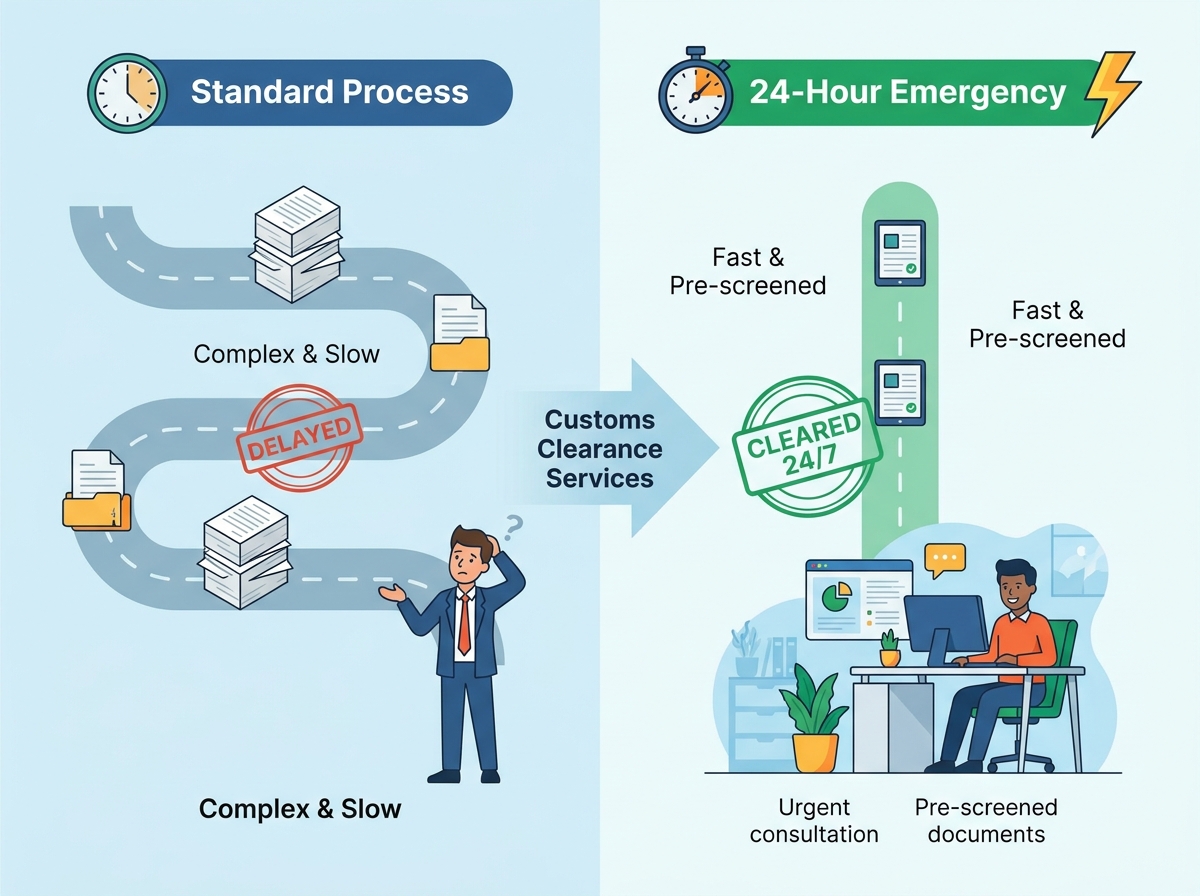
What Are 24-Hour Emergency Customs Clearance Services
Even with meticulous planning, unforeseen disruptions happen. A sudden regulatory shift, an unexpected port strike, or a supplier documentation oversight can leave critical freight stranded. In these high-stakes moments, standard business-hour processing falls dangerously short.
Defining Emergency Clearance Operations
Emergency clearance is a targeted logistical rescue operation. It involves round-the-clock monitoring of shipment statuses and immediate response protocols to satisfy border inquiries. By leveraging professional import customs clearance services, businesses gain access to dedicated strike teams. These experts work through nights, weekends, and national holidays to secure the release of time-sensitive cargo.
Scenarios Demanding Immediate Support
Certain industries cannot tolerate even a 12-hour delay. Consider a Just-In-Time automotive manufacturing plant. A single delayed container of microchips can halt the entire assembly line. This results in massive hourly financial losses. Similarly, temperature-sensitive pharmaceuticals risk complete spoilage if left sitting on a hot airport tarmac awaiting Monday morning clearance. In these critical scenarios, immediate intervention is essential for operational survival.
Standard vs. Emergency Clearance Capabilities
To fully grasp the value of a rapid response infrastructure, consider this operational breakdown between standard and emergency services:
| Feature | Standard Brokerage | 24-Hour Emergency Clearance |
|---|---|---|
| Operating Hours | Monday to Friday, 9 AM - 5 PM | 24/7/365 Active Monitoring |
| Exception Handling | Queued for next business day review | Immediate direct liaison with port officers |
| Data Integration | Manual entry summaries | Direct API/Electronic Data Interchange linkage |
| Best Suited For | Routine, non-urgent general cargo | Perishables, manufacturing parts, stuck cargo |
Proven Strategies to Speed Up Your Import Clearance
Beyond emergency interventions, establishing a baseline of efficient operations naturally accelerates your standard processing times. Implementing structured strategies significantly reduces friction with government agencies.
Leverage Electronic Filing Systems
Paper-based processing is entirely obsolete. Importers must ensure their logistics partners utilize advanced software to interface directly with government portals. Electronic filing allows for the instant transmission of entry summaries. This digital handshake accelerates the review process, provides real-time status updates, and allows for automated duty payments. It effectively eliminates administrative lag.
Maintain Transparent Supplier Communication
In addition, your clearance process is only as strong as the raw data provided by your overseas suppliers. Establish strict Standard Operating Procedures for your vendors. Train them to provide highly accurate commercial invoices detailing product descriptions, unit values, and country of origin. Ambiguous descriptions frequently trigger inquiries and subsequent delays. Do not label a shipment simply as metal parts when it actually contains steel automotive ball bearings.
Stay Updated on Trade Compliance Laws
International trade regulations are highly dynamic. Tariffs, anti-dumping duties, and environmental requirements shift constantly based on geopolitical events. Staying compliant requires continuous monitoring of these updates. Importers who proactively adjust their compliance strategies to align with new laws prevent their shipments from being caught in unexpected regulatory nets.
Why You Need Professional Customs Brokerage for Import Shipments
Managing cross-border logistics internally might seem like a clever cost-saving tactic. The reality is quite different. The regulatory environment governing global trade is notoriously unforgiving. The legal burden of reasonable care rests squarely on your shoulders as the importer of record. Failing to meet these stringent standards can result in severe financial penalties or cargo seizures.
Navigating Overlapping Jurisdictions
Bringing goods across a border often involves more than just one agency. For instance, importing medical devices requires strict adherence to health department guidelines, while agricultural products face intense biological scrutiny. Partnering with a licensed customs brokerage for import shipments provides you with the specialized knowledge needed to navigate these overlapping jurisdictions seamlessly. They ensure that all necessary permits are filed concurrently. This shields your business from costly regulatory blind spots.
Handling Tariffs and Taxes Efficiently
Duty assessment is rarely straightforward. Expert brokers do more than just assign codes. They engage in legal tariff engineering. By deeply analyzing your product composition and intended use, they identify legitimate opportunities to reduce your overall duty liability. Furthermore, they help you leverage Free Trade Agreements and duty drawback programs. This ensures you never overpay on import taxes.
Direct Liaison with Border Agencies
When a bottleneck occurs at the port, general customer service channels are entirely ineffective. Licensed brokers maintain direct, authorized access to government interfaces. They possess established relationships with port officers. If an anomaly is detected, a broker can communicate directly with the reviewing official to provide immediate clarification. This transforms a potential multi-day hold into a minor administrative query.
When to Book an Urgent Customs Clearance Consultation
Recognizing the exact moment when standard procedures have failed is crucial. Waiting too long to seek external help usually transforms a minor hiccup into a costly supply chain crisis. If your business encounters any of the following scenarios, immediate action is required.
Your Cargo is Currently Stuck at the Port
Time is the most expensive commodity in logistics. When a container is discharged from a vessel, the terminal grants a brief window of free time. Once that expires, daily demurrage fees accumulate aggressively. These penalties often reach thousands of dollars per week. If your freight has been held for over 24 hours without a clear explanation from your forwarder, standard processing has failed. At this juncture, booking an urgent customs clearance consultation allows specialists to diagnose the root cause via digital systems. They can then deploy immediate corrective measures to halt the financial bleeding.
You Received a Formal Request for Information
Government agencies do not send official notices casually. Receiving a formal request for information indicates that officials have identified discrepancies in your valuation or origin declarations. Responding to these inquiries without professional guidance is highly risky. Providing incomplete or legally inaccurate information can escalate a routine check into a full-scale audit. Expert consultation provides you with trade compliance veterans who will formulate a legally sound response to defend your importing practices.
First-Time Importers Facing Complex Goods
The highest rate of delays occurs among first-time importers attempting to move heavily regulated commodities. Products like industrial chemicals, lithium batteries, or food items are subject to intense scrutiny. If you are importing a complex category for the first time, waiting until the cargo is on the water is too late. A consultation during the procurement phase ensures you have all laboratory testing certificates and licenses secured long before the goods reach the border.
How to Choose the Best Import Customs Clearance Partner
The logistics market is saturated with providers claiming to offer fast processing. However, the quality of service varies drastically. When supply chain continuity is on the line, selecting the right partner requires a systematic evaluation of their operational parameters.
Look for Active 24/7 Monitoring Desks
Global supply chains operate continuously across multiple time zones. Cargo does not stop moving just because it is the weekend. However, many traditional brokerage firms strictly adhere to a standard schedule. Prioritize partners that offer true 24-hour emergency support. Look for infrastructure that includes round-the-clock monitoring desks and direct Electronic Data Interchange linkage to port authorities.
Verify Integrated Logistics Capabilities
Fragmenting your supply chain across multiple vendors creates massive communication silos. Using one company for ocean freight and another for clearance inevitably leads to vendor finger-pointing when a problem arises. Selecting a partner that offers integrated ocean freight and clearance synergy ensures a seamless flow of data from the factory floor to the final delivery destination. This internal synergy eliminates data entry duplication and significantly accelerates the end-to-end delivery timeline.
Demand Certified Compliance Standards
Clearance is not a one-size-fits-all process. The regulatory hurdles faced by a textile importer are vastly different from those encountered by an electronics distributor. Before signing a contract, verify that the service provider operates under recognized industry compliance standards. Deep sector expertise translates directly into fewer physical inspections and much faster release times.
Conclusion and Next Steps
Import customs can often feel like an impenetrable labyrinth of red tape. However, devastating delays and skyrocketing storage fees are entirely preventable. You simply need the right preparation and the right logistical partners.
Investing in professional, round-the-clock clearance support is fundamentally an investment in your supply chain resilience. Do not wait for your cargo to become trapped in terminal gridlock. Take proactive steps today to audit your compliance processes, leverage pre-screened documentation, and secure the emergency support necessary to keep your freight moving seamlessly across borders.
For businesses looking to eliminate border bottlenecks and ensure seamless global trade operations, partnering with seasoned experts is the only logical choice. Explore the comprehensive logistics and emergency clearance solutions available at https://www.jfszlogistics.com to safeguard your next shipment from costly delays.
Frequently Asked Questions
How long does import customs clearance usually take?
Standard clearance can take anywhere from a few hours to several days depending on port congestion and commodity type. However, by utilizing pre-screened documents and digital systems, compliant shipments can frequently be pre-cleared on the exact same day they arrive at the port.
What happens if my shipment is selected for a customs inspection?
If flagged, your cargo will be securely moved to a Centralized Examination Station. This process can cause delays ranging from a few days to several weeks. Having a dedicated, licensed broker on your side helps expedite the communication process with border officials to resolve the inspection as quickly as possible.
Related Blogs
-
 Door to door shipping from China simplifies international logistics. But how can you ensure smooth delivery from factory to destination? Choosing the right shipping method, preparing documents, and understanding customs responsibilities are essential. This guide explains each shipping step, compares sea, air, and express services, and clarifies DDP and DAP terms. Learn how to arrange reliable deliveries and avoid unexpected costs.
-
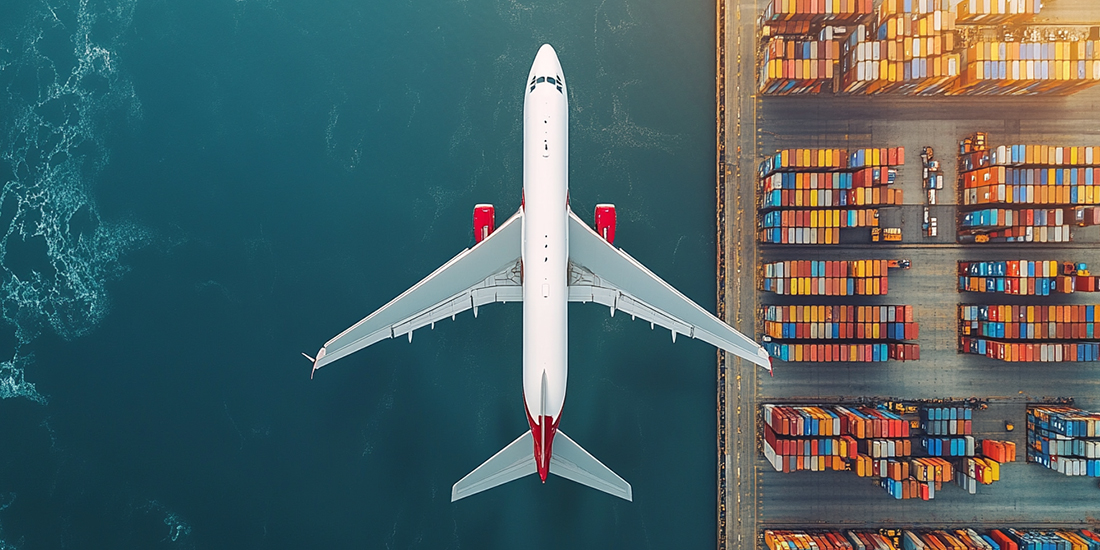 When production stops, every delivery day matters. Delayed components can disrupt schedules and customer commitments. Air freight from China offers a practical solution for urgent commercial shipments. However, choosing the right service requires careful planning. This guide compares standard, priority, and express shipping. You will also learn about flight schedules, customs clearance, and cargo preparation.
-
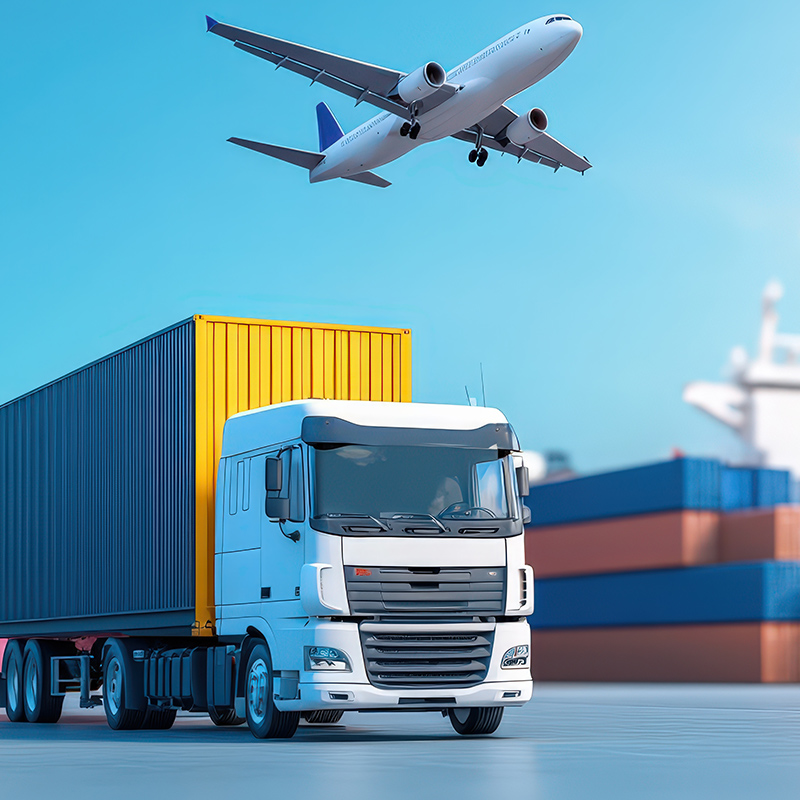 Air freight from China offers speed, but costs can vary significantly. Do you know what determines your final shipping bill? This guide explains air freight cost from China, including per-kilogram rates, chargeable weight, surcharges, and destination fees. Learn how to estimate costs and reduce shipping expenses.
