



Picture a fully loaded truck idling at a border checkpoint. The engines hum. Meanwhile, customs officers meticulously scrutinize a single mismatched Harmonized System code. A smooth shipment actually starts weeks before the ignition is ever turned on. Moving bonded merchandise across international borders remains one of the most highly regulated logistics operations globally. Ignoring compliance carries severe risks. These include hefty fines, immediate cargo seizures, and crippling operational delays.
An experienced freight forwarder acts as your frontline defense against these costly bottlenecks. This comprehensive guide delivers a field-tested compliance checklist. It is designed to safeguard your supply chain and streamline every cross-border operation.
Key Takeaways
- Strict Documentation is Non-Negotiable: Flawless paperwork forms the absolute baseline. It is required to avoid severe financial penalties, regulatory audits, and port delays.
- Route and Transit Compliance: Bonded trucks operate under rigid parameters. They must follow pre-approved routes, utilize active electronic seals, and remain under continuous GPS monitoring.
- Regional Nuances Matter: Specific geographical corridors demand specialized equipment. This includes dual-plate vehicles and strict adherence to distinct customs Electronic Data Interchange systems.
- Expertise is Essential: Leveraging professional logistics partners is the most reliable method to ensure end-to-end legal and operational compliance.
Industry Trend: The Era of Algorithmic Customs Enforcement
The landscape of international trade compliance is shifting rapidly. Customs authorities no longer rely solely on manual checkpoint inspections. Instead, border control agencies worldwide are deploying AI-driven risk assessment models. These systems analyze predictive analytics and manifest data long before a vehicle ever departs the loading dock.
What does this mean for supply chain managers? The margin for human error has effectively vanished. Relying on outdated spreadsheet tracking is no longer a viable strategy. Real-time API integrations and automated electronic seal monitoring are now baseline requirements. These technologies prevent algorithmic flagging and ensure uninterrupted transit across borders.
Why Bonded Freight Demands Uncompromising Compliance
Navigating international borders always presents logistical hurdles. However, transporting cargo under customs control introduces a significantly higher level of regulatory scrutiny. A single misstep in routing can lead to cascading failures across your entire supply chain network.
The True Value of Bonded Goods
Bonded goods are imported items with a unique tax status. Customs duties, taxes, and standard import fees remain legally deferred on these items. This deferral lasts until the merchandise enters the domestic market for consumption or is re-exported. This mechanism provides immense cash flow advantages for importers. Because the government's tax revenue is temporarily suspended, customs authorities maintain strict oversight. While in transit, the physical movement of the goods must be meticulously documented and secured at every milestone.
The High Stakes of Non-Compliance
Customs authorities operate on a strict liability basis. Failing a random checkpoint inspection or deviating from an approved transit corridor results in severe consequences. These range from heavy administrative fines to the immediate confiscation of the cargo. Furthermore, non-compliance triggers severe supply chain disruptions. This leads to missed delivery windows and damaged client relationships. Repeated compliance failures can even lead to the permanent revocation of a company's bonded status.
Critical Documentation for Customs Declarations
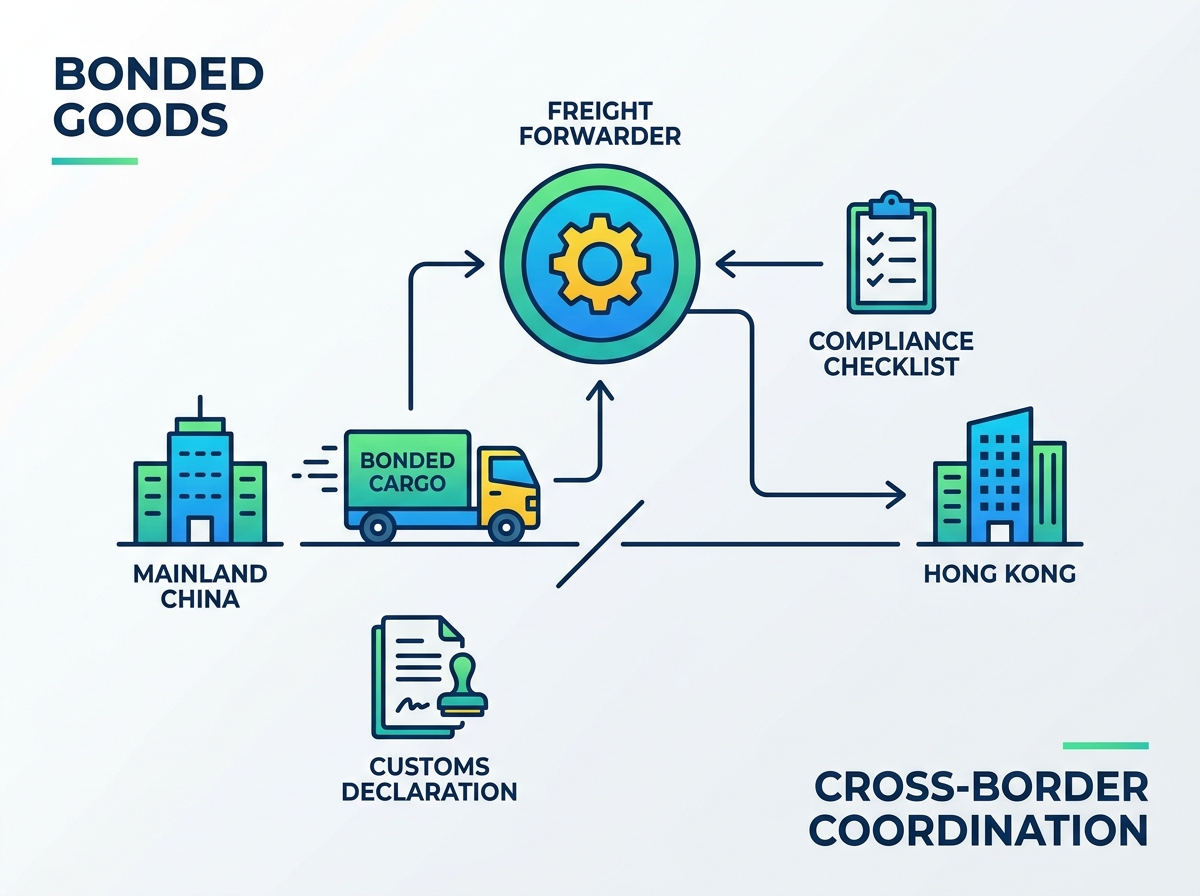
Accurate documentation forms the bedrock of any successful cross-border operation. When dealing with bonded freight, paperwork acts as a legally binding declaration to government entities. Flawless execution of your customs declaration for bonded goods ensures your freight moves without unnecessary friction.
| Document Name | Primary Function | Compliance Criticality |
|---|---|---|
| Commercial Invoice & Packing List | Details the exact value, quantity, weight, and Harmonized System codes of the cargo. | Foundational. Any discrepancy between these documents and the physical cargo triggers immediate customs holds. |
| Bonded Transit Document | Provides proof that a financial guarantee is in place to cover the suspended taxes and duties. | Mandatory. Without an active bond, customs will not permit the goods to leave the port of entry. |
| Bill of Lading | Serves as the legal contract of carriage, detailing the specific chain of custody. | Essential for proving the legal transfer of goods and establishing liability during the transit phase. |
| Certificate of Origin | Certifies the exact country where the goods were manufactured or produced. | Crucial for claiming specific tariff exemptions upon the final entry of the merchandise. |
In practice, modern logistics operations increasingly rely on digital infrastructure. Leading forwarders transmit these documents directly to customs authorities before the truck even arrives at the border checkpoint. This proactive approach significantly accelerates the clearance process.
The Ultimate Cross-Border Trucking Compliance Checklist
To systematically mitigate risk, logistics managers must implement a chronological verification process. This field-tested checklist breaks down the critical compliance steps required when moving bonded cargo.
Pre-Shipment Preparation
From an operational standpoint, the most common compliance failures occur long before the cargo is loaded onto the trailer.
- Data Verification: Rigorously verify that the Harmonized System codes, product descriptions, and values match perfectly across all draft declarations.
- Carrier Vetting: Ensure the assigned trucking company holds specific, active bonded carrier licenses. Standard domestic trucking licenses are entirely insufficient.
- Bond Verification: Confirm the customs bond possesses sufficient coverage limits for the specific cargo value.
In-Transit Security and Monitoring
Once the truck is moving, the operational focus shifts entirely to physical security and strict route adherence.
- Electronic Seals: Confirm the application of customs-approved electronic seals. These RFID-enabled devices immediately alert authorities if cargo doors are tampered with.
- Route Adherence: Bonded trucks are restricted to pre-approved transit corridors. The truck must strictly adhere to the approved route without making unauthorized detours.
- Communication Protocols: Establish a clear protocol for the driver to report unavoidable delays immediately. The forwarder must then officially notify customs to prevent automated security alarms.
Arrival and Unloading
The compliance lifecycle does not end when the truck reaches its destination. Formal closure of the transit is legally required.
- Facility Verification: Verify that the receiving warehouse is a government-certified bonded facility authorized for your specific goods.
- Bond Closure: Ensure the forwarder formally closes the transit bond with local customs. Failing to close the transit record leaves the financial guarantee exposed.
Special Focus: Navigating the Mainland to Hong Kong Corridor
Different geographical corridors present unique regulatory hurdles. The border between Mainland China and Hong Kong stands as one of the busiest logistics corridors globally. It demands highly specific operational protocols to prevent severe bottlenecks.
Specialized Dual-Plate Fleets
Unlike standard domestic transport, mainland to Hong Kong goods transportation requires highly specialized vehicles. Trucks operating on this route must feature dual license plates, commonly known as Z-plates. This means they are legally registered to operate in both jurisdictions. Securing these licenses requires rigorous background checks and continuous compliance monitoring.
Customs Checkpoints and Digital Systems
Navigating checkpoints such as Huanggang or Shenzhen Bay requires dual-compliance with two distinct customs authorities simultaneously. For Hong Kong, forwarders must submit cargo details through the Road Cargo System prior to arrival. Concurrently, they must comply with the China Customs Advanced Manifest requirements for the Mainland side. Discrepancies between these two submissions will result in the truck being denied crossing.
Seamless Handover Coordination
A professional forwarder coordinates the exact timing of the border crossing. Because bonded trucks cannot loiter indefinitely at border buffer zones, all digital clearances must be approved before dispatching the truck. This precise coordination prevents demurrage fees and reduces the risk of invasive cargo inspections.
How Professional Forwarders Systematically Mitigate Risk
Transporting goods under customs control is inherently fraught with vulnerabilities. Attempting to handle these procedures internally often exposes companies to unnecessary liabilities. Engaging professional cross-border freight forwarding services is a strategic decision. It systematically mitigates risk across multiple critical touchpoints.
International trade laws and border crossing protocols are not static. Customs authorities frequently update their data interchange requirements and modify restricted routing paths. A dedicated forwarder maintains compliance teams whose sole responsibility is to monitor these legislative shifts. By integrating these updates directly into their workflows, the forwarder ensures your shipments are never delayed due to outdated paperwork.
Furthermore, operational exceptions are inevitable in the physical realm of cross-border logistics. Imagine a scenario where a bonded vehicle pulls over due to a blown tire. Without immediate authorization, authorities may presume the cargo is being illegally offloaded. An experienced forwarder implements rigorous exception management protocols. They immediately communicate with relevant checkpoints and dispatch authorized recovery vehicles, preventing authorities from classifying a mechanical breakdown as a smuggling attempt.
Supply Chain Optimization: The Annual Importer Audit
Prudent supply chain managers must conduct a comprehensive review of their logistics operations regularly. Evaluating your bonded cargo transportation coordination yields significant cost savings and operational efficiencies.
Auditing Past Customs Entries for Discrepancies
Begin by requesting a comprehensive report of all bonded shipments processed over the last twelve months. Cross-reference the commercial invoices with the final customs declarations. Pay particular attention to Harmonized System code classifications. Even minor, systemic errors in code application can lead to retroactive audits by customs authorities. Document any discrepancies to prevent recurrence.
Reviewing Current Transportation Workflows
Analyze the physical movement of your bonded goods. Evaluate transit times, border crossing delays, and the frequency of physical customs inspections. Frequent delays are often indicators of underlying compliance issues. Map out the entire workflow from the point of origin to the final bonded warehouse, identifying bottlenecks in document handovers.
Evaluating Your Current Logistics Partners
The reliability of your supply chain is inextricably linked to the competence of your logistics providers. Assess the performance of your current bonded trucking carriers. Did they maintain full compliance with all routing and electronic seal requirements? If your current partners demonstrate recurring compliance failures, it is time to transition to a more capable logistics provider.
Actionable Criteria for Selecting a Logistics Partner
Selecting a logistics partner requires looking beyond basic marketing claims. You need a provider with hard-coded infrastructure and technical expertise. When vetting a potential partner, mandate the following technical and operational criteria:
Authorized Economic Operator Certification
The most reliable indicator of competence is an active Authorized Economic Operator certification. This accreditation is awarded to logistics providers demonstrating impeccable compliance records and robust financial stability. It directly translates to prioritized customs processing and expedited border clearances for your freight.
Integrated Warehousing and Fleet Capabilities
A competent partner must control the physical assets. Look for providers offering intelligent warehousing equipped with real-time Warehouse Management Systems. For trans-border routes, they should deploy self-operated dual-plate fleets. Relying heavily on third-party sub-contractors introduces unacceptable risk layers for bonded freight.
Real-Time Digital Visibility
Visibility equals security. Your forwarder must provide continuous digital tracking. This includes active GPS monitoring integrated with customs-approved routing maps. API integrations should feed directly into your supply chain dashboard, offering minute-by-minute location data and clearance milestone updates.
Conclusion
Moving bonded merchandise requires military-level precision. Customs authorities demand absolute accuracy every single day. Missing a single compliance check can trigger financial penalties, cargo seizures, and irreparably damage client relationships. Do not leave your supply chain to chance or outdated manual processes.
Partner with a technologically advanced logistics provider to secure your cross-border operations. If you are experiencing delays, compliance warnings, or a lack of visibility, it is time to upgrade your logistics infrastructure. Contact the expert team at JFSZ Logistics today to implement a flawless, end-to-end transportation strategy tailored to your specific cargo needs. Protect your bottom line and ensure your freight keeps moving seamlessly.
FAQ
What is the difference between standard trucking and bonded trucking?
Standard trucking involves the transportation of goods that have already cleared domestic customs. All applicable duties and taxes have been paid, allowing these vehicles to travel freely on public roads. In contrast, bonded trucking involves moving cargo still under customs control, with duties legally suspended. This requires specially licensed carriers, pre-approved transit routes, financial guarantees, and strict security measures like electronic sealing.
Can any Freight Forwarder handle customs declarations for bonded goods?
No. Managing declarations for goods under customs control requires highly specialized qualifications. A forwarder must possess specific customs brokerage licenses and maintain secure IT integrations with national customs databases. They must also have the financial capacity to underwrite the necessary transit bonds. Only forwarders with dedicated compliance departments should handle these scrutinized transactions.
What happens if a bonded truck deviates from its approved route?
If a vehicle transporting bonded cargo deviates from its mandated route without prior authorization, the active GPS tracking system will immediately trigger an automated alarm to customs authorities. This is treated as a severe security breach. Authorities will typically dispatch enforcement units to intercept the vehicle, resulting in mandatory cargo inspections, heavy fines, and potential revocation of operational licenses.
How long does mainland to Hong Kong goods transportation take for bonded cargo?
The actual transit time can be remarkably swift if all compliance protocols are strictly followed. With proper coordination, customs documentation is processed electronically long before the truck arrives at the checkpoint. Utilizing dual-plate vehicles and expedited customs lanes, the physical border crossing can be completed in a matter of hours. However, incomplete paperwork can extend this process into multi-day delays.
What is the penalty for incorrect Harmonized System codes on bonded freight?
Applying an incorrect Harmonized System code is considered a serious customs violation. Penalties range from immediate cargo holds and administrative fines to retroactive audits of your previous shipments. If customs determines the misclassification was intentional to evade higher tariffs, it can lead to cargo seizure and criminal smuggling charges.
How do electronic seals work in cross-border trucking?
Electronic seals are heavy-duty, RFID-enabled locking mechanisms applied to the cargo doors of a bonded truck. Once locked and activated by customs or an authorized forwarder, they continuously transmit a signal. If the seal is tampered with, cut, or opened before reaching the authorized destination, it instantly sends an alert to border control systems, flagging the shipment for immediate inspection.
Related Blogs
-
 Door to door shipping from China simplifies international logistics. But how can you ensure smooth delivery from factory to destination? Choosing the right shipping method, preparing documents, and understanding customs responsibilities are essential. This guide explains each shipping step, compares sea, air, and express services, and clarifies DDP and DAP terms. Learn how to arrange reliable deliveries and avoid unexpected costs.
-
 When production stops, every delivery day matters. Delayed components can disrupt schedules and customer commitments. Air freight from China offers a practical solution for urgent commercial shipments. However, choosing the right service requires careful planning. This guide compares standard, priority, and express shipping. You will also learn about flight schedules, customs clearance, and cargo preparation.
-
 Air freight from China offers speed, but costs can vary significantly. Do you know what determines your final shipping bill? This guide explains air freight cost from China, including per-kilogram rates, chargeable weight, surcharges, and destination fees. Learn how to estimate costs and reduce shipping expenses.
