


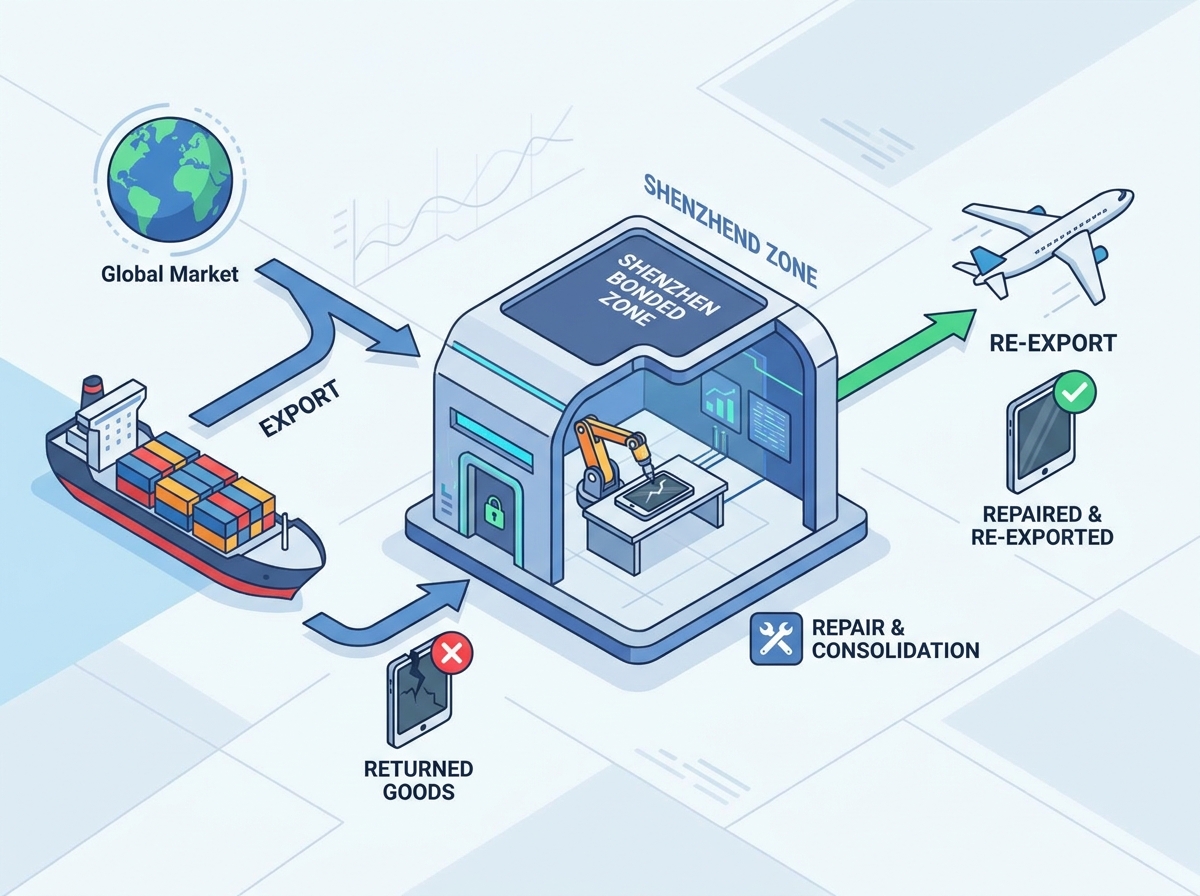
Foreign buyers reject a shipment. Panic immediately sets in. Manufacturers and trading companies picture the ultimate reverse logistics nightmare. They foresee exorbitant taxes, endless red tape, and months of frustrating delays. Discarding the goods overseas means a total loss of product value. Conversely, bringing them back to mainland China triggers hefty import duties and Value-Added Tax, commonly known as VAT.
Fortunately, a highly strategic workaround exists. By utilizing the Shenzhen Bonded Zone, businesses legally bypass these severe financial penalties. In this comprehensive guide, we will break down exactly how to fix defective exports through tax-free repair policies. This approach ensures your profit margins remain intact while complying entirely with China Customs regulations.
Key Takeaways
- Tax-Free Repairs: Routing returned goods through the Shenzhen Bonded Zone allows businesses to conduct repairs without paying Chinese import duties or VAT. This preserves vital capital.
- Streamlined Processes: Expert management of customs declarations significantly reduces processing time. Refurbished products return to the global market much faster.
- Secure Storage: Utilizing regulated bonded facilities provides a safe, highly controlled environment. Technicians can inspect and fix merchandise before it ships back out.
- Professional Support: Leveraging specialized customs brokerage ensures all documentation remains entirely compliant with stringent regulatory standards. This covers everything from the initial return to the final re-export.
Why Choose the Shenzhen Bonded Zone for Export Returns?
Areas such as the Futian Free Trade Zone and the Pingshan Comprehensive Bonded Zone operate under a unique regulatory status. They are considered within the national territory, but outside customs territory. This critical distinction forms the cornerstone of modern reverse logistics in Southern China.
Recent global trade data reveals a striking shift in supply chain dynamics. With the explosive growth of cross-border e-commerce and increasingly stringent B2B quality standards, return rates have surged. Industry analysts report that return volumes to Asia grew by over 30 percent last year alone. Instead of writing off these returns as sunk costs, forward-thinking supply chain managers are pivoting. They now view reverse logistics as a critical value-recovery mechanism. Utilizing special economic zones for tax-free refurbishment is no longer a niche tactic. It is becoming a standard operational baseline for competitive exporters.
Financial Benefits and Tax Exemptions
The primary advantage of directing returned cargo to a Shenzhen Bonded Zone is immediate financial relief. These zones sit entirely outside the standard customs boundary. Consequently, goods entering from overseas are completely exempt from standard import tariffs and VAT.
Consider a conventional scenario. A manufacturer might be forced to pay a 13 percent VAT plus varying import duties just to bring their own malfunctioning products back to their factory floor. By utilizing the bonded zone, these taxes are legally neutralized. The goods are temporarily housed, repaired, and subsequently shipped back out. This ensures the cost of reverse logistics never eclipses the intrinsic value of the merchandise.
The Core Contrast: Traditional vs. Bonded Repair
To truly understand the operational impact, we must look at the data. On the front lines of logistics, the difference between traditional methods and bonded zone utilization is stark.
| Operational Metric | Traditional Re-Importation | Shenzhen Bonded Zone Repair |
|---|---|---|
| Import Duties & VAT | Fully applicable, often exceeding 15% to 20% | 100% Exempt |
| Clearance Speed | Weeks to months due to heavy scrutiny | 24 to 48 hours with AEO-certified brokers |
| Facility Standards | Standard domestic factory floors | WMS-integrated, ESD-safe bonded technical centers |
| Customs Risk | High risk of forced taxation or confiscation | Regulated, highly compliant, and predictable |
Common Challenges in Reverse Logistics
While the financial benefits are undeniable, the operational execution of reverse logistics is fraught with regulatory hurdles. Bottom-of-the-funnel operations require absolute precision. A single clerical error can lead to catastrophic delays.
Strict Customs Scrutiny
China Customs rigorously monitors all returned goods. Their primary goal is to prevent smuggling, tax evasion, and the illegal dumping of electronic waste. Authorities remain highly vigilant about ensuring the cargo coming back for repair matches the exact items originally exported. Specifically, any discrepancy in serial numbers, product descriptions, or declared quantities triggers intense physical audits. This quickly leads to cargo confiscation or severe financial penalties.
Complex Documentation and Proof of Export
Furthermore, the burden of proof is one of the highest barriers to entry in this process. Businesses must conclusively demonstrate that the defective merchandise was originally manufactured in, and exported from, China. This necessitates matching the current return shipment with historical export declarations. If original paperwork is lost, proving origin becomes exceptionally difficult. The situation worsens if the goods originally moved through a convoluted network of third-party trading companies.
Why You Need Professional Intervention
Navigating these strict regulations requires deep, specialized knowledge. Partnering with seasoned professionals acts as a critical bridge over these operational gaps. Expert brokers conduct pre-arrival audits on your cargo data. They ensure every serial number and Harmonized System code aligns perfectly with historical records. By identifying anomalies before the vessel even docks, these experts prevent costly bottlenecks.
Step-by-Step Guide: Customs Clearance for Returned Exports
Understanding the operational workflow is vital for supply chain managers aiming to optimize their reverse logistics. The process must be executed sequentially. Maintaining compliance at every stage is non-negotiable.
Before the defective goods even leave their overseas destination, the regulatory process must begin in China. The exporter submits a formal return-for-repair application to customs via their appointed broker. This dossier details the nature of the defect, the scope of the intended repairs, and a strict timeline. Only after this permit is officially granted should the goods be loaded onto a vessel bound for Shenzhen.
Once the goods arrive at major maritime hubs like Yantian or Shekou, they are not cleared for domestic entry. Instead, they are processed under a transit declaration. The cargo is securely transferred from the port terminal directly into the designated comprehensive bonded zone. The entire transit occurs heavily secured under customs seals.
Upon arrival at the facility, the operational phase kicks off. To ensure this phase remains compliant and efficient, businesses rely on specialized customs clearance for returned exports. Technicians enter the warehouse to unpack the cargo, flash firmware, swap faulty lithium batteries, and conduct rigorous quality assurance testing. Crucially, any replacement parts brought into the bonded zone from mainland China must also be properly declared. Technically, these parts are being exported into the zone.
After repairs conclude, the broker compiles a meticulous consumption report. This document outlines exactly what was fixed and which spare parts were utilized. It also confirms the goods are ready for departure. The final declaration is then submitted to close the loop on the initial permit, allowing the cargo to be released for outbound shipping.
Navigating Returned Merchandise Re-Export Procedures
Fixing the product is merely half the battle. Getting it back to the overseas buyer legally and efficiently requires strict adherence to outbound regulations.
Before any shipment leaves the bonded zone, it must meet all international export standards. The repackaging process is heavily documented. Customs authorities frequently conduct random spot checks. Ensuring rigorous quality control at this stage prevents a devastating secondary rejection from the overseas buyer. A second rejection would exponentially compound logistical costs.
The outbound phase involves highly specific returned merchandise re-export procedures. A critical constraint here is time. China Customs generally mandates that goods brought in for repair must be re-exported within a strict six-month window. Sometimes complex repairs require more time due to global supply chain shortages for replacement parts. In these cases, a formal extension must be applied for prior to the deadline. Failure to comply can result in the goods being forcibly imported, triggering the exact taxes the business sought to avoid.
During the refurbishment process, technicians extract defective components, such as cracked LCD screens or burnt-out circuit boards. These broken parts cannot simply be tossed in a dumpster. Customs views this scrap as bonded material. Consequently, businesses have three legal avenues. They can re-export the scrap alongside the repaired goods. They can pay applicable import taxes to bring the scrap into mainland China for recycling. Alternatively, they can have it officially destroyed within the bonded zone under the direct physical supervision of customs and environmental agencies.
Essential Documents for Import and Export Customs Brokerage
In international trade, missing a single piece of paper can bring the entire supply chain to a grinding halt. Preparing a comprehensive document package is absolutely non-negotiable.
To prove the origin and declared value of the goods, historical documents are strictly required. These include the original China Customs export declaration form, the commercial invoice, the packing list used during the first shipment, and the original Bill of Lading or Air Waybill.
Customs requires concrete proof that the return is a legitimate business transaction. It cannot be a tactic for tariff evasion. Businesses must provide a formal Return Agreement signed by both the Chinese seller and the overseas buyer. In addition, detailed photographic evidence, testing logs, or a third-party inspection report explicitly detailing the defects must be submitted.
Managing this mountain of paperwork is inherently complex. Utilizing professional import and export customs brokerage ensures that all files are meticulously audited before submission. Expert brokers verify that Harmonized System codes match historical data. They translate technical defect reports into standard customs terminology. Furthermore, they push the entire dossier flawlessly through the China International Trade Single Window system. This professional oversight drastically minimizes the risk of rejection due to clerical errors.
Real-World Scenarios: Who Benefits from Bonded Zone Repairs?
Understanding the practical application of these regulations helps supply chain leaders evaluate if this strategy fits their specific operational model.
The consumer electronics sector sees the highest utilization of Shenzhen bonded infrastructure. Items like commercial drones, smartphones, and LED displays are high-value but highly prone to firmware glitches or hardware faults. For instance, imagine a batch of 2,000 tablets is rejected by a European distributor due to a faulty battery batch. Re-importing them and paying taxes on their high declared value would be financially devastating. By routing them to a Futian bonded warehouse, the manufacturer can dispatch engineers, swap the batteries, and send them back to Europe. This strategy saves hundreds of thousands of dollars.
Sellers operating on platforms like Amazon or Shopify face notoriously high return rates. Traditionally, many chose to liquidate or destroy returned items overseas. The freight and tax costs of returning them to China were simply prohibitive. Today, forward-thinking e-commerce brands consolidate their overseas customer returns. They ship them in bulk to the Shenzhen Bonded Zone. Here, items are inspected, refurbished, repackaged into pristine retail boxes, and re-exported to global fulfillment centers. This process recovers massive amounts of revenue.
Evaluation Criteria for Logistics Partners in Shenzhen
Navigating the complexities of reverse logistics requires more than just a basic understanding of freight forwarding. When dealing with defective merchandise, the stakes are significantly higher. Selecting a highly competent logistics and compliance partner is the most critical operational decision a business can make.
Shenzhen is home to multiple distinct bonded areas. Each operates under the broad framework of China Customs, but with localized administrative nuances. A reliable partner must have an established physical presence and deep operational experience within these specific zones. Local expertise means the broker understands the exact interpretation of regulations by regional officers. This ensures containers are swiftly transferred from Yantian or Shekou terminals without incurring unnecessary demurrage charges.
Reverse logistics is inherently fragmented. A standard return involves ocean freight, port drayage, secure storage, technical labor, and outbound shipping. Utilizing different vendors for each step creates dangerous operational silos. To mitigate these risks, businesses should partner with comprehensive providers who offer integrated solutions. Look for a partner that seamlessly combines international freight forwarding with highly secure bonded warehousing for returned cargo. Elite facilities offer features like Warehouse Management System integration, 24/7 CCTV monitoring, and ESD-safe repair stations. By consolidating these functions, your partner assumes total accountability, preventing miscommunications that lead to clearance delays.
The financial structure of reverse logistics can be unpredictable if managed by an opaque vendor. Decision-makers must demand clear, itemized quotes. These should outline warehouse handling fees, declaration charges, and scrap disposal costs. Beyond pricing, compliance guarantees are paramount. Evaluate whether the prospective partner holds an Advanced Authorized Economic Operator certification from China Customs. Partnering with an AEO-certified broker provides tangible benefits. These include significantly lower random inspection rates and priority processing during peak shipping seasons, often achieving clearance in as little as 24 to 48 hours.
Conclusion
Handling export returns does not have to drain your profits or become an administrative nightmare. The Shenzhen Bonded Zone offers highly strategic, tax-free repair policies. These policies allow manufacturers and sellers to salvage the value of defective goods legally and efficiently.
However, reverse logistics rules remain incredibly strict. The complexity of these procedures requires specialized knowledge. Attempting this without expertise leads to devastating compliance mistakes, cargo seizures, or unexpected tax bills. Stop letting overseas returns erode your profit margins. Evaluate your current return volume, upgrade your supply chain strategy, and partner with expert teams for reliable customs clearance, secure warehousing, and intelligent reverse logistics solutions today.
FAQ
How long can returned goods stay in the Shenzhen Bonded Zone for repair?
Under standard China Customs regulations, returned goods are permitted to remain within the Shenzhen Bonded Zone for a maximum initial period of six months. This timeframe begins on the exact date the cargo officially enters the bonded facility. If the repair process requires specialized components that face severe global supply chain delays, a formal application for an extension can be submitted. This typically grants an additional six months. Failing to re-export the goods before the expiration date can result in heavy administrative fines or forced re-importation with full taxation.
Do I have to pay taxes on the replacement parts sent into the bonded zone?
No, you generally do not have to pay taxes, provided the parts are managed correctly under bonded regulations. If you import replacement parts from a foreign country directly into the bonded zone, they are exempt from Chinese import duties and VAT. Conversely, if you send domestically manufactured parts from mainland China into the zone, they are treated as exports and are typically exempt from export taxes. However, strict inventory management is legally required. Every single replacement part must be meticulously tracked and proven to have been used exclusively for the repair.
Can any type of product be returned to the Shenzhen Bonded Zone for repair?
While the bonded repair policy is highly accommodating, it is primarily designed for high-value manufactured goods. This includes consumer electronics, telecommunications equipment, medical devices, and precision machinery. China Customs strictly prohibits the entry of certain items to protect national security and environmental integrity. Hazardous materials, heavily contaminated items, medical waste, or goods listed in the national Catalog of Prohibited Import Goods cannot be processed under any circumstances. A thorough preliminary consultation is essential to verify your specific product's legal eligibility.
What happens if the goods cannot be repaired?
Despite the best technical efforts, certain returned products may be diagnosed as fundamentally unrepairable. When this occurs, businesses have three legally compliant options. First, the goods can be repackaged and returned directly to the original overseas buyer. Second, the unrepairable merchandise can be exported to a third country that specializes in industrial recycling. Third, the products can be destroyed directly within the bonded zone. This destruction process must be executed by certified environmental disposal agencies. It is conducted under the direct physical or video supervision of China Customs officers.
Why should I use specialized customs clearance services instead of my regular freight forwarder?
Utilizing a general freight forwarder for reverse logistics is a significant operational risk. Bonded zone regulations are highly specialized. A standard forwarder excels at moving conventional cargo using standard declaration codes. However, reverse logistics requires the use of specific repair trade codes. These codes demand a completely different set of supporting documentation, including original export proofs and formal return agreements. A dedicated customs broker possesses the granular regulatory knowledge required to structure the data correctly. This ensures you avoid severe financial penalties and cargo seizures.
What is the average cost of processing returns through a bonded zone?
Costs vary significantly based on the volume, product type, and scope of repairs. Generally, expenses include port-to-zone transit fees, bonded warehouse handling and storage rates, and customs declaration fees. While there are upfront logistical costs, they are vastly outweighed by the savings from avoiding the 13 percent to 20 percent import duties and VAT. An experienced logistics partner will provide a transparent, itemized quote based on your specific operational requirements.
Do foreign companies need a registered Chinese business entity to utilize these zones?
Foreign companies do not necessarily need their own registered Chinese business entity to utilize the bonded repair policies. They can leverage the services of an authorized, locally registered customs broker and bonded warehouse operator. The local partner acts as the consignee for the bonded zone operations, handling all customs declarations, warehousing, and compliance requirements on behalf of the overseas client.
Related Blogs
-
 Door to door shipping from China simplifies international logistics. But how can you ensure smooth delivery from factory to destination? Choosing the right shipping method, preparing documents, and understanding customs responsibilities are essential. This guide explains each shipping step, compares sea, air, and express services, and clarifies DDP and DAP terms. Learn how to arrange reliable deliveries and avoid unexpected costs.
-
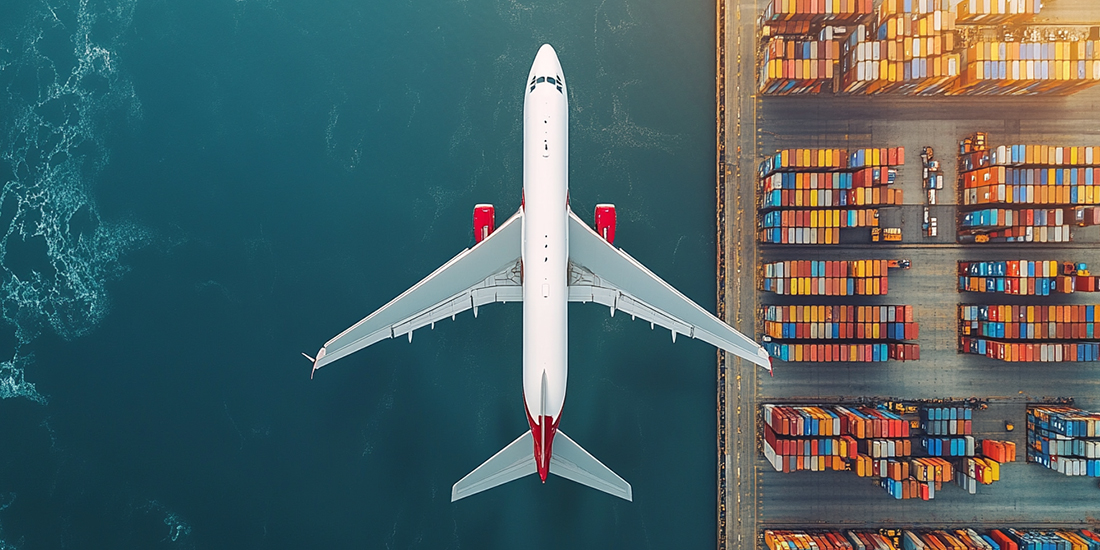 When production stops, every delivery day matters. Delayed components can disrupt schedules and customer commitments. Air freight from China offers a practical solution for urgent commercial shipments. However, choosing the right service requires careful planning. This guide compares standard, priority, and express shipping. You will also learn about flight schedules, customs clearance, and cargo preparation.
-
 Air freight from China offers speed, but costs can vary significantly. Do you know what determines your final shipping bill? This guide explains air freight cost from China, including per-kilogram rates, chargeable weight, surcharges, and destination fees. Learn how to estimate costs and reduce shipping expenses.
