



Shipping oversized furniture and heavy construction materials across the globe presents a brutal set of logistical nightmares. Skyrocketing ocean freight costs and unpredictable customs delays are relentless. Many businesses unwittingly overpay for half-empty containers. Others struggle with the severe cash flow impact of upfront customs duties on massive project shipments. In this comprehensive guide, we will explore how the strategic combination of freight consolidation and bonded transit acts as the ultimate cost-saving mechanism. By implementing smarter transit strategies, supply chain managers can protect profit margins, streamline operations, and ensure timely delivery for both retail brands and large-scale developers.
Key Takeaways
- Cost Efficiency: Utilizing shared container space for bulky goods allows businesses to pay strictly for the volumetric footprint they consume. This drastically reduces overall shipping expenditures compared to underutilized dedicated containers.
- Cash Flow Management: Bonded transit frameworks enable companies to legally defer customs duties and import taxes. Vital working capital is preserved until the goods are officially released to their final destination.
- Risk Mitigation: Engaging professional cargo handlers ensures that fragile furniture pieces and heavy construction materials are properly segregated. Goods are packed safely and handled in strict compliance with international load-bearing regulations.
- Project Readiness: Securing reliable logistics support guarantees that heavy machinery and essential building materials arrive at the active project site precisely when the development schedule dictates.
The Shifting Landscape of Global Freight
Recent disruptions in global shipping lanes have fundamentally altered how procurement managers approach inventory. With fluctuating tariffs and unpredictable transit times, the traditional just-in-time model is proving too fragile for heavy industries. Market analysis indicates a massive pivot toward buffer stock strategies across the construction and home goods sectors. Leading developers and retail brands are now leveraging bonded warehousing near major destination ports. This approach allows importers to bring inventory closer to the end market in bulk, hedging against volatile ocean freight rates. Most importantly, it shields project budgets from unpredictable tax hikes until the exact moment those materials are required on-site.
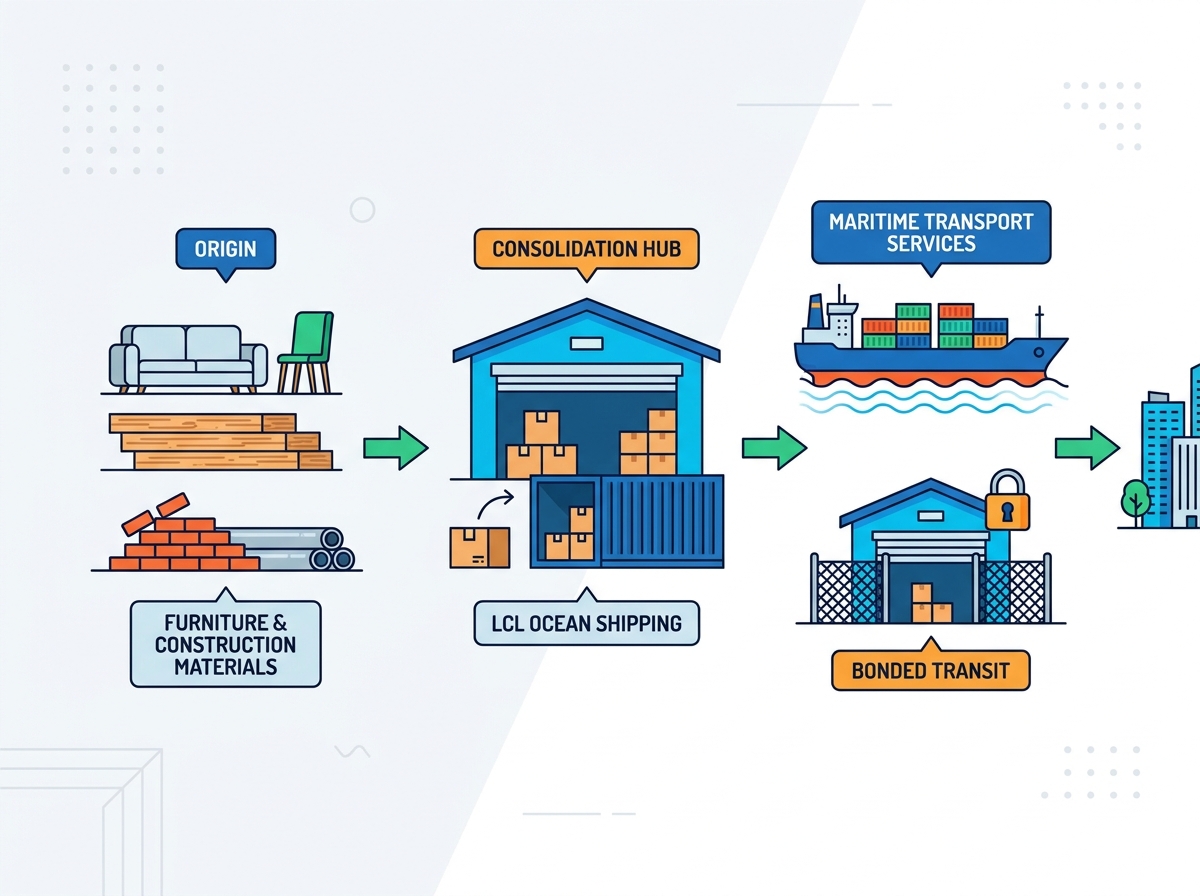
The Mechanics of Bulky Cargo Consolidation
Navigating the global supply chain requires meticulous planning. This is especially true when dealing with items that simply refuse to conform to standard pallet dimensions. Applying traditional shipping models to non-standard cargo frequently results in glaring operational inefficiencies.
At its core, cargo consolidation merges multiple smaller shipments from various suppliers into a single shipping container. Traditionally, procurement managers moving large items booked a full container load to guarantee cargo security. They did this even if their goods only occupied sixty percent of the interior space. This outdated practice meant companies were essentially paying a premium to ship empty air.
The financially viable alternative is leveraging LCL ocean shipping for bulky goods. Less than container load consolidation allows multiple independent shippers to share both the physical space and the financial burden. A medium-sized batch of upholstered sofas or a specific order of architectural steel can be shipped economically. You no longer need to wait weeks to accumulate enough inventory to justify a dedicated booking.
Overcoming Challenges in Mixed Cargo Transport
The physical characteristics of furniture and building supplies create distinct logistical hurdles. A standardized approach to maritime freight for furniture and building materials almost always fails. These two categories possess entirely different risk profiles, weight distributions, and handling requirements.
Furniture logistics is notoriously complex. Structural damage, surface scratching, and moisture degradation are constant threats during long ocean voyages. Upholstered items and solid wood dining tables are highly susceptible to drastic changes in humidity. A single instance of improper forklift handling can instantly turn a high-margin retail product into unsellable inventory. Industry leaders employ targeted consolidation models to group shipments by specific geographic regions before they cross the ocean. Fewer touchpoints directly correlate to a significantly lower probability of transit damage.
In contrast, the primary challenge with construction materials lies in their extreme weight and cumbersome dimensions. Structural steel beams and raw cement do not fit neatly into standard shipping cartons. They test the maximum payload limits of a standard forty-foot container long before the physical volume is filled. If heavy steel pipes are loaded without specialized blocking and bracing, they can violently shift during turbulent ocean swells. This dynamic movement can easily breach the container walls or crush adjacent lighter cargo. Industrial-grade securing mechanisms like heavy-duty ratchet straps and custom timber dunnage are absolute necessities.
Optimizing Supply Chains with Warehouse Consolidation
The theoretical financial benefits of shared shipping space mean nothing without flawless execution on the ground. Combining disparate goods requires specialized infrastructure, climate-controlled zones, and highly trained personnel.
The journey begins the moment goods arrive at an origin facility. Logistics personnel rigorously check for pre-existing damage or packaging flaws before accepting liability. Following this initial receipt, the cargo undergoes detailed inspection and sorting. Loading a container is a complex physical puzzle. Heavy construction items like dense pallets of ceramic tiles must be strategically placed at the bottom. This lowers the center of gravity. Lighter modular cabinetry is carefully secured on top or segregated using physical plywood partitions. To achieve this structural precision, savvy businesses rely on professional warehouse cargo consolidation services. This ensures cargo integrity remains intact throughout the turbulent ocean voyage.
Upon arrival at the destination port, this intricate process is carefully reversed. Heavy-duty forklifts maneuver the pallets out of the shared container within a secure warehouse environment. The segregated goods are then routed to their respective final delivery points using localized freight networks.
Leveraging Bonded Transit for Heavy Machinery
Large-scale commercial construction projects operate on unforgiving timelines and highly scrutinized budgets. Any disruption causes cascading delays. Premature financial expenditures severely strain a developer's working capital. Bonded transit acts as a critical buffer for these high-stakes environments.
Heavy construction machinery carries a massive upfront capital cost. The import duties levied on hydraulic excavators and tower cranes are proportionally exorbitant. By utilizing bonded logistics, construction firms can import this heavy machinery months in advance. The equipment is stored safely in an off-site bonded warehouse. The firm only pays the required duties when the equipment is physically deployed to the site. Partnering with experts for construction equipment logistics support ensures project managers maintain vital liquidity. You stop draining cash reserves on upfront taxes for idle machinery.
Furthermore, many international infrastructure projects require equipment to traverse multiple sovereign borders. Bonded transit frameworks allow sealed containers and oversized heavy machinery to cross borders with minimal bureaucratic interference. Customs duties are suspended during transit. The equipment moves seamlessly without getting trapped in administrative bottlenecks.
Actionable Selection Guide: When to Consolidate
Adopting a new logistical framework requires a clear-eyed assessment of operational trade-offs. Combining shipments offers undeniable financial benefits but is not a universal remedy.
The most prominent driver for adopting consolidation is the aggressive reduction of baseline shipping expenditures. Converting fixed container costs into variable costs based on exact cubic volume protects profit margins. It also accelerates inventory turnover. You can ship smaller, more frequent batches instead of tying up capital in origin-side inventory.
However, objective analysis requires acknowledging the friction points. Consolidated freight must pass through a container freight station. It takes additional days at the origin port to receive, sort, and pack multiple shipments. A similar deconsolidation process occurs at the destination. This typically adds three to seven days to the total transit time. Increased handling also equates to a statistically higher risk of damage.
Transparency is critical. Highly urgent construction deadlines demand dedicated containers or premium air freight. If a multi-million-dollar building project is halted pending specific structural steel components, the cost of delay far exceeds the savings of shared shipping. Extremely fragile bespoke furniture should never share container space with industrial goods. The risk of impact damage dictates the use of dedicated sealed containers.
Calculating Cost Savings in Maritime Transport
To justify a shift in supply chain methodology, logistics professionals require empirical financial projections. The return on investment is realized through direct freight cost reduction and the avoidance of punitive hidden fees.
Consider a medium-sized furniture retailer importing fifteen cubic meters of wooden dining tables. A standard forty-foot container holds approximately sixty-seven cubic meters. If the retailer chooses dedicated shipping to prioritize security, they pay a flat rate regardless of utilization. If they choose shared shipping, the cost is prorated based on volume.
| Cost Component | Dedicated Full Container | Consolidated Freight 15 Cubic Meters | Financial Impact |
|---|---|---|---|
| Ocean Freight Rate | $4,500 Flat Rate | $1,350 at $90 per unit | $3,150 Savings |
| Origin Terminal Handling | $300 | $150 | $150 Savings |
| Destination Handling | $0 Direct delivery | $450 Deconsolidation | $450 Additional Cost |
| Customs Clearance | $150 | $150 | Neutral |
| Total Estimated Cost | $4,950 | $2,100 | Net Savings: $2,850 |
Beyond base freight rates, demurrage and detention charges are volatile threats to a logistics budget. Demurrage occurs when a full container sits at the port terminal beyond its allotted free days. Detention is charged when the empty container is not returned within the agreed timeframe. In congested ports, these fees accumulate rapidly.
Bonded transit acts as a powerful mitigation tool. Instead of waiting for standard customs clearance at a congested arrival terminal, bonded cargo is immediately transferred to an off-site bonded warehouse. This action stops the terminal demurrage clock dead in its tracks.
Choosing the Right Logistics Partner
The theoretical benefits of consolidation and bonded transit require flawless execution. The logistics provider you select dictates whether your supply chain becomes a competitive advantage or a source of operational friction.
A competent freight forwarder must possess a robust global network and verifiable ownership of consolidation warehouses. Relying entirely on sub-contracted facilities introduces unnecessary risk. Buyers should demand deep customs brokerage expertise. Navigating bonded transit regulations requires precise documentation and accurate tariff classification.
The partner must demonstrate access to specialized equipment handling. This includes heavy-lift cranes for construction machinery, climate-controlled zones for sensitive furniture, and strict load-planning software to ensure optimal weight distribution.
Conclusion and Next Steps
Shipping large items across international borders requires strategic planning. Consolidation and bonded transit offer quantifiable value for businesses willing to optimize their supply chains. These methods effectively reduce shipping costs, protect vital cash flow, and keep demanding projects on schedule. Stop overpaying for empty container space and paralyzing your working capital with premature tax payments.
Explore our comprehensive shipping solutions at JFSZ Logistics. Whether you need precise handling for fragile retail goods or heavy-lift capabilities for industrial equipment, our tailored logistics frameworks actively protect your bottom line. Reach out to our engineering and logistics experts today to safeguard your profit margins on your next bulky shipment.
FAQ
What is the difference between shared and dedicated container shipping?
Shared shipping allows multiple shippers to split the space and cost of a single shipping container. This makes it highly cost-effective for medium-sized shipments. Dedicated shipping means you rent the entire container exclusively for your goods. While dedicated shipping offers faster transit times and enhanced security since the container remains sealed, shared shipping is the superior financial choice when your cargo volume is insufficient to fill a dedicated container.
Is maritime freight for furniture and building materials safe from damage?
Yes, provided it is managed by experienced logistics professionals. The safety of mixed cargo relies entirely on rigorous warehouse protocols. This includes using specialized crating for fragile furniture, applying heavy-duty blocking and bracing for building materials, and utilizing advanced load-planning to ensure heavy items are secured at the base while lighter items are protected from crushing forces.
How does bonded transit save money for construction projects?
Bonded transit does not eliminate taxes, but it provides a critical cash flow advantage by deferring them. When heavy machinery or bulk materials enter a bonded warehouse, import duties and taxes are not immediately payable. Construction firms can delay these substantial payments until the exact moment the equipment is dispatched to the active job site. This frees up working capital during the capital-intensive early phases of a project.
Can you mix furniture and heavy construction equipment in the same container?
While technically possible, it is generally discouraged unless executed by a highly specialized consolidation team. The extreme weight discrepancy poses a severe crushing risk during the dynamic movements of ocean transit. Typically, expert forwarders will consolidate fragile furniture with similar retail goods, and group heavy construction equipment with other industrial cargo to maintain structural integrity within the container.
How do customs authorities handle bonded transit for construction materials?
Customs authorities utilize a strictly monitored chain of custody. When construction materials arrive at the port, they are moved by certified bonded carriers directly to an approved bonded warehouse. The goods remain under customs jurisdiction but are physically stored off-site. Authorities track the inventory digitally. Duties are only assessed and collected when the project manager formally files entry documents to remove the materials for site deployment.
What is the maximum weight limit for consolidated building materials?
The absolute weight limit depends on the container specifications and local highway weight restrictions at both the origin and destination. A standard twenty-foot container can typically hold up to twenty-eight metric tons of dense building materials like steel or cement. However, in shared consolidation, logistics engineers must balance this weight with lighter cargo to ensure the container's center of gravity remains stable. Exceeding highway weight limits during the final delivery phase will result in severe penalties and transit delays.
Related Blogs
-
 Door to door shipping from China simplifies international logistics. But how can you ensure smooth delivery from factory to destination? Choosing the right shipping method, preparing documents, and understanding customs responsibilities are essential. This guide explains each shipping step, compares sea, air, and express services, and clarifies DDP and DAP terms. Learn how to arrange reliable deliveries and avoid unexpected costs.
-
 When production stops, every delivery day matters. Delayed components can disrupt schedules and customer commitments. Air freight from China offers a practical solution for urgent commercial shipments. However, choosing the right service requires careful planning. This guide compares standard, priority, and express shipping. You will also learn about flight schedules, customs clearance, and cargo preparation.
-
 Air freight from China offers speed, but costs can vary significantly. Do you know what determines your final shipping bill? This guide explains air freight cost from China, including per-kilogram rates, chargeable weight, surcharges, and destination fees. Learn how to estimate costs and reduce shipping expenses.
