



Logistics serves as the beating heart of the global food supply. Should this complex system falter even momentarily, the consequences are immediate and severe. Products spoil. Revenues evaporate. Hard-earned brand trust shatters. A single temperature fluctuation during transit can turn a lucrative shipment of fresh seafood or seasonal berries into a total loss. We will uncover the operational mechanics behind an unbreakable cold chain. We explore how specialized warehousing and strategic bonded transit solutions safeguard sensitive cargo from farm to table.
Key Takeaways
- Strategic Anchors: Specialized warehousing acts as the critical anchor of the cold chain, preventing spoilage during complex physical handoffs.
- Pillars of Success: Reliable perishable logistics demands strict pre-cooling, specialized transit equipment, automated storage environments, and rapid border clearance.
- Transit Efficiency: Modern temperature-controlled shipping offers a highly scalable method for global perishable transit when paired with continuous telemetry monitoring.
- Regulatory Navigation: Utilizing bonded transit and expert customs clearance eliminates border delays, keeping the thermal environment unbroken.
- Technological Integration: Contemporary storage facilities rely heavily on wireless sensors, robotic automation, and algorithmic tracking to guarantee food safety compliance.
The High Stakes of the Perishable Supply Chain
Shipping perishable goods involves rigorous engineering standards. Unlike dry goods, which easily withstand minor delays and environmental fluctuations, perishable commodities have a strictly defined shelf life. This demands absolute thermal precision.
Why Logistics is the Beating Heart of Food Supply
Consumer demand for fresh, globally sourced produce year-round has fundamentally altered the supply chain landscape. Supermarkets and distributors now expect uninterrupted access to seasonal fruits, fresh meats, and temperature-sensitive pharmaceuticals regardless of geographic origin. Consequently, the financial and environmental costs of inadequate logistics have become substantial.
According to data from global agricultural organizations, a significant percentage of food produced is lost between the harvest and retail stages. Supply chain inefficiencies remain a primary driver. When the cold chain breaks, the resulting spoilage leads to direct revenue loss, increased disposal costs, and severe damage to brand reputation. Logistics is not merely a transportation function. It operates as the vital life support system for time-sensitive cargo.
Current Trends in Time-Sensitive Goods Shipping
The industry is currently experiencing a massive shift driven by stringent regulatory frameworks and consumer demand for transparency. Recent market analysis indicates a distinct transition toward sustainable cold chain solutions and predictive logistics. Supply chain managers are increasingly prioritizing operational resilience over mere cost-cutting. We see a clear trend where bonded transit is no longer viewed just as a workaround for port congestion. It has evolved into a core strategic asset to mitigate geopolitical risks and unexpected border delays.
Furthermore, stringent regulations like the Food Safety Modernization Act mandate comprehensive tracking and preventive controls. Farm-to-table transparency requires logistics providers to maintain meticulous digital records of a product journey. This proves goods were maintained at optimal temperatures throughout their transit lifecycle. This regulatory pressure, combined with the integration of artificial intelligence forecasting, allows forward-thinking companies to anticipate customs bottlenecks before a vessel even leaves its origin port.
The Keys to Successful Cold Chain Shipping
Maintaining product integrity across international borders requires a highly systematic approach. The cold chain is only as strong as its weakest link. Optimizing every single phase of the journey is absolutely essential for commercial success.
Pre-Cooling and Preparation
Many assume refrigerated transport cools down warm products. This is a critical engineering misconception. Logistics equipment is designed strictly to maintain temperature, not lower it. Goods must be brought to their target temperature before they enter the logistics network. This process is known as pre-cooling or removing field heat. For instance, field-harvested asparagus retaining high summer heat must be hydro-cooled before ever touching a refrigerated pallet. Loading warm produce into a refrigerated container overworks the cooling compressor. This leads to uneven temperature distribution, severe condensation, and accelerated bacterial growth.
Robust Packaging Solutions
Packaging serves as the first line of defense against thermal fluctuations. Standard cardboard provides zero insulation. Modern perishable logistics relies on engineered packaging solutions. These include thermal blankets, insulated pallet covers, and Phase Change Materials. Specialized gel packs or dry ice absorb or release latent heat to maintain a stable internal environment. This provides a critical thermal buffer if external power to a refrigeration unit is temporarily interrupted during a physical transfer.
Unbroken Transit
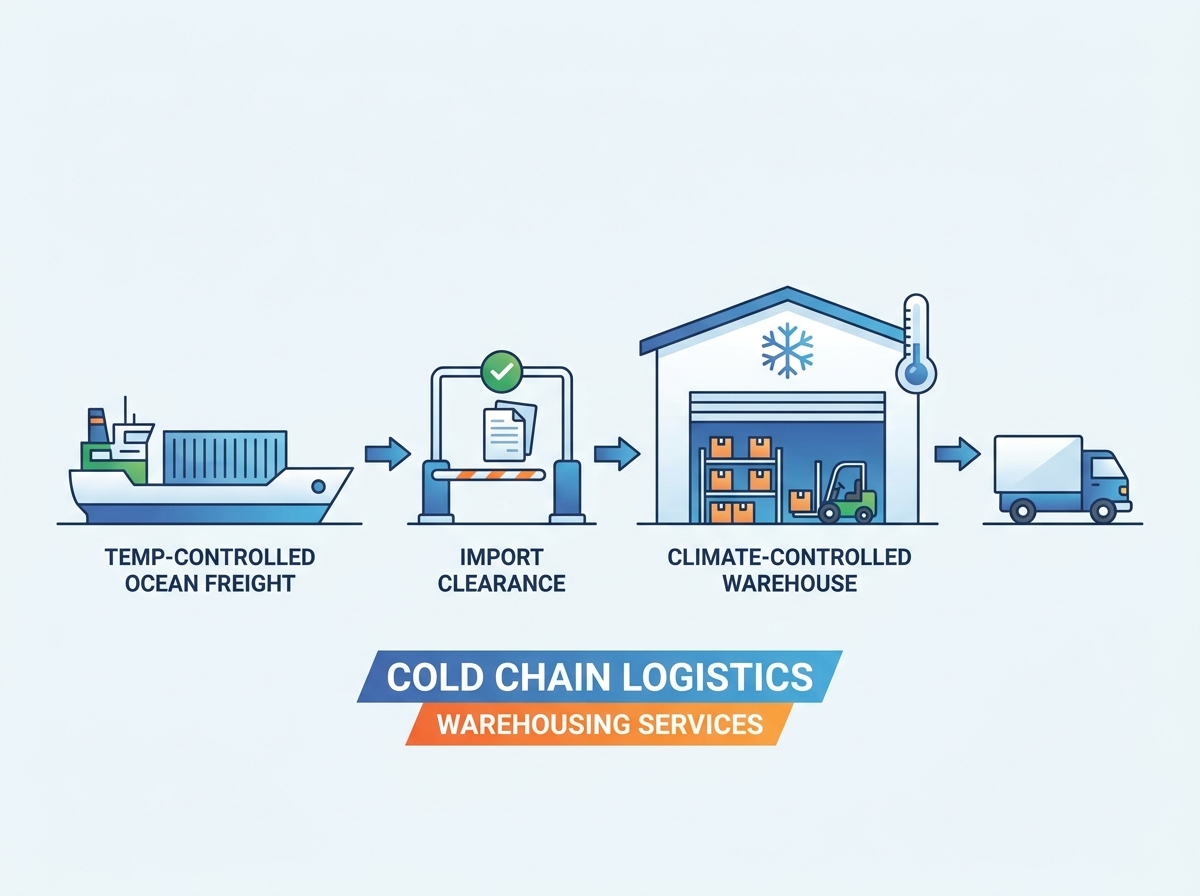
For international routes, balancing cost and reliability is paramount. While air freight offers speed, temperature-controlled ocean freight provides a highly scalable and cost-effective alternative for global transit. Modern refrigerated containers are equipped with active cooling systems and controlled atmosphere technology. Specifically, these advanced units actively regulate oxygen and carbon dioxide levels to slow down the ripening process of fruits and vegetables. High-end marine transport solutions maintain precise set points ranging from negative 30 degrees Celsius to positive 25 degrees Celsius. This effectively puts the agricultural cargo to sleep during long ocean voyages.
Seamless Handoffs and Cross-Docking
The highest risk of temperature excursion occurs during physical handoffs. Moving goods from a vessel to a truck, or from a truck to a storage facility, exposes cargo to ambient threats. Loading docks are highly vulnerable to weather conditions. Imagine a pallet of premium pharmaceuticals sitting on a sun-baked tarmac in Miami for just thirty minutes. That brief exposure can degrade the active ingredients entirely. Successful cold chain operations utilize refrigerated cross-docking facilities where the loading bays are hermetically sealed and climate-controlled. This ensures speed and precision during these vital transfers.
Premium Warehousing Services: The Anchor of the Cold Chain
Transit is only one segment of the supply chain. The safe holding and processing of goods require highly specialized infrastructure. High-quality warehousing services act as the ultimate safeguard. They provide a secure, regulated environment that protects perishable investments from external volatility.
Defining Specialized Warehousing Services for Food
Not all storage facilities are equipped to handle food and perishables. A standard commercial warehouse focuses primarily on square footage and basic security. In contrast, a food-grade warehouse is engineered around sanitation, strict zoning, and rigorous pest control protocols. These facilities are constructed with materials that are easy to sanitize. They are physically segmented to prevent cross-contamination between different food categories, keeping raw meats totally isolated from fresh produce.
The Role of Climate-Controlled Warehouse Storage
There is a distinct operational difference between basic refrigeration and comprehensive climate-controlled warehouse storage. Standard cold storage primarily manages temperature, keeping goods either chilled or frozen. However, many high-value perishables require precise management of both temperature and humidity.
Storing fine wine or artisanal chocolate requires maintaining humidity levels at specific thresholds to prevent cork degradation or sugar bloom. Too much moisture causes mold in agricultural products. Too little causes dehydration and weight loss. Premium facilities utilize dual-compressor redundancy and automated humidity controls accurate to within a two percent margin.
| Storage Configuration | Target Temperature Range | Humidity Precision | Ideal Cargo Profile |
|---|---|---|---|
| Ambient Dry Storage | 15°C to 25°C | Basic Ventilation | Canned goods, dry pasta, bulk grains |
| Standard Refrigerated | 2°C to 8°C | Moderate Monitoring | Dairy products, fresh meats, standard vegetables |
| Deep Frozen | -18°C to -25°C | Moisture Locked | Frozen seafood, ice cream, raw poultry |
| Advanced Climate-Controlled | Customizable set points | Precise control within 2 percent | Confectionery, fine wine, exotic fruits, pharmaceuticals |
Value-Added Operations in Storage
Modern storage facilities provide more than just shelf space. They offer value-added services that directly impact supply chain efficiency. This includes strict inventory management using the First Expired First Out methodology rather than the standard First In First Out approach. This ensures products closest to their expiration date are shipped first, drastically reducing waste. Additional services often include quality control inspections, compliance labeling, and temperature-safe repackaging before final mile delivery.
Overcoming Impediments: Bonded Transit and Customs
International borders represent the most significant bottleneck in perishable logistics. A delay of even 24 hours on a congested port tarmac can render an entire shipment unsellable. Navigating these impediments requires a deep understanding of customs regulations and strategic routing.
What is Bonded Transit for Perishable Goods?
When goods arrive at a congested port, waiting for standard customs clearance can be an agonizingly lengthy process. Bonded transit offers a strategic engineering solution. It allows perishable cargo to be moved through a country or transported away from a congested port without immediately paying duties or undergoing final clearance.
In practical terms, the goods are moved under a customs bond to a specialized bonded facility. This allows the cargo to be transferred out of vulnerable port environments and into a secure, temperature-regulated facility much faster. It preserves freshness while the administrative clearance process is completed in the background.
Mastering Import Clearances
Executing a seamless perishable goods import customs clearance process requires meticulous preparation. Regulatory agencies scrutinize food imports to prevent the introduction of foreign pests and ensure public health safety. Working with a logistics partner who integrates customs brokerage directly into their service offering prevents cargo from sitting idle.
The documentation must be flawless prior to vessel arrival. Missing a single certificate triggers mandatory holds or intensive physical inspections. Essential documentation includes commercial invoices detailing exact quantities, phytosanitary certificates proving pest-free status, certificates of origin for tariff rates, and electronic prior notice submissions required by national health agencies.
Smart Tech: Innovating Warehouse Logistics for Perishable Cargo
In the modern supply chain, maintaining a strict temperature range is no longer sufficient. The current standard requires proactive monitoring, data-driven decision-making, and automated handling. Integrating smart technology into operations is the most effective method for mitigating risk and ensuring compliance with stringent food safety regulations.
The Rise of Smart Food Storage
Traditional cold storage facilities often rely on manual labor for inventory management and order fulfillment. Human operation in sub-zero environments presents significant challenges. These include reduced working efficiency, safety hazards, and an increased likelihood of errors. Furthermore, the prolonged opening of freezer doors during manual loading introduces thermal shock, which severely compromises product integrity.
The transition toward intelligent warehouse logistics for perishable cargo relies heavily on Automated Storage and Retrieval Systems. These robotic systems operate seamlessly in extreme temperatures, executing picking and packing processes with high precision. By utilizing automation, facilities achieve high-density storage while minimizing the time perishable goods spend outside their optimal temperature zones. Automated systems also utilize algorithmic routing to ensure strict adherence to inventory expiration protocols.
Internet of Things and Real-Time Visibility
The true innovation in modern perishable logistics lies in data transparency. Internet of Things devices have transformed storage facilities from passive cooling rooms into active, intelligent environments. Rather than relying on periodic manual temperature checks, modern facilities deploy wireless data loggers and environmental sensors throughout the storage space.
These sensors continuously monitor both temperature and humidity levels, transmitting data to a centralized management system in real time. If a specific zone experiences a temperature fluctuation that approaches the predefined safety threshold, the system automatically triggers an alert to facility managers. This allows for proactive interventions, such as transferring cargo or adjusting compressor settings, before the goods suffer irreversible damage.
| Operational Feature | Traditional Cold Storage | Smart Warehouse Logistics |
|---|---|---|
| Environmental Monitoring | Manual thermometer checks, periodic logging | Continuous wireless sensor telemetry |
| Issue Detection | Reactive discovery after spoilage occurs | Proactive alerts based on predictive algorithms |
| Inventory Handling | Manual forklifts, human picking in freezing zones | Automated storage retrieval, robotic conveyors |
| Inventory Rotation | Prone to human error during shift changes | System-enforced expiration date algorithms |
| Data Auditing | Paper-based logs or manual spreadsheets | Cloud-based, immutable digital compliance records |
How to Choose the Right Logistics Partner for Your Perishables
Selecting a logistics provider for food and perishable goods is a critical business decision. The stakes are exceptionally high. A single failure in the cold chain results in total cargo loss. Organizations must evaluate potential partners based on their infrastructure, regulatory compliance, and ability to handle complex international transit scenarios.
Look for End-to-End Warehousing Services
A fragmented supply chain is the primary cause of cold chain disruptions. When a shipment is handled by separate entities for ocean freight, drayage, storage, and distribution, the risk of temperature excursions multiplies at every handoff point. Accountability also becomes obscured when multiple vendors point fingers during a crisis.
To maintain an unbroken cold chain, partner with a provider offering comprehensive, end-to-end solutions. An integrated approach ensures the transition from a refrigerated container at the port to the storage facility is seamless and closely monitored. Consolidating these services under one provider ensures singular accountability and consistent operational standards.
Verify Certifications and Compliance
The handling of perishable goods is heavily regulated by international health and safety organizations. A reliable logistics partner must possess the necessary certifications to prove their operational competence. Verify their compliance with ISO Certifications and Hazard Analysis Critical Control Point protocols. Additionally, confirming their Bonded Warehouse Status is crucial for international shipments, allowing goods to be stored securely while customs duties are deferred.
Assess Their Customs Expertise
International borders remain the most vulnerable points in global perishable logistics. Cargo delayed at a port due to missing paperwork is cargo that is actively degrading. Even if you utilize reliable temperature-controlled transport, those benefits are nullified if the container sits unattended during a lengthy customs dispute.
Evaluating a partner specific expertise in managing import regulations is mandatory. The right partner will have licensed in-house customs brokers who deeply understand the precise documentation required for food products. A logistics provider with profound customs expertise will leverage bonded transit routes to bypass congested port terminals, moving sensitive cargo directly into compliant storage while final clearance procedures are safely completed.
Conclusion
Mastering food logistics requires far more than just refrigerated trucks. It demands meticulous planning, modern technological integration, and uncompromising regulatory compliance. By leveraging expert storage solutions and utilizing strategic transit methods like bonded warehousing, you effectively shield your valuable inventory from external volatility. Investing in a robust cold chain does more than just prevent spoilage. It secures your brand reputation for quality over the long term.
If you are ready to optimize your global transport strategy and eliminate temperature excursion risks, reaching out to a specialized logistics partner is the crucial first step. For engineering-grade reliability, explore the advanced solutions at https://www.jfszlogistics.com to configure your optimal transit and warehousing strategy, ensuring your products consistently arrive fresh and safe.
FAQ
What are the most common impediments in cold chain logistics?
The most frequent disruptions include delays during customs clearance, mechanical failures in refrigeration equipment, and inefficient physical handoffs between transport vehicles and storage facilities. These bottlenecks often lead to temperature excursions that compromise product safety and significantly reduce shelf life.
How does climate-controlled warehouse storage differ from standard cold storage?
Standard cold storage primarily manages temperature, focusing strictly on refrigeration or freezing environments. Climate-controlled storage precisely manages both temperature and humidity levels. This dual-control is a critical engineering requirement for maintaining the quality of sensitive goods like fresh produce, fine wine, and confectionaries.
What is required for perishable goods import customs clearance?
Successful clearance requires exact and timely documentation tailored to the specific commodity. This typically includes commercial invoices, certificates of origin, sanitary or phytosanitary certificates, and mandatory pre-arrival notifications submitted to relevant national health and food regulatory agencies.
Why is bonded transit important for food logistics?
Bonded transit allows perishable shipments to bypass immediate, time-consuming customs processing at congested entry ports. The goods can be moved directly to a specialized, temperature-controlled bonded warehouse. This preserves their freshness while administrative procedures are finalized in the background.
How do expert warehousing services impact the shelf life of perishable cargo?
Expert facilities utilize strict First Expired First Out inventory management systems to ensure optimal product rotation. By maintaining unbroken temperature zones, utilizing automated handling to minimize thermal shock, and reducing manual handling time, these services significantly extend the viable market life of food products.
What is the difference between a standard supply chain and a cold chain?
A standard supply chain focuses on moving dry goods from origin to destination with an emphasis on speed and cost. A cold chain is a highly specialized logistical network engineered to maintain a specific thermal environment constantly. It utilizes active refrigeration, insulated packaging, and continuous temperature monitoring to prevent biological degradation.
How long can perishable goods remain in a bonded warehouse?
The duration perishable goods can remain in a bonded warehouse depends heavily on the specific country customs regulations and the biological shelf life of the product itself. While legal timeframes can extend for months or years to defer duties, the practical limit for fresh produce is dictated entirely by its natural expiration date and the facility environmental controls.
Related Blogs
-
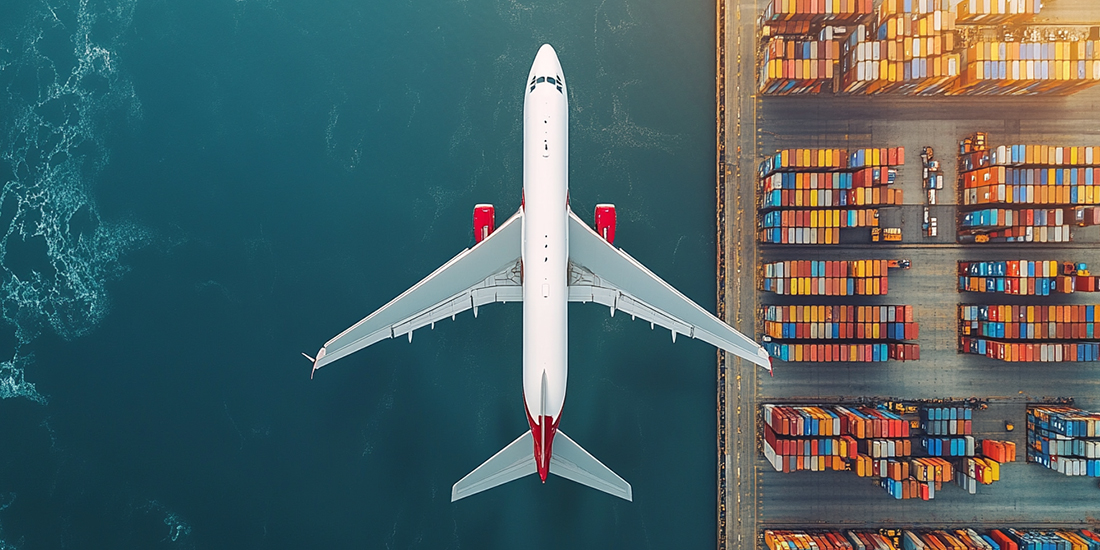 When production stops, every delivery day matters. Delayed components can disrupt schedules and customer commitments. Air freight from China offers a practical solution for urgent commercial shipments. However, choosing the right service requires careful planning. This guide compares standard, priority, and express shipping. You will also learn about flight schedules, customs clearance, and cargo preparation.
-
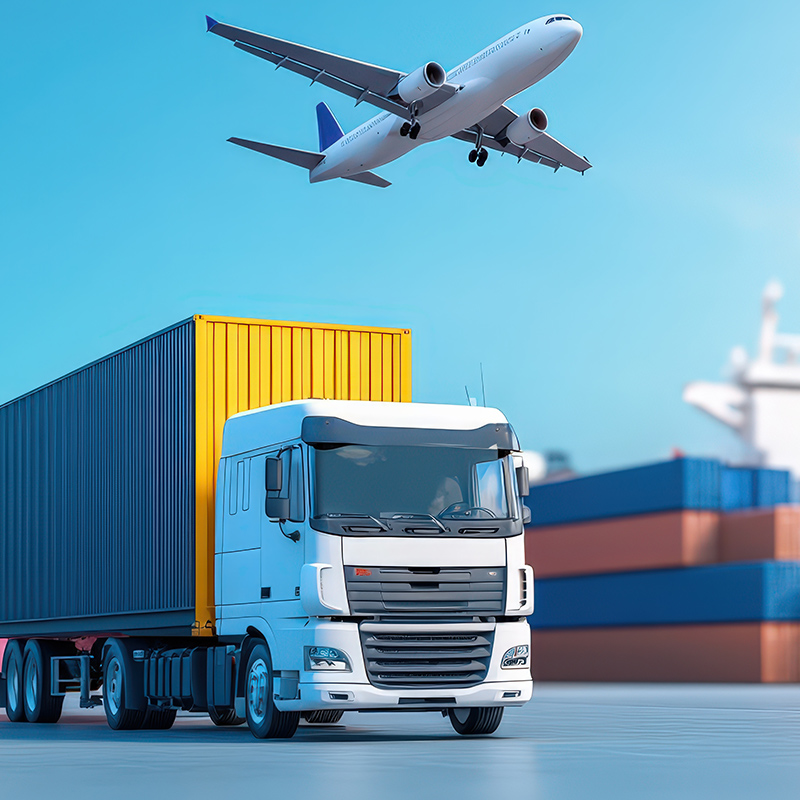 Air freight from China offers speed, but costs can vary significantly. Do you know what determines your final shipping bill? This guide explains air freight cost from China, including per-kilogram rates, chargeable weight, surcharges, and destination fees. Learn how to estimate costs and reduce shipping expenses.
-
 Choosing the right shipping method can significantly affect your import costs. How do you select the best option for your cargo? China to Europe sea freight offers flexible FCL, LCL, and door-to-door solutions. This guide compares shipping options, transit times, costs, and customs requirements to help you make informed decisions.
