



Picture a container loaded with high-margin electronics. It sits stranded at Yantian Port. The reason? A single misaligned HS code. Border delays like this bleed businesses dry, costing thousands of dollars daily in demurrage fees and missed retail windows. Navigating strict trade rules demands far more than basic paperwork filing. It requires deep local expertise and proactive risk management.
An AEO-certified partner solves these complex logistics problems. They act as a trusted bridge between your business and regulatory authorities. In this guide, we break down the mechanics of efficient import and export customs clearance from a front-line operational perspective. You will discover why rigorous regulatory adherence matters and how to find the right logistics partner to safeguard your supply chain.
Key Takeaways
- AEO Certification is a Strategic Asset: Utilizing an AEO-certified broker in Guangdong provides measurable advantages, including priority processing, significantly reduced inspection rates, and highly predictable cargo release timelines.
- Compliance Drives Cost Reduction: Implementing rigorous document review protocols prevents expensive border delays, regulatory fines, and potential confiscation of goods by authorities.
- Comprehensive Import Support: A professional agency handles the entire spectrum of import requirements, from precise HS code classification to accurate tariff calculations and final delivery coordination.
- Geographic Advantage: Engaging specialized services allows businesses to seamlessly connect with South China’s most efficient and high-volume trade routes.
What is Customs Brokerage and Why is it Crucial in Guangdong?
Customs Brokerage is a highly specialized profession. It clears goods through regulatory barriers for global traders. Think of it as the critical bridge between private businesses and China Customs. A dedicated broker ensures shipments meet all legal requirements, mitigating the risk of delays and ensuring the smooth transition of goods across international borders.
The context of Guangdong makes this function particularly critical. As the manufacturing powerhouse of China, the province encompasses massive logistics hubs like Shenzhen, Guangzhou, and Dongguan. The sheer volume of daily trade moving through these terminals means authorities operate under high scrutiny. Without professional intervention, administrative bottlenecks are almost guaranteed. Expert brokers understand local port nuances, regional updates, and specific operational preferences.
The Core Responsibilities of a Customs Broker
To truly grasp the value of these services, it is essential to examine the specific responsibilities managed on behalf of clients. A proactive broker does not just file papers; they engineer a seamless border crossing.
| Responsibility Category | Specific Tasks | Business Impact |
|---|---|---|
| Documentation Preparation | Drafting and submitting commercial invoices, packing lists, bills of lading, and certificates of origin. | Ensures all paperwork aligns with China Customs Single Window system requirements, preventing rejection. |
| Financial Calculations | Assessing cargo value, determining correct tariff rates, and calculating Value Added Tax and consumption taxes. | Prevents overpayment of duties and avoids penalties associated with under-declaring cargo value. |
| Regulatory Communication | Acting as the legal representative during physical inspections, answering official queries, and resolving classification disputes. | Reduces the time cargo spends in port by immediately addressing official concerns on-site. |
Industry Trends: The Digital Shift and AEO-Certified Clearance
Let us look at the current landscape. Recent industry analyses highlight a massive shift in Guangdong's customs environment. Driven by tightening global trade compliance, the General Administration of Customs of China is rapidly deploying AI-driven risk assessment algorithms. The Smart Customs initiative means that minor paperwork discrepancies now automatically trigger cargo holds. Manual amendments are becoming a thing of the past.
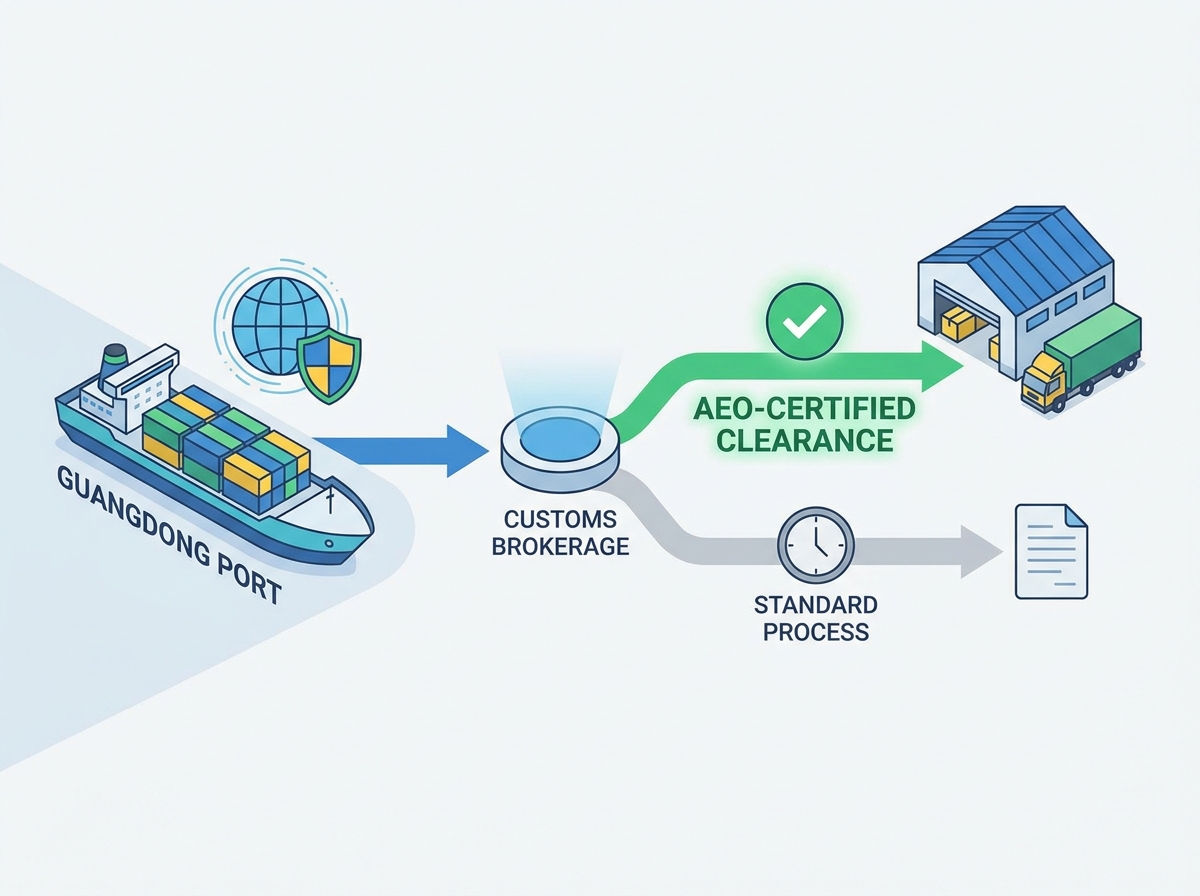
Consequently, the reliance on Authorized Economic Operator certification has surged. When a brokerage firm achieves AEO status, it receives a government-backed seal of approval. The highest tier, Advanced Certified Enterprise, enjoys the highest level of trust. Companies are realizing that advanced certification is a critical necessity to bypass algorithmic bottlenecks and maintain supply chain fluidity in an era of heightened regulatory scrutiny.
Top Benefits of Using an AEO-Certified Partner
Choosing between a standard broker and an AEO-certified partner fundamentally impacts supply chain reliability. How much does a delay cost? At major ports, demurrage and detention fees quickly eat into profit margins. Understanding the tangible benefits of an AEO-certified broker is essential for making an informed hiring decision.
Core Comparison: AEO vs. Standard Brokers
| Feature | AEO-Certified Broker | Non-AEO Standard Broker |
|---|---|---|
| Clearance Channel | VIP Green Channel priority processing. | Standard queuing system. |
| Inspection Rates | Statistically lower physical inspection rates, often below 2 percent. | Standard or higher inspection rates based on industry averages. |
| Exception Handling | Access to dedicated liaison officers for rapid dispute resolution. | Standard administrative appeals process, taking days to resolve. |
Priority processing is a game-changer. During peak shipping seasons, certified shipments are pushed to the front of the line. Physical inspections are time-consuming and carry the inherent risk of cargo damage. Shipments managed by certified partners are subject to significantly fewer random checks. Fewer physical interventions mean a safer journey for fragile goods.
When anomalies occur, certified enterprises have a structural advantage. Dedicated liaison officers allow the brokerage to bypass standard bureaucratic queues and resolve issues directly with decision-makers. This turns potential days of delay into mere hours.
The Role of a Customs Declaration Agency for Importers
Importing goods into China involves stringent regulatory hurdles. Partnering with a specialized customs declaration agency for importers is a strategic necessity. Navigating import regulations requires managing non-tariff barriers. Electronics need China Compulsory Certification. Food and cosmetics require specialized labeling. Agricultural products demand specific phytosanitary certificates.
An expert agency acts as a regulatory consultant long before the vessel departs. Accurate HS code classification dictates the tariff rate and VAT. Incorrect classification is a primary trigger for audits. A knowledgeable agency actively seeks legal avenues to minimize tax burdens by leveraging Free Trade Agreements. They conduct a thorough review of the supply chain to claim tariff exemptions and duty reductions.
The Import and Export Clearance Workflow and Parameter Selection
Transparency is the hallmark of a reliable logistics partner. In Guangdong’s high-volume ports, the clearance process is highly digitized. A systematic approach ensures cargo moves without interruption. Modern logistics providers integrate API tracking and 24-hour clearance monitoring into their service parameters.
Pre-Arrival Preparation
The process begins before the vessel arrives. Importers must compile comprehensive shipping documents. Early data gathering identifies potential regulatory roadblocks. This allows the logistics team to pre-clear cargo data through the system.
Rigorous Audit Protocols
Before submission, a professional broker conducts a strict audit. This proactive customs compliance and document review is a critical risk-management step. The broker cross-references declared values and product descriptions against assigned HS codes. This step prevents declaration errors that trigger administrative fines.
Electronic Declaration and Release
China utilizes the Single Window electronic system. For AEO-certified brokers, submissions often benefit from automated priority routing. Once duties are settled via electronic payment systems, China Customs issues a formal release order. The cargo is then dispatched to its final destination, integrating seamlessly with bonded warehousing or door-to-door delivery services.
Mastering Customs Compliance and Risk Management
Compliance is a fundamental component of supply chain cost control. China Customs operates a strict Enterprise Credit Management System. Companies that consistently submit accurate declarations are rewarded. Those with frequent errors face severe operational penalties.
Failing to maintain strict standards leads to cascading financial consequences. Common errors, like under-declaring the value of goods or misclassifying an item, are treated as serious infractions. Consequences range from administrative delays to the outright confiscation of goods. Repeated infractions downgrade the importer's credit rating, guaranteeing elevated inspection rates for all future shipments.
To mitigate these risks, a proficient broker implements granular document review protocols. They verify valuation consistency against market pricing databases. They confirm Certificates of Origin meet specific formatting requirements. They cross-check gross and net weights, as discrepancies here are a primary trigger for physical checks.
How to Choose the Best Guangdong Customs Brokerage Services
Selecting the right partner is a critical strategic decision. Importers and exporters must evaluate potential brokers based on verifiable credentials and operational capabilities. Here is an actionable checklist to help you secure top-tier Guangdong customs brokerage services for your supply chain:
- Verify Official AEO Certification: Explicitly request to see their certification tier. Prioritize firms holding Advanced Certified Enterprise status. This grants access to the most impactful benefits during port congestion.
- Assess Local Port Expertise: Ensure the firm has established physical offices and dedicated personnel stationed at specific ports like Yantian, Shekou, or Nansha.
- Evaluate Comprehensive Service Offerings: Look for end-to-end logistics solutions. Providers offering freight forwarding, bonded warehousing, and inland drayage streamline communication and reduce vendor hand-offs.
- Demand Technology Integration: A reliable partner utilizes digital document management systems. API integration with your ERP system provides real-time status updates, vital for post-clearance audits.
- Check Industry-Specific Experience: Inquire about the broker's specific experience handling your commodity. Medical devices require entirely different documentation than raw textiles or lithium batteries.
Conclusion and Next Steps
Navigating Guangdong's bustling ports demands strategic expertise. A single documentation error can result in cascading delays and inflated costs. Investing in AEO-certified clearance is a direct investment in supply chain speed, cost-efficiency, and profound peace of mind.
Safeguard your cargo against unpredictable bottlenecks. By partnering with experts who understand the granular details of local regulations, you transform your logistics operations from a potential liability into a distinct competitive advantage.
Ready to optimize your border clearance? Explore professional solutions tailored to your cargo needs and ensure your shipments clear customs without a hitch. Visit JF SZ Logistics to find the exact service configuration that matches your supply chain requirements, from accurate classification to seamless door-to-door delivery.
Frequently Asked Questions
What is the difference between standard and AEO-certified clearance?
Standard clearance follows standard queuing procedures. Declarations are processed in the order received and subject to baseline inspection algorithms. AEO-certified clearance utilizes a Green Channel. Because the broker is pre-audited and trusted by China Customs, their submissions receive priority processing. This results in significantly lower physical inspection rates and faster cargo release.
Do I really need a declaration agency for imports in Guangdong?
Yes, engaging a professional agency is highly recommended. China’s import regulations are complex and frequently updated. An experienced agency ensures strict legal compliance, identifies the correct HS codes to prevent overpaying on tariffs, and manages intricate documentation. Attempting to navigate this without local expertise often leads to severe port delays.
How long does clearance take in Shenzhen or Guangzhou?
Clearance times vary based on cargo type and port congestion. When utilizing an AEO-certified broker and ensuring proper document review prior to arrival, standard clearance is highly efficient. Electronic clearance can often be completed within 24 to 48 hours. For qualified shipments, pre-arrival declarations allow cargo to be cleared before the vessel docks.
What documents are required for standard brokerage?
Universal baseline documents include the Commercial Invoice, Detailed Packing List, Ocean Bill of Lading or Airway Bill, Certificate of Origin, and the Sales Contract. Regulated goods may require specific import licenses, sanitary certificates, or safety compliance documents like CCC certificates.
Can a broker help reduce my import duties?
While a broker cannot change statutory tax rates, they optimize duty payments legally. A qualified broker achieves this through highly accurate HS code classification, ensuring you are not placed in a higher tax bracket. They also leverage applicable Free Trade Agreements and tariff exemption programs.
What happens if my cargo is selected for a physical customs inspection?
If the risk-management system flags your shipment, customs officers will order a physical examination. Your broker acts as your on-site representative. They coordinate the unsealing of the container, answer official queries regarding the cargo, and oversee the repacking process. Having an experienced broker minimizes the time spent in the inspection bay and reduces the risk of cargo damage.
How does the Single Window system impact my import declarations?
The Single Window is China's centralized digital platform for all trade declarations. It connects customs, inspection bureaus, and port authorities in one interface. This system requires absolute data accuracy. A single mismatch between your commercial invoice and the digital entry will result in an automatic rejection. Professional brokers use specialized software to audit data before it ever touches the Single Window.
Related Blogs
-
 Door to door shipping from China simplifies international logistics. But how can you ensure smooth delivery from factory to destination? Choosing the right shipping method, preparing documents, and understanding customs responsibilities are essential. This guide explains each shipping step, compares sea, air, and express services, and clarifies DDP and DAP terms. Learn how to arrange reliable deliveries and avoid unexpected costs.
-
 When production stops, every delivery day matters. Delayed components can disrupt schedules and customer commitments. Air freight from China offers a practical solution for urgent commercial shipments. However, choosing the right service requires careful planning. This guide compares standard, priority, and express shipping. You will also learn about flight schedules, customs clearance, and cargo preparation.
-
 Air freight from China offers speed, but costs can vary significantly. Do you know what determines your final shipping bill? This guide explains air freight cost from China, including per-kilogram rates, chargeable weight, surcharges, and destination fees. Learn how to estimate costs and reduce shipping expenses.
