



Thousands of tons of goods cross the border daily between manufacturing hubs in Guangdong and global transit points in Hong Kong. Despite this massive volume, hidden fees, unpredictable border delays, and complex regulatory paperwork continue to frustrate many businesses.
Recent industry data highlights a massive shift in the Greater Bay Area logistics landscape. Driven by the explosive growth of cross-border e-commerce and strict just-in-time manufacturing schedules, supply chains are becoming highly intolerant of friction. Shippers are rapidly moving away from fragmented, multi-vendor transit models. Instead, there is a surging demand for micro-visibility and direct-injection ground transport. The ability to bypass secondary deconsolidation nodes and inject cargo directly into international air or ocean terminals is no longer just a premium service. It has become a baseline requirement for maintaining global competitiveness.
In this post, you will learn exactly how a streamlined door-to-door trucking model solves these logistical headaches. We will dive deep into the operational mechanics, explore cost-saving strategies, and provide a framework for choosing the right logistics partner to keep your supply chain moving without interruption.
Key Takeaways
- Speed and Flexibility: Ground transport remains the fastest method for cross-border trade, consistently offering same-day or next-day delivery capabilities.
- Unified Management: A reliable logistics partner handles the entire door-to-door process, mitigating risks across pickup, transit, customs, and final delivery.
- Strategic Compliance: Mastering customs protocols and utilizing bonded networks can significantly reduce tax liabilities and transit delays.
- Vendor Selection: Selecting a partner with comprehensive warehousing, transparent pricing, and robust digital tracking is crucial for maintaining a seamless end-to-end supply chain.
What is Door-to-Door Mainland China to Hong Kong Trucking?
Door-to-door trucking between these two regions is a comprehensive logistics solution. Goods are collected directly from a manufacturer, supplier, or factory in China and transported straight to the buyer’s designated facility in Hong Kong. Unlike fragmented shipping methods that require multiple hand-offs between different regional carriers, this model ensures a continuous chain of custody.
Imagine a scenario where a factory in Dongguan finishes a batch of high-value electronics at 4 PM. By utilizing dedicated mainland China to Hong Kong trucking, those goods can be sitting securely in a Kwai Chung distribution center by 9 AM the following morning. This operational continuity minimizes cargo handling. It reduces the risk of damage and significantly accelerates the overall transit time.
Full Truckload versus Less Than Truckload
When booking ground transportation, procurement managers must choose between Full Truckload and Less Than Truckload shipping. The decision directly impacts both the financial bottom line and the speed of delivery.
Full Truckload: This involves reserving an entire dual-plate vehicle, typically a 3-ton, 5-ton, or 12-ton truck, for a single shipment. Full Truckload is the optimal choice for high-volume shipments, fragile goods that require exclusive space, or highly time-sensitive cargo. Because the vehicle travels directly from the origin point to the destination without making additional stops, transit times are kept to an absolute minimum.
Less Than Truckload: Designed for smaller shipments that do not require the capacity of a full trailer. Less Than Truckload allows multiple shippers to share the space and the cost of a single truck. While highly cost-effective for smaller loads, usually under 15 cubic meters, it requires additional handling. Goods must be consolidated at an origin warehouse and deconsolidated upon arrival in Hong Kong. This routing can add several hours to a full day to the total transit time.
Why Speed Matters in this Corridor
The geographical proximity between the Pearl River Delta and Hong Kong makes ground transportation uniquely efficient. Standard transit times often range from 24 to 48 hours. However, speed here is more than just a logistical perk. It is a strict business imperative.
Hong Kong serves as a critical global transshipment hub. A delay of just four hours at a border checkpoint can result in missed connections with international ocean freighters or air cargo flights departing from Hong Kong International Airport. Trucks outpace rail and sea freight in this region simply due to their agility. Dispatchers can deploy them on short notice and dynamically reroute them based on real-time traffic data.
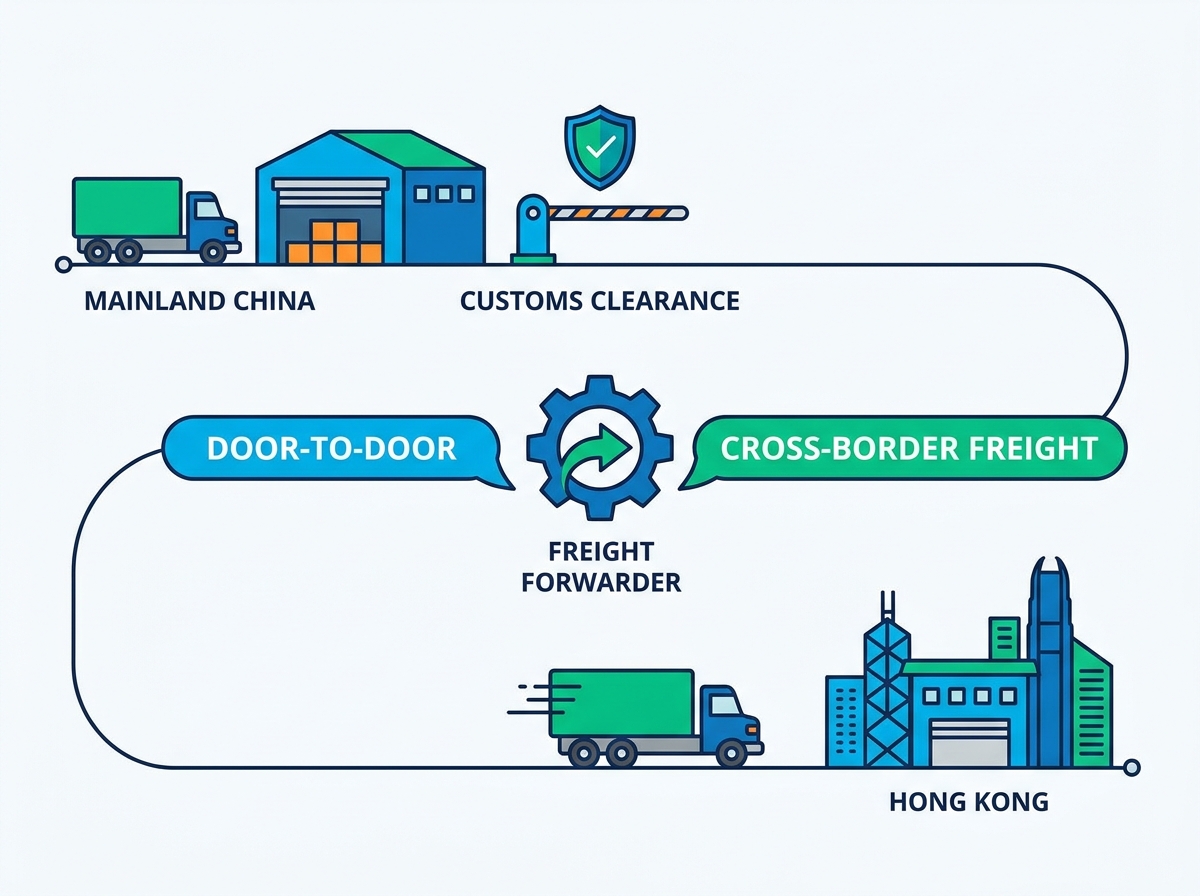
The Crucial Role of a Freight Forwarder in Cross-Border Logistics
Managing dual-jurisdiction logistics internally requires significant resources, specific licensing, and highly specialized regulatory knowledge. For most businesses, attempting to navigate this environment alone exposes the supply chain to unnecessary compliance risks and severe operational bottlenecks.
End-to-End Supply Chain Management
Instead of communicating separately with local Chinese trucking fleets, border customs brokers, and Hong Kong-based delivery drivers, businesses rely on a central logistics architect. A professional partner coordinates specialized dual-plate trucks. These are vehicles legally permitted to operate in both jurisdictions. The forwarder manages driver scheduling and synchronizes border checkpoint crossings with local delivery networks.
By integrating these historically fragmented components, seamless China Hong Kong freight forwarding ensures a continuous, visible, and highly controlled movement of goods from origin to destination.
Risk Mitigation and Troubleshooting
Cross-border transit is inherently susceptible to unpredictable disruptions. Severe weather events, sudden changes in customs inspection protocols, or a single missing commercial document can halt a shipment indefinitely. Experienced logistics providers possess the infrastructure to mitigate these risks proactively. If the Huanggang port experiences severe congestion, a knowledgeable dispatch team will instantly reroute the truck to the Shenzhen Bay or Heung Yuen Wai checkpoints. This layer of professional troubleshooting is essential for maintaining resilience.
Step-by-Step: The Freight Forwarding Process
Understanding the exact lifecycle of a shipment allows procurement managers to plan inventory cycles accurately. The standard operational sequence follows a strict, four-step methodology.
Step 1: Booking and Cargo Pickup
The process begins with precise scheduling. Upon receiving the booking, a dispatch team sends a vehicle to the manufacturing facility. During this stage, operators physically inspect the cargo. Drivers or warehouse staff scan barcodes, measure pallet dimensions, and ensure the lashing is secure. Verifying that the actual weight matches the declared commercial documents at this stage is critical to avoiding discrepancies later.
Step 2: Consolidation and Warehousing
For shared truckload shipments, the cargo moves to a strategically located transit warehouse in Shenzhen or Dongguan. Here, handlers unload, sort, and consolidate goods with other shipments destined for Hong Kong. Warehousing facilities may also provide value-added services. These include shrink-wrapping, palletizing, or applying specific compliance labels required by international carriers.
Step 3: Border Crossing and Customs
Once loaded onto a cross-border truck, the cargo proceeds to the designated checkpoint. The truck must pass through both China Customs exit procedures and Hong Kong Customs entry procedures. Effective providers utilize Electronic Data Interchange systems to submit all necessary declarations hours before the truck physically arrives. This digital handshake drastically reduces wait times at the terminal gates.
Step 4: Final Mile Delivery in Hong Kong
After successfully clearing both jurisdictions, the truck enters Hong Kong. Depending on the logistics plan, the cargo is either delivered directly to a retail storefront, routed to a local distribution center for deconsolidation, or driven straight to the Kwai Chung Container Terminals for immediate global transshipment.
Navigating Customs Clearance Without Delays
Customs compliance is universally recognized as the primary bottleneck in international logistics. In recent years, regulatory authorities have heavily integrated digital risk assessment algorithms to scrutinize cross-border trade. Non-compliance no longer just means a warning. It results in immediate operational delays, financial penalties, or cargo confiscation.
Essential Documentation
Flawless paperwork is the foundation of smooth border transit. Supply chain managers must ensure that the following documents are meticulously prepared:
- Commercial Invoice: Must detail the exact value, currency, and a highly specific description of the goods. Vague descriptions, such as generic electronic parts, frequently trigger manual inspections.
- Packing List: Must accurately reflect the net weight, gross weight, dimensions, and total carton count.
- Waybill: The official contract of carriage detailing the origin, destination, and terms of transport.
- Customs Declaration Forms: Specific regulatory documents required to assess export legality and track trade statistics.
Seamless Cross-Border Clearance
Achieving a frictionless border crossing requires proactive data management. Top-tier logistics providers do not wait until the cargo reaches the physical border to begin the clearance process. By utilizing advanced cross-border customs clearance protocols, operations teams pre-clear shipments electronically. When the truck arrives at the physical checkpoint, cameras scan the license plate and customs seal. If the pre-submitted data aligns with the system algorithms, the vehicle is granted immediate passage without a time-consuming manual offload.
Understanding Bonded Cargo Transportation
For businesses managing complex, high-value, or heavily taxed goods, standard clearance may not be the most efficient route. In these scenarios, cross-border bonded cargo transportation offers a highly strategic alternative.
Bonded transportation involves moving goods under strict customs supervision and secure seals directly from a facility in Mainland China to a designated bonded warehouse in Hong Kong. Because the goods are technically held in a customs-controlled environment, import duties and taxes are deferred until the cargo officially enters the local consumer market. This strategy is incredibly beneficial for cash flow optimization. It allows e-commerce fulfillment hubs to stage inventory near their target markets without immediate tax liabilities.
Cost Factors: How to Save Money on Cross-Border Freight
While trucking is highly efficient, costs can escalate rapidly if the logistics strategy is not optimized. Understanding the internal pricing mechanics of the freight industry is essential for protecting your profit margins.
Weight versus Volume
Logistics providers calculate shipping costs based on Chargeable Weight. This metric ensures carriers are fairly compensated whether a shipment is extremely heavy, like industrial machinery, or extremely light but bulky, like foam packaging.
The chargeable weight is determined by comparing the actual gross weight of the cargo against its volumetric weight. The forwarder bills based on whichever number is higher. In ground transportation, a common standard is that one cubic meter equals approximately 167 kilograms. If your shipment takes up two cubic meters of space but only weighs 100 kilograms, you will be charged for the volumetric equivalent of 334 kilograms.
Hidden Fees to Watch Out For
Transparent pricing is critical. Yet, many shippers encounter unexpected surcharges on their final invoices. To maintain accurate cost projections, clarify the following potential fees before booking:
| Fee Type | Description | Optimization Strategy |
|---|---|---|
| Toll & Checkpoint Fees | Charges incurred for using specific highways or border bridges. | Ensure your forwarder includes standard route tolls in the base quote. |
| Parking & Gate Charges | Fees levied by Hong Kong delivery locations, especially at airports or private complexes. | Confirm final delivery destination specifics prior to booking. |
| Customs Inspection Fees | Costs associated with unloading, inspecting, and reloading cargo if selected by authorities. | Maintain flawless documentation to lower your statistical risk profile. |
| Residential Surcharges | Extra fees applied when delivering to non-commercial zones lacking loading docks. | Consolidate deliveries to commercial warehouses when possible. |
Pro Tips for Cost Optimization
To systematically lower freight expenses, start by optimizing your packaging. By reducing empty space within cartons, you decrease the overall cubic volume, directly lowering the volumetric chargeable weight. Next, leverage consolidation for non-urgent shipments. Sharing truck space significantly reduces per-unit costs. Finally, communicate with your dispatch team about off-peak transit scheduling. Border congestion typically peaks on Friday afternoons. Scheduling pickups during mid-week lulls can often yield faster transit times and more favorable pricing.
How to Choose the Right Logistics Partner
The boundary between Mainland China and Hong Kong operates under a unique dual-system framework, meaning it functions as a distinct international customs border. Relying on a standard domestic carrier is insufficient. You need a specialized logistics engineer.
Industry Experience and Fleet Ownership
Local expertise is the foundation of reliable cross-border transit. The routes connecting Guangdong Province to Hong Kong are dynamic. A competent partner must possess deep familiarity with checkpoints like Huanggang, Man Kam To, and Heung Yuen Wai to route cargo effectively. Operators without direct access to a robust fleet of dual-plate vehicles often rely on third-party sub-contractors. This introduces operational opacity and increases the risk of delays. Always verify a provider's fleet ownership, specifically looking for a mix of 3-ton to 12-ton chassis capabilities.
Comprehensive Service Offerings
Fragmented supply chains create critical vulnerabilities. When one vendor handles mainland pickup, another manages customs, and a third executes final delivery, communication gaps inevitably occur. These gaps frequently lead to documentation errors and delayed cargo releases.
To achieve an optimized flow, partner with a provider that centralizes all logistical functions. A unified approach ensures that the commercial invoice, packing list, and declarations are cross-referenced by a single internal team before the vehicle ever departs the factory. This consolidation accelerates transit times and establishes a single point of accountability.
Transparency and Risk Management
In modern logistics, digital visibility is just as critical as physical transportation. Providers must offer real-time GPS tracking for their vehicles. You should demand precise location data from factory pickup to final delivery, not just manual spreadsheet updates. Furthermore, they must demonstrate a proactive approach to regulatory compliance. This requires meticulous attention to Harmonized System code classification and strict adherence to import licensing. An expert provider will employ licensed brokers who pre-audit all documentation, backed by adequate freight liability insurance to protect your financial interests.
Conclusion
Moving goods between Mainland China and Hong Kong is a highly efficient process when managed with precision. The combination of geographical proximity and advanced logistical infrastructure allows for rapid, flexible supply chain solutions that can adapt to global market demands.
However, the success of a door-to-door delivery hinges entirely on the competence of the team managing the operation. Navigating dual-jurisdiction customs, optimizing chargeable weight, and coordinating dual-plate fleets requires specialized expertise. Mistakes at the border cost both time and money, eroding your competitive advantage.
By partnering with an integrated logistics provider who prioritizes digital tracking, regulatory compliance, and transparent pricing, you can eliminate border friction. Stop letting unpredictable delays disrupt your supply chain. Explore the professional freight forwarding solutions at JFSZ Logistics today to secure a customized, hassle-free delivery experience for your next cross-border shipment.
FAQ
How long does door-to-door trucking from Mainland China to Hong Kong take?
Transit times are highly dependent on the specific origin city within Mainland China and the efficiency of the customs declaration process. For shipments originating within the Greater Bay Area, such as Shenzhen or Dongguan, same-day or next-day delivery is the standard benchmark. Typically, the physical transit time from a Shenzhen facility to a Hong Kong warehouse ranges from 4 to 8 hours. Shipments from deeper inland provinces will require 24 to 48 hours. Note that random customs inspections can extend these times by 12 to 24 hours.
What is the difference between Delivered at Place and Delivered Duty Paid in this trade corridor?
These terms define the distribution of risk and cost. Under Delivered at Place terms, the logistics provider transports the goods to Hong Kong, but the buyer assumes responsibility for any applicable import duties and formal customs clearance upon arrival. Under Delivered Duty Paid terms, the seller's logistics partner assumes total responsibility for the entire lifecycle. They handle all export and import documentation and pay any applicable taxes, delivering the goods directly to the final facility without requiring the buyer to interface with customs.
Are there any restricted items for cross-border trucking to Hong Kong?
Yes. While Hong Kong operates as a free port with minimal general tariffs, it heavily regulates specific categories of goods for safety and security. Common restricted items include hazardous materials, strategic commodities like advanced telecommunications equipment, and controlled substances. Transporting these items requires specialized licenses and certified dangerous goods vehicles. Attempting to transport them without proper permits will result in immediate cargo seizure.
What documents are mandatory for export clearance from Shenzhen to Hong Kong?
To successfully clear China Customs for export to Hong Kong, shippers must provide a commercial invoice, a detailed packing list, a valid sales contract, and the customs declaration form. If the goods fall under specialized categories, additional documentation such as an export license or a certificate of origin may be mandatory. Ensuring absolute consistency across all these documents is vital to prevent checkpoint rejections.
How do weather events like typhoons impact cross-border trucking schedules?
Severe weather patterns, particularly typhoons during the summer and autumn months, severely disrupt cross-border logistics. When the Hong Kong Observatory issues a Typhoon Signal Number 8 or higher, border checkpoints suspend operations, and container terminals halt all gate activities. Professional freight forwarders monitor these meteorological alerts constantly, pre-routing cargo to secure transit warehouses to prevent damage and staging vehicles to resume transport the moment authorities lift the restrictions.
Related Blogs
-
 Door to door shipping from China simplifies international logistics. But how can you ensure smooth delivery from factory to destination? Choosing the right shipping method, preparing documents, and understanding customs responsibilities are essential. This guide explains each shipping step, compares sea, air, and express services, and clarifies DDP and DAP terms. Learn how to arrange reliable deliveries and avoid unexpected costs.
-
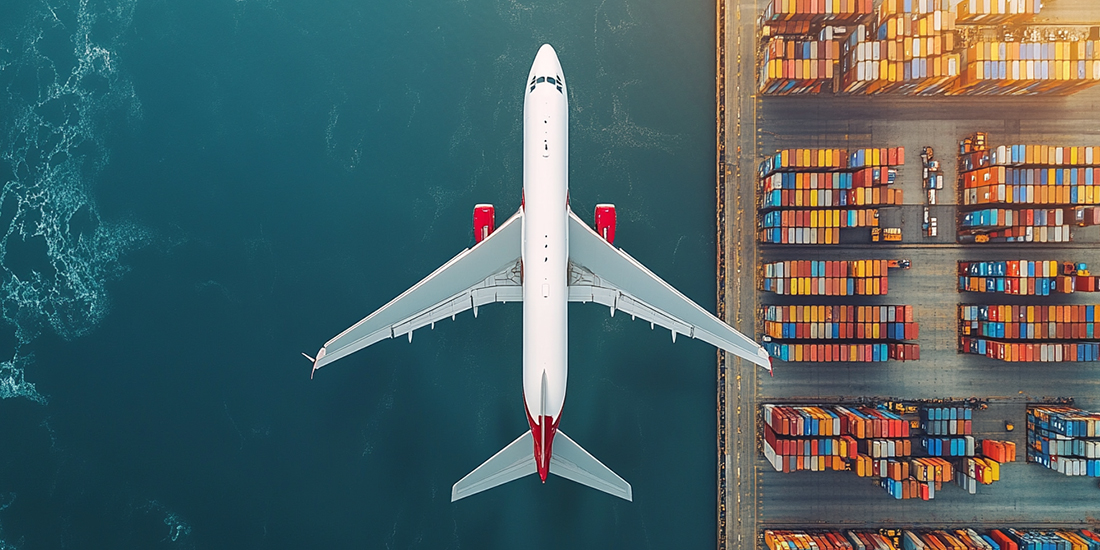 When production stops, every delivery day matters. Delayed components can disrupt schedules and customer commitments. Air freight from China offers a practical solution for urgent commercial shipments. However, choosing the right service requires careful planning. This guide compares standard, priority, and express shipping. You will also learn about flight schedules, customs clearance, and cargo preparation.
-
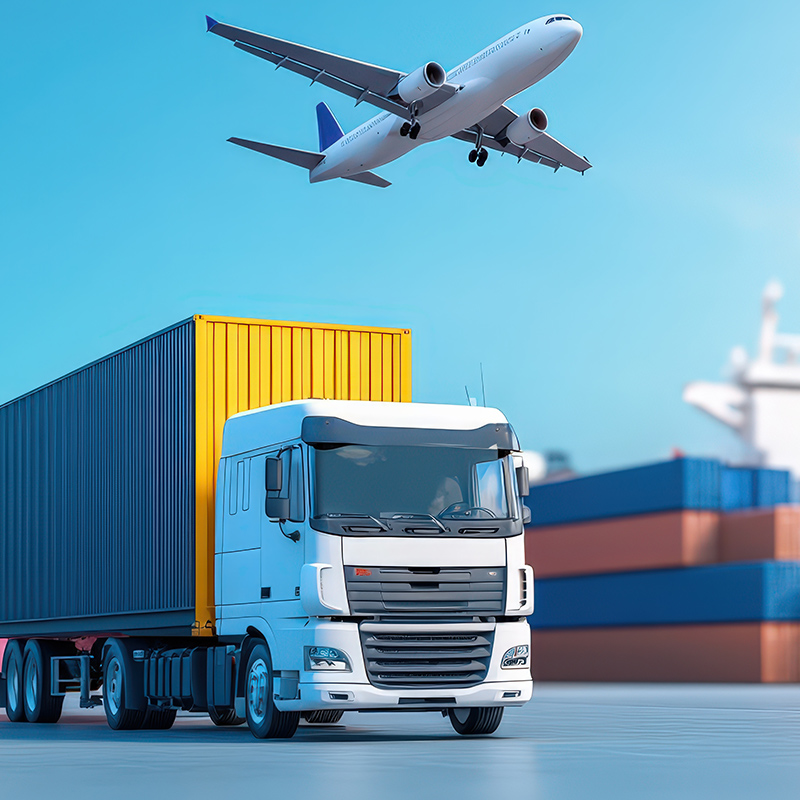 Air freight from China offers speed, but costs can vary significantly. Do you know what determines your final shipping bill? This guide explains air freight cost from China, including per-kilogram rates, chargeable weight, surcharges, and destination fees. Learn how to estimate costs and reduce shipping expenses.
