



Moving hazardous materials across the globe goes far beyond getting cargo from point A to point B. It is a high-stakes engineering operation. Preventing catastrophic financial, legal, and environmental disasters remains the primary objective. A single chemical spill or compliance violation can cost a company millions in fines. It can also lead to massive cleanup fees and lost inventory.
The global supply chain for chemicals requires navigating an incredibly complex maze. Shippers face strict international regulations, overlapping customs procedures, and highly specific storage requirements. Attempting to manage this internally often leads to critical supply chain failures. Relying on a general logistics provider is equally risky. A specialized freight forwarder solves this exact problem. By partnering with a technical logistics expert who understands the nuances of hazardous cargo, chemical manufacturers can bridge the gap between their production facilities and global markets smoothly and legally.
This comprehensive technical guide explores the intricacies of dangerous goods compliance. It uncovers the significant financial benefits of bonded storage and details exactly how to optimize your supply chain for highly regulated cargo.
Key Takeaways
- Expertise is Non-Negotiable: A specialized freight forwarder is absolutely essential for navigating the complex web of global chemical shipping regulations and preventing costly border delays.
- Financial Flexibility: Utilizing bonded cargo warehousing allows chemical companies to strategically defer taxes and duties. This vastly improves corporate cash flow while maintaining safe storage.
- Risk Mitigation: Strict adherence to dangerous goods compliance prevents severe fines, port rejections, and safety hazards during transit.
- Seamless Trade: Expert customs clearance ensures that highly scrutinized chemical shipments cross international borders without unnecessary friction.
The Evolving Landscape of Chemical Supply Chains
Global supply chains are shifting rapidly. Industry data shows a massive pivot away from fragile just-in-time inventory models. Geopolitical disruptions, fluctuating trade tariffs, and volatile ocean freight rates force manufacturers to build strategic buffer stocks. Consequently, demand for compliant bonded storage has skyrocketed globally.
Chemical companies now position bulk stock much closer to end-users. This forward-deployment strategy avoids triggering massive immediate tax events. Furthermore, stricter environmental, social, and governance reporting requires precise tracking of hazardous materials. Logistics providers must now offer advanced visibility tools alongside physical transport capabilities. Adapting to these trends separates resilient chemical businesses from those vulnerable to market shocks.
What is Chemical Logistics and Why Do You Need a Specialist?
Chemical logistics encompasses the intricate planning and physical control required to move substances from manufacturers to end-users. Unlike standard retail goods, chemicals dictate a highly rigid logistics environment. Their volatile physical properties and heavily monitored legal status demand absolute precision. In this ecosystem, your logistics provider acts as a technical orchestrator.
The Unique Complexities of the Chemical Supply Chain
Volatility defines the chemical supply chain. Many industrial substances are highly sensitive to temperature fluctuations, moisture, and atmospheric pressure. To illustrate, a minor temperature spike in a container sitting at a tropical port can cause a reactive polymer to degrade within hours. This turns a multi-million dollar shipment into hazardous waste.
Cross-contamination presents another severe risk. Shipping certain chemicals near food-grade products or incompatible reactive substances can lead to catastrophic chemical reactions. While shipping general goods involves standard containerization, hazardous chemicals demand specialized containment vessels. They require rigorous route risk assessments and strict adherence to safety protocols. The margin for error is zero.
The Role of a Technical Freight Forwarder
A standard logistics provider typically focuses on volume and speed. Conversely, a chemical-focused forwarder prioritizes risk management, regulatory compliance, and specialized carrier selection. Their daily operations include auditing complex safety documents and selecting carriers with specific hazardous materials certifications. They plan transit routes that intentionally avoid restricted zones like residential areas or sensitive waterways.
Generalist forwarders simply lack the technical infrastructure and regulatory knowledge to manage these risks. This highlights the absolute necessity of special cargo freight forwarding expertise. Professionals operating in this niche understand the exact chemical properties of your cargo. They build a customized logistics strategy around those specific physical requirements.
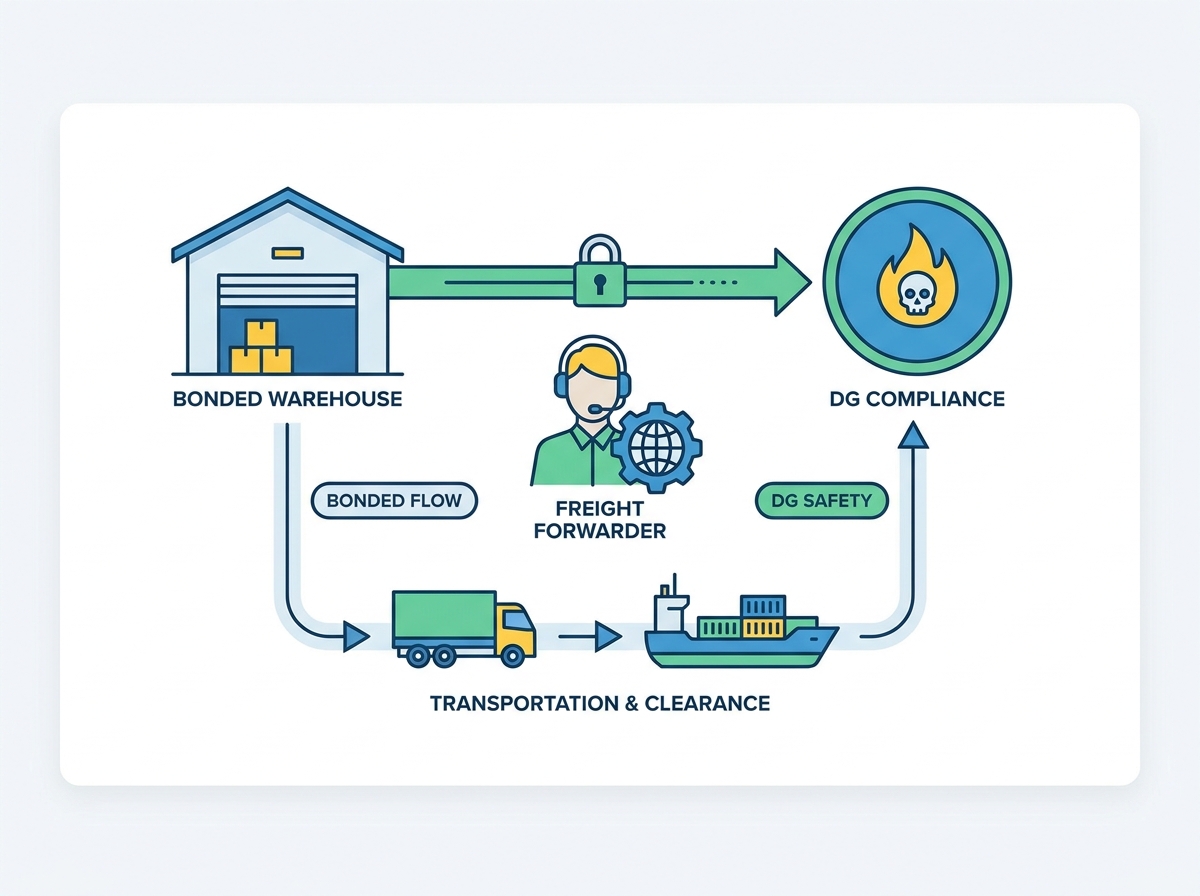
Mastering Dangerous Goods Compliance: The Engineering Backbone
Dangerous Goods compliance is not merely a bureaucratic hurdle. It is the fundamental engineering framework that keeps global trade safe. A competent forwarder ensures that every single shipment adheres to these stringent guidelines long before it leaves the manufacturing facility.
Understanding Global Regulatory Frameworks
Chemical transport is governed by distinct regulatory bodies depending on the mode of transit. The International Maritime Dangerous Goods code regulates ocean freight. This ensures vessels are not compromised by volatile cargo. Air freight is governed by the extremely strict International Air Transport Association Dangerous Goods Regulations. Regional agreements govern road transport across different continents.
A critical component of these frameworks is the classification of goods. The United Nations has established nine classes of dangerous goods. Whether a substance is a Class 3 Flammable Liquid or a Class 8 Corrosive completely dictates the logistics strategy. It influences everything from the type of packaging used to how the cargo is segregated in the hull of a ship.
Packaging, Labeling, and Technical Documentation
Hazardous chemicals must be packed in United Nations certified packaging. These specialized containers undergo rigorous real-world testing. Drop tests, pressure differentials, and heavy stack tests guarantee they can withstand the physical abuse of global transit.
Equally critical is the accompanying paperwork. The Safety Data Sheet provides comprehensive information on the chemical properties, hazards, and emergency response procedures. Alongside this, the Dangerous Goods Declaration acts as a legally binding document. The shipper officially certifies that the cargo is packed and labeled according to international law. A seasoned logistics partner meticulously audits these documents against the physical labels on the cargo. Even a slight discrepancy is the leading cause of port rejections.
The Strategic Advantage of Bonded Cargo Warehousing
Storage is a critical node in the chemical supply chain. For companies engaged in high-volume international trade, specialized storage solutions offer significant operational advantages.
What is a Bonded Warehouse for Chemicals?
A bonded warehouse is a highly secure facility authorized by customs authorities. Imported goods can be stored here without the immediate payment of duties and taxes. When dealing with chemicals, these facilities must meet exceptional engineering standards. They feature advanced fire suppression systems, chemical spill containment berms, and precise climate control zones. Specialized ventilation prevents the dangerous buildup of toxic or explosive fumes.
Cash Flow and Supply Chain Benefits
The primary advantage of bonded cargo warehousing and circulation is unparalleled financial flexibility. Chemical importers can bring massive volumes of bulk liquids or powders into a destination country. They store them securely in a bonded facility. Import duties and taxes are entirely deferred until specific quantities are withdrawn and officially circulated into the domestic market.
This strategic deferment prevents working capital from being tied up in inventory taxes. It allows chemical distributors to position their inventory strategically close to target markets. This enables rapid order fulfillment without bearing the crippling immediate tax liability of a bulk import.
Technical Selection Guide for Chemical and Oversized Transport
The chemical industry does not just move liquids and powders. It also requires the movement of the massive industrial infrastructure used to manufacture these substances. Managing both aspects requires a highly specialized engineering skill set.
Multi-Modal Transport Parameters
Chemicals rarely travel via a single mode of transport. A seamless transition from ocean vessels to road trucks is required. Proper equipment selection is vital for safety and efficiency:
- ISO Tanks: Designed for bulk hazardous liquids. Look for tanks with a working pressure rating of up to 4 bar. For high-viscosity resins, ensure the tanks are equipped with advanced steam or electrical heating coils.
- Temperature-Controlled Reefers: Essential for sensitive compounds. Select units capable of active thermal regulation ranging from minus 20 degrees Celsius to plus 25 degrees Celsius, complete with continuous digital monitoring.
- Flexitanks: A cost-effective alternative strictly for non-hazardous bulk chemicals, offering high payload capacity within standard twenty-foot containers.
Handling Oversized Project Cargo
Building or upgrading a chemical plant requires moving massive industrial components. Imagine a 150-ton chemical reactor navigating narrow port access roads. This falls under the complex category of project cargo.
Executing dangerous goods and oversized cargo transportation requires extensive engineering pre-planning. It involves detailed route surveying to ensure local bridges can physically handle the weight. Logistics teams must navigate low clearances and coordinate with regional traffic authorities. They utilize heavy-lift cranes and multi-axle hydraulic trailers capable of supporting hundreds of tons. A proficient logistics partner seamlessly integrates the movement of this oversized infrastructure with strict safety protocols.
Core Comparison: General vs. Specialized Forwarders
To highlight the stark contrast in service levels, review the operational differences below. Choosing the wrong provider often leads to structural supply chain failures.
| Logistics Requirement | General Logistics Provider | JFSZ Specialized Chemical Logistics |
|---|---|---|
| Hazardous Storage | Standard ambient warehousing. High risk of cross-contamination. | Certified bonded warehousing with spill containment, climate zones, and gas ventilation. |
| Customs Processing | Basic document submission. Prone to HS code misclassification. | Pre-clearance protocols, precise chemical tariff classification, and environmental license verification. |
| Equipment & Capacity | Standard dry vans. Limited access to specialized containers. | Access to pressure-rated ISO tanks, active reefers, and multi-axle trailers for oversized reactors. |
| Risk Management | Reactive problem solving. Relies on standard carrier insurance. | Proactive route risk assessments, strict dangerous goods auditing, and dedicated emergency response plans. |
Streamlining Specialized Customs Clearance
Customs clearance is universally recognized as the most significant bottleneck in global logistics. For chemical cargo, this scrutiny is intensely magnified due to overlapping security and environmental concerns.
The Complexity of Chemical Customs Clearance
Chemicals are subject to a myriad of international trade compliance regulations. Importing chemicals into the European Union requires strict adherence to the REACH regulation. Meanwhile, the United States enforces the Toxic Substances Control Act. Border control agencies flag chemical shipments for higher scrutiny to prevent the illegal transit of environmental hazards.
Preventing Border Bottlenecks
Proactive management is the only way to ensure smooth border crossings. An expert forwarder acts as a dedicated technical liaison between the chemical shipper and customs authorities. They prevent costly bottlenecks by engaging in specialized customs clearance for regulated cargo. This involves submitting documentation electronically days before a vessel arrives. Furthermore, they ensure accurate tariff classification by applying the correct Harmonized System codes. Misclassification often leads to severe financial penalties. They also verify that all necessary import licenses from environmental ministries are active.
Common Pitfalls in Chemical Logistics
Even minor oversights in chemical logistics can cascade into major operational failures. Understanding historical points of failure allows shippers to proactively manage risk.
Inaccurate Safety Data Translation: Safety documents must often be translated into the official language of the destination country. Relying on basic translation software leads to critical errors. Poor translations misinform local emergency responders on how to handle a spill.
Non-Compliant Packaging: Utilizing standard commercial packaging instead of certified containment frequently results in chemical leaks during transit. This inevitably leads to massive environmental cleanup fines and total loss of product.
Failing to Secure Proper Storage: Importing bulk chemicals without a pre-arranged bonded warehouse strategy results in heavy immediate tax liabilities. This causes severe cash flow crunches and leaves cargo stranded at the port accruing demurrage fees.
The most effective way to avoid these pitfalls is to shift the operational burden to a dedicated chemical freight forwarder. These specialists anticipate regulatory shifts and possess the exact infrastructure required to mitigate inherent risks.
Optimize Your Chemical Supply Chain Today
Chemical shipping demands strict accuracy and zero errors. Compliance is the only way to prevent costly legal and safety disasters. By implementing smart financial strategies, such as using secure bonded storage, you can defer taxes and significantly improve your cash flow. Ultimately, a reliable logistics partner keeps your supply chain resilient. They manage complex regulations and border clearances smoothly.
Always choose specialized experts for dangerous goods transport to protect your business and your cargo. If you are moving volatile chemicals, heavy industrial reactors, or require secure bonded warehousing, do not leave your supply chain to chance. Visit JFSZ Logistics today to explore our specialized cargo solutions and request a custom engineering logistics quote tailored to your specific requirements.
FAQ
What is the main difference between a standard freight forwarder and one that specializes in chemical logistics?
A specialized provider possesses deep technical knowledge of international dangerous goods regulations. Unlike standard forwarders, they have access to certified hazardous storage facilities. They utilize specialized equipment like pressure-rated ISO tanks and employ staff formally trained in chemical risk management.
How does bonded cargo warehousing save chemical companies money?
Bonded warehousing allows companies to store imported chemicals in a highly secure, customs-regulated facility without paying duties upfront. You only pay these government fees when the goods are officially withdrawn and circulated into the domestic market. This strategic deferral protects your working capital.
What specific certifications should a bonded warehouse hold for hazardous materials?
A compliant facility must hold specific national customs authorizations for bonded storage. Additionally, it should possess environmental permits for hazardous material handling. Look for facilities with ISO 9001 for quality management, ISO 14001 for environmental management, and advanced fire suppression and spill containment certifications.
How do geopolitical trends affect chemical supply chain strategies?
Recent geopolitical tensions and freight rate volatility have forced chemical manufacturers to abandon just-in-time inventory models. Companies are now utilizing bonded warehouses to build strategic buffer stocks closer to end-users. This ensures product availability despite global shipping disruptions without incurring immediate import taxes.
Can a single logistics provider handle both dangerous goods and oversized cargo transportation?
Yes. Top-tier project cargo and chemical logistics providers have the robust engineering expertise required to manage both. They can seamlessly coordinate the transport of volatile chemical compounds alongside the oversized heavy-lift machinery required to process them.
What happens if dangerous goods are misclassified during shipping?
Misclassification is a severe regulatory violation. It can lead to massive financial fines and the immediate confiscation of your cargo by border authorities. More importantly, it creates severe safety hazards. Carriers will not know the correct emergency protocols to follow in the event of a chemical reaction during transit.
Related Blogs
-
 Door to door shipping from China simplifies international logistics. But how can you ensure smooth delivery from factory to destination? Choosing the right shipping method, preparing documents, and understanding customs responsibilities are essential. This guide explains each shipping step, compares sea, air, and express services, and clarifies DDP and DAP terms. Learn how to arrange reliable deliveries and avoid unexpected costs.
-
 When production stops, every delivery day matters. Delayed components can disrupt schedules and customer commitments. Air freight from China offers a practical solution for urgent commercial shipments. However, choosing the right service requires careful planning. This guide compares standard, priority, and express shipping. You will also learn about flight schedules, customs clearance, and cargo preparation.
-
 Air freight from China offers speed, but costs can vary significantly. Do you know what determines your final shipping bill? This guide explains air freight cost from China, including per-kilogram rates, chargeable weight, surcharges, and destination fees. Learn how to estimate costs and reduce shipping expenses.
