



Selecting a logistics partner is no longer just about securing the lowest rate per TEU. Today, it represents a critical risk-management decision that dictates your overall supply chain resilience. Market realities have shifted dramatically over the past few years. Persistent supply chain volatility, sudden capacity constraints, and expanding compliance complexities make vetting potential partners increasingly difficult. You need reliable vendors to navigate these disruptions successfully.
We designed this guide to provide shippers and supply chain managers with an objective, criteria-based framework. You will learn how to evaluate, compare, and ultimately select the right logistics partner. We will explore key differentiators and highlight operational bottlenecks you must avoid. By the end of this article, you will possess a clear roadmap to secure partnerships that protect your bottom line and enhance global delivery performance.
Key Takeaways
The fundamental difference between forwarders, brokers, and direct carriers lies in legal liability, service scope, and physical control of goods.
Reliable evaluation requires looking beyond initial quotes to assess network density, digital tracking maturity, and compliance credentials.
Aligning your cargo profile (volume, commodity, lanes) with specific forwarder archetypes prevents service mismatches.
Robust vetting involves rigorous SLA definitions, trial shipments, and assessing the operational stability of the forwarder’s account management team.
Clarifying Roles: Freight Forwarder vs Broker and Direct Carriers
Delineating legal and operational boundaries across logistics vendors is crucial for effective risk management. Supply chain managers frequently confuse intermediary roles, leading to costly coverage gaps. Understanding the nuances of a Freight forwarder vs broker setup will immediately streamline your vendor selection process.
Freight Forwarder vs Broker
Brokers operate primarily as matching services. They connect shippers to carriers. They act purely as intermediaries. Brokers do not take physical possession of your goods, nor do they carry cargo liability. Conversely, forwarders take physical possession of shipments. They consolidate multiple cargo streams. As Non-Vessel Operating Common Carriers (NVOCCs), they issue their own Bills of Lading. Because they assume the role of a carrier under the law, forwarders take on direct liability for your cargo.
Forwarder vs Common Carrier and Direct Shipping
Direct-to-carrier shipping models offer distinct pros and cons. Establishing direct relationships suits enterprise shippers moving massive, highly predictable volumes. It eliminates intermediary markups. However, this model lacks operational agility. Forwarders provide the necessary flexibility you need during market shocks. They offer immediate routing alternatives when port congestion strikes. Furthermore, they act as an essential administrative buffer. When a carrier rolls your container, a forwarder rebooks it automatically. A direct carrier simply tells you to wait.
Liability Realities
Many shippers misunderstand the limits of forwarder liability. Standard international carriage conventions strictly cap their financial exposure. Under treaties like the Hague-Visby rules, payouts for damaged cargo remain minimal. Forwarders rarely reimburse the full commercial value of ruined goods. You must secure supplemental cargo insurance. Comprehensive insurance policies protect your financial interests when catastrophic maritime or aviation losses occur.
Key Differentiators Among Top Freight Forwarder Companies
Evaluating competing Freight forwarder companies requires looking past aggressive sales pitches. You must analyze their hard assets, digital infrastructure, and regulatory standing. The best partners blend local expertise with global compliance frameworks.
Network Density and Trade Lane Expertise
Network density dictates operational success. You must evaluate the depth of a vendor's relationships on your specific high-volume routes. A partner dominating the Trans-Pacific lane might struggle with European inland logistics. Local presence matters immensely. Having their own offices at origin and destination ensures smooth customs clearance. It guarantees priority drayage routing. While agent networks provide broad reach, wholly owned local offices deliver superior accountability.
Digital Visibility and Freight Forwarder Tracking
Basic milestone updates no longer suffice. Modern supply chains demand sophisticated Freight forwarder tracking capabilities. You should prioritize vendors offering deep API or EDI integrations. They must provide proactive exception management alerts. Real-time portal access is non-negotiable. Manual spreadsheet updates fail to provide actionable data during a crisis. Unified digital tracking ecosystems consolidate your data, enabling rapid decision-making.
Freight Forwarder Evaluation Metrics
Capability Pillar | Basic Forwarder | Advanced Forwarder |
|---|---|---|
Visibility | Manual email updates and static spreadsheets. | Real-time API integrations and unified dashboard portals. |
Network | Heavily reliant on third-party agent networks globally. | Wholly owned offices at key origin and destination ports. |
Compliance | Standard FMC licensing only. | C-TPAT, AEO status, and in-house customs brokerage. |
Exception Management | Reactive problem solving after delays occur. | Automated predictive alerts and pre-planned routing alternatives. |
Licensing, Certifications, and Financial Stability
Compliance credentials prove a vendor's operational maturity. Never partner with unlicensed entities. Verify their FMC licensing for US-bound ocean freight. Check their IATA certification for air freight operations. You should strongly favor partners holding C-TPAT membership and AEO (Authorized Economic Operator) status. These certifications expedite customs clearance significantly. Finally, assess their financial health. Strong balance sheets ensure they can secure premium carrier space. Financial stability proves they will weather market downturns without risking your cargo.
Matching Forwarder Archetypes to Your Supply Chain
Service mismatches cause intense operational friction. You must align your cargo profile—including volume, commodity type, and routing lanes—with the right vendor category. Exploring specific Freight forwarder examples helps clarify these distinct archetypes.
The Global Integrators (The "Mega-Forwarders")
These massive organizations dominate global trade volumes. They best serve multinational corporations requiring true end-to-end global coverage. They offer massive volume scalability. They provide seamlessly integrated warehousing and distribution solutions. However, trade-offs exist. Mega-forwarders operate rigidly. They enforce strict standard operating procedures. If you represent a smaller account, you may lack priority customer support during peak seasons.
The Digital-First Forwarders
Digital-first vendors disrupted traditional logistics models. They are ideal for tech-forward e-commerce brands and mid-market companies. They prioritize self-serve quoting platforms. They deliver automated analytics dashboards straight to your browser. Their UI/UX design removes the friction from day-to-day freight management. They empower lean supply chain teams to operate like massive logistics departments.
The Niche and Specialized Forwarders
Sometimes, broad capabilities fall short. Complex commodities require specialized handling. You might need partners focused strictly on cold chain logistics for pharmaceuticals. Other niche players specialize entirely in hazardous materials. Some handle out-of-gauge project cargo exclusively. Regional specialists dominate specific geographic lanes. For instance, you might hire a vendor focusing strictly on LATAM-to-US routes, ignoring their lack of Asian coverage in exchange for unparalleled South American expertise.
Red Flags and Operational Bottlenecks to Avoid
Protecting your supply chain requires defensive vetting. Identifying operational red flags early saves you from disrupted cargo flows and blown budgets. Pay close attention to pricing tactics and human resource stability.
Opaque Pricing Structures
Opaque pricing ruins transportation budgets. Beware of vendors offering aggressive "buy-in" rates just to win your business. Audit your quotes meticulously for hidden surcharges. Undocumented origin handling charges appear frequently on invoices. Inflated chassis fees kill your margins. Fluctuating fuel margins often mask poor base rates. Demand fully itemized quotes. Refuse any proposal grouping vaguely defined "administrative fees" together.
Account Management and Turnover
Logistics remains a relationship-driven industry. High turnover in Freight forwarder jobs creates internal chaos. When account managers quit frequently, your communication breaks down. The new team loses institutional knowledge regarding your standard operating procedures. Issue resolution slows to a crawl. Demand dedicated account management teams. Ask about their employee retention rates during the RFP phase.
Poor Exception Management
A vendor's true value appears only when things go wrong. Smooth sailing requires zero skill. Assess their historical exception management protocols. How fast do they respond to rolled cargo? How quickly do they clear sudden customs holds? Port strikes test their contingency networks entirely. Ask for case studies demonstrating their crisis response times.
Overpromising Capacity
Maintain healthy skepticism toward vendors guaranteeing space during peak seasons. Unless they demonstrate proof, treat guarantees as empty sales tactics. Ask to see their block space agreements (BSAs). Verify their inclusion in core carrier programs. Overpromising capacity without backed assets leaves your cargo stranded at the terminal.
The Vetting Framework: How to Finalize Your Decision
Transitioning from initial research to a finalized contract requires a structured process. You must eliminate guesswork entirely. Selecting a highly capable Freight Forwarder involves executing three distinct validation steps.
Step 1: The RFI and RFQ Phase
Structure your requests around specific, real-world scenarios. Avoid comparing hypothetical rates. Give them past routing data and ask how they would handle disruptions. Demand complete transparency regarding their standard operating procedures (SOPs). Evaluate the clarity of their responses. Ambiguous answers during the RFI phase guarantee poor communication during actual operations.
Step 2: SLA Negotiation
Define measurable Key Performance Indicators (KPIs) immediately. Never sign a contract lacking a rigid Service Level Agreement (SLA). Track their quote turnaround times. Measure their documentation accuracy rates. Monitor their on-time delivery percentages strictly. Evaluate their claim resolution speeds. Tie these KPIs directly to quarterly performance reviews.
Step 3: The Pilot Program
Never commit your entire primary supply chain blindly. Advise your team to start with a trial allocation. Award them 10-15% of your total volume on a secondary trade lane. Use this pilot program to stress-test their tracking technology. Evaluate their daily communication cadence. Verify their invoicing accuracy. Only expand their volume allocation once they successfully pass this physical trial.
Conclusion
The industry has shifted permanently away from transactional vendor selection. Modern logistics demands strategic partnership integration. Competing solely on the lowest ocean rate creates massive supply chain vulnerability. The "right" partner offers more than cheap freight. They align their infrastructure, technological maturity, and operational agility directly with your growth stage.
We encourage you to audit your current logistics partnerships today. Apply this exact evaluation criteria to your incumbent vendors. Identify your visibility gaps. Measure their exception management response times. If they fail to meet these modern standards, initiate a new RFQ process immediately. Upgrading your logistics partners protects your margins and guarantees global delivery reliability.
FAQ
Q: What is the difference between an NVOCC and a standard freight forwarder?
A: While people use the terms interchangeably, distinct legal differences exist. An NVOCC acts as a carrier, issues its own House Bill of Lading, and assumes direct cargo liability. A standard forwarder often acts merely as an agent, organizing transport without issuing proprietary carrier documents.
Q: How often should we tender our freight or run an RFQ?
A: We recommend conducting annual or bi-annual reviews. Your frequency should depend on market volatility and internal volume shifts. Frequent RFQs help secure competitive rates. However, balancing rate competitiveness with long-term partnership stability ensures better capacity allocation during peak seasons.
Q: Can a freight forwarder clear customs for me?
A: Yes, most established providers operate in-house licensed customs brokerages. If they lack an internal team, they partner with trusted local brokers. This allows them to offer unified, door-to-door service, simplifying your administrative burden significantly.
Q: Why is my freight forwarder tracking information delayed?
A: Data lags occur due to fragmented legacy systems. Physical ocean carriers, port terminals, and forwarder TMS platforms often fail to communicate instantly. Advanced vendors solve this issue by implementing direct API integrations, which bypass manual data entry and push real-time updates to your dashboard.
Related Blogs
-
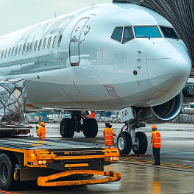 Door to door shipping from China simplifies international logistics. But how can you ensure smooth delivery from factory to destination? Choosing the right shipping method, preparing documents, and understanding customs responsibilities are essential. This guide explains each shipping step, compares sea, air, and express services, and clarifies DDP and DAP terms. Learn how to arrange reliable deliveries and avoid unexpected costs.
-
 When production stops, every delivery day matters. Delayed components can disrupt schedules and customer commitments. Air freight from China offers a practical solution for urgent commercial shipments. However, choosing the right service requires careful planning. This guide compares standard, priority, and express shipping. You will also learn about flight schedules, customs clearance, and cargo preparation.
-
 Air freight from China offers speed, but costs can vary significantly. Do you know what determines your final shipping bill? This guide explains air freight cost from China, including per-kilogram rates, chargeable weight, surcharges, and destination fees. Learn how to estimate costs and reduce shipping expenses.
